Betaine HCl for Candida: What Does It Actually Do?

Quick Answer
Betaine HCl does not kill Candida directly. It is a supplemental form of hydrochloric acid that can increase gastric acidity, which plays an important role in digestion and the stomach’s natural defence against microorganisms. For people with low stomach acid, Betaine HCl may support normal digestive function, but it should not be considered a treatment for Candida overgrowth.
Betaine HCl is not an antifungal. Its potential relevance to Candida is indirect, through the role of stomach acid in digestion and the body’s natural defence against microorganisms.
Stomach acid helps begin protein digestion and creates a strongly acidic environment in the stomach. When gastric acid is reduced, digestion and the stomach’s normal microbial barrier can be affected. Betaine HCl is sometimes used as a supplemental source of hydrochloric acid, particularly in people who may have low stomach acid.
If you’re interested in the relationship between Candida and digestive health, it’s important to distinguish between supporting normal digestive function and directly treating Candida overgrowth.
Learn more about Candida overgrowth and how it develops.
🔬 Research Snapshot
Gastric acid is an important part of the stomach’s natural defence against microorganisms that enter through food and drink. Research shows that reduced gastric acidity can alter the microbial environment of the upper digestive tract and increase susceptibility to some infections, particularly bacterial infections. (Martinsen, Fossmark, & Waldum, 2019).
Gastric acid also contributes to normal digestion by helping denature proteins and providing the acidic environment required for pepsin activity. (Waldum et al., 1993).
However, this does not mean that low stomach acid causes Candida overgrowth, or that increasing stomach acid treats Candida. The relevance of Betaine HCl to Candida is indirect: it may support normal gastric acidity and digestion in appropriate circumstances, but it is not an antifungal treatment.
Key Takeaways
- Betaine HCl does not kill Candida and should not be considered an antifungal treatment.
- Betaine HCl provides hydrochloric acid and can temporarily increase gastric acidity, particularly in people with reduced stomach acid. (Guilliams & Drake, 2020)
- Stomach acid plays an important role in digestion and the stomach’s natural defence against microorganisms.
- Research on Betaine HCl in humans has primarily examined its effects on gastric pH, rather than whether it improves Candida-related symptoms or treats Candida overgrowth. (Guilliams & Drake, 2020)
- Betaine HCl is therefore best understood as a digestive-support ingredient, not a Candida treatment.
- It isn’t appropriate for everyone, particularly people with certain stomach conditions or those taking medications that affect gastric acid.
- If you suspect low stomach acid or have persistent digestive symptoms, it’s worth investigating the underlying cause rather than assuming Betaine HCl is the answer.
Estimated reading time: 12 minutes
What Is Betaine HCl and How Does It Work?
Betaine HCl is a supplement that combines betaine, a naturally occurring compound found in foods such as beets and spinach, with hydrochloride, providing hydrochloric acid.
Hydrochloric acid is naturally produced by the stomach. It helps create the highly acidic environment needed for normal digestion and contributes to the stomach’s defence against microorganisms that are swallowed with food and drink.
When Betaine HCl is taken, it can temporarily increase gastric acidity, although the effect depends on factors including dose and whether food is present. Research examining Betaine HCl supplementation has primarily focused on its ability to lower stomach pH, particularly in people with reduced gastric acid production (Guilliams & Drake, 2020).
This is important because Betaine HCl is not the same thing as stimulating the stomach to produce more acid. It provides an additional source of hydrochloric acid, which can temporarily make the stomach contents more acidic.
What does this have to do with Candida?
Not as much as you might think.
Betaine HCl does not directly kill Candida, and there is not good evidence that taking Betaine HCl treats Candida overgrowth.
Learn more about evidence-based approaches to Candida treatment.
Its relevance is indirect. Normal stomach acid is part of the body’s first-line defence against microorganisms entering through the digestive tract, while also supporting normal protein digestion.
So if you’re considering Betaine HCl in the context of Candida, it’s more accurate to think of it as digestive support rather than an antifungal treatment.
Potential Benefits of Betaine HCl for Digestive Health
1. May Temporarily Increase Gastric Acidity
Betaine HCl provides hydrochloric acid and can temporarily lower gastric pH when taken orally. In a small human study involving people with medication-induced hypochlorhydria, Betaine HCl rapidly lowered gastric pH, although the effect was temporary. (Guilliams & Drake, 2020).
A separate clinical study also found that Betaine HCl could temporarily restore gastric acidity after food had raised stomach pH in healthy volunteers. The response varied according to the dose and whether food was present. (Surofchy, Frassetto, & Benet, 2019).
This provides evidence that Betaine HCl can temporarily acidify the stomach, but it does not establish that taking Betaine HCl is beneficial for everyone with digestive symptoms.
2. Supports the Normal Environment for Protein Digestion
Stomach acid has an important role in digestion. The acidic environment of the stomach helps denature proteins and supports the activity of pepsin, an enzyme involved in protein digestion.
For this reason, reduced gastric acidity can affect normal digestive processes. (Waldum et al., 1993).
However, it’s important not to overstate what this means for supplementation. Research showing that Betaine HCl can lower gastric pH does not automatically demonstrate that it improves protein digestion or relieves digestive symptoms in everyone who takes it.
If low stomach acid is genuinely contributing to impaired digestion, restoring an appropriately acidic gastric environment may be relevant. But symptoms such as bloating, reflux, fullness and indigestion have many possible causes.
Stomach acid and digestive enzymes work at different stages of digestion. If you’re interested in the role of enzymes in the broader Candida discussion, see Digestive Enzymes and Candida.
3. May Be Relevant When Gastric Acid Is Reduced
Betaine HCl has primarily been studied as a way of temporarily increasing gastric acidity in people with reduced stomach acid, rather than as a general digestive supplement for everyone.
This distinction matters.
Feeling bloated after meals, experiencing reflux or having indigestion does not by itself prove that you have low stomach acid. These symptoms can occur for many different reasons.
The available research therefore supports a more cautious conclusion: Betaine HCl can temporarily lower gastric pH, but whether supplementation is appropriate or beneficial depends on the individual and the reason gastric acidity may be reduced. (Guilliams & Drake, 2020).
Why Is Betaine HCl Included in Yeastrix Candida Cleanse?
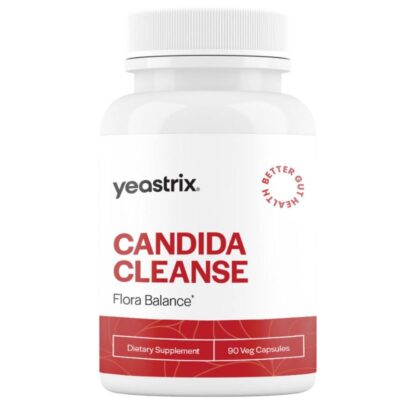
Betaine HCl is included in Yeastrix Candida Cleanse because the formula was designed with digestive support as well as botanical ingredients in mind.
Betaine HCl provides hydrochloric acid, which can temporarily increase gastric acidity when taken with a meal. As we’ve discussed, stomach acid has important physiological roles in digestion and microbial defence.
However, Betaine HCl is not included because it is an antifungal ingredient, and it should not be viewed as a treatment for Candida.
Instead, it forms one part of the overall formulation alongside the botanical and other ingredients selected for the product.
What does the formula contain?
Yeastrix Candida Cleanse combines Betaine HCl with a range of botanical and other ingredients, including:
- Oregano leaf extract
- Pau d’arco
- Caprylic acid
- Undecylenic acid
- Garlic extract
- Grapefruit seed extract
- Neem
- Ceylon cinnamon
- Lemongrass
- Black walnut
- Berberine
Each ingredient has its own properties and evidence base, and the presence of an ingredient in a supplement does not mean that every ingredient has been clinically demonstrated to treat Candida in humans.
If you’d like to understand the reasoning behind the complete formulation, see our guide to Candida Cleanse ingredients.
Where does Betaine HCl fit?
The simplest way to think about it is:
Botanical ingredients → selected for their individual properties
Betaine HCl → provides supplemental hydrochloric acid
Complete formulation → designed to provide broader digestive and microbiome support
This is a more accurate description than saying Betaine HCl “makes antifungals work better” or “restores the gut environment.”
If you are considering Betaine HCl because you suspect low stomach acid, remember that digestive symptoms alone cannot establish that you have hypochlorhydria. A healthcare professional can help determine whether further investigation is appropriate.
Common Mistakes When Using Betaine HCl
Betaine HCl isn’t appropriate for everyone, and digestive symptoms alone don’t tell you whether you have low stomach acid. If you’re considering supplementation, these are some important points to keep in mind.
Taking Betaine HCl on an empty stomach
Betaine HCl is generally taken with food rather than on an empty stomach. Taking an acidic supplement without food may increase the risk of stomach irritation.
Follow the directions provided with the specific product you’re using, and speak with a healthcare professional if you’re unsure whether it is appropriate for you.
Assuming bloating means you have low stomach acid
Bloating, fullness, indigestion and reflux can have many different causes. These symptoms don’t establish that stomach acid is too low.
Taking Betaine HCl simply because you experience digestive discomfort may therefore be unnecessary — and in some situations could make symptoms worse.
Expecting Betaine HCl to treat Candida
Betaine HCl does not directly kill Candida and should not be used as a substitute for appropriate treatment of a diagnosed Candida infection or other medical condition.
Its potential role is digestive support, particularly where reduced gastric acidity has been identified or is considered relevant.
Using it despite a stomach condition
Because Betaine HCl increases gastric acidity, it may not be appropriate for people with certain gastrointestinal conditions, including active peptic ulcers.
If you have a diagnosed stomach condition, recurring upper-abdominal pain, significant reflux or other persistent symptoms, discuss Betaine HCl with your healthcare professional before using it.
Overlooking medications
Some medications deliberately reduce stomach acid, while others may be affected by changes in gastric acidity.
If you’re taking prescription medication — particularly acid-suppressing medication — check with your healthcare professional or pharmacist before adding Betaine HCl.
The bottom line
Betaine HCl isn’t simply a matter of “more acid is better.” Its usefulness depends on why gastric acidity might be reduced and whether supplementation is appropriate for the individual.
Is Betaine HCl Safe?
Betaine HCl is not appropriate for everyone. Because it provides hydrochloric acid and can increase gastric acidity, it is important to consider your individual health circumstances before using it.
You should speak with a healthcare professional before using Betaine HCl if you:
Have an active stomach ulcer or another diagnosed stomach condition
Have persistent or unexplained upper-abdominal pain
Experience ongoing or severe reflux symptoms
Take medication that reduces stomach acid, such as proton pump inhibitors (PPIs) or H2 blockers
Take prescription medications and are unsure whether Betaine HCl is appropriate alongside them
Betaine HCl should also not be used as a way to self-diagnose low stomach acid. Digestive symptoms such as bloating, reflux, fullness and indigestion can have many possible causes.
If you experience significant or persistent digestive symptoms, it’s better to investigate the underlying cause rather than assuming that low stomach acid is responsible.
If you’re considering Betaine HCl supplementation and aren’t sure whether it’s appropriate for you, speak with your healthcare professional or pharmacist.
Frequently Asked Questions
No. Betaine HCl is not an antifungal and does not directly kill Candida. It provides hydrochloric acid and can temporarily increase gastric acidity, which has important roles in digestion and the stomach’s natural defence against microorganisms.
Betaine HCl may not be appropriate for people with active stomach ulcers or certain gastrointestinal conditions. People taking acid-suppressing medication, such as proton pump inhibitors (PPIs) or H2 blockers, should also speak with a healthcare professional before using it.
Possibly, but only in certain circumstances. Betaine HCl can increase gastric acidity, but bloating has many possible causes and does not necessarily indicate low stomach acid. There isn’t enough evidence to recommend Betaine HCl as a general treatment for bloating.
Betaine HCl is generally taken with a meal rather than on an empty stomach. Follow the directions for the specific product you’re using, and speak with a healthcare professional if you’re unsure whether it is appropriate for you.
Betaine HCl can affect gastric acidity relatively quickly after it is taken. However, that doesn’t mean it will produce noticeable digestive benefits, and there is no established timeframe for symptom improvement. Any benefit depends on the reason supplementation is being considered.
No. Betaine HCl is not required to treat Candida, and not everyone with Candida needs supplemental hydrochloric acid. Its potential role is related to digestive support in people who may have reduced gastric acidity, rather than direct antifungal activity.
Betaine HCl doesn’t stimulate the stomach to produce more hydrochloric acid. Rather, it provides hydrochloric acid directly, which can temporarily lower the pH of the stomach contents.
No. Betaine is a naturally occurring compound found in foods such as beets and spinach. Betaine HCl is a form in which betaine is combined with hydrochloride, providing a source of hydrochloric acid when consumed.
Final Thoughts
Betaine HCl is a digestive-support ingredient, not a Candida treatment.
By providing hydrochloric acid, it can temporarily increase gastric acidity, which plays important roles in digestion and the stomach’s natural defence against microorganisms. However, the evidence does not show that Betaine HCl directly treats Candida overgrowth.
For people considering Betaine HCl, the more useful question is not simply “Does it help Candida?” but “Is supplemental hydrochloric acid appropriate for my digestive needs?”
If you have persistent digestive symptoms or suspect that you may have low stomach acid, consider discussing the underlying cause with a qualified healthcare professional rather than self-diagnosing.
Betaine HCl is one component of the Yeastrix Candida Cleanse formulation. If you’re interested in the complete formulation, you can explore the individual ingredients and their intended roles in the product.
This article is intended for educational and informational purposes only and is not a substitute for professional medical advice, diagnosis, or treatment. Always consult with a qualified healthcare provider before starting any new treatment or supplement, especially if you have a pre-existing medical condition or are taking medication. The recommendations here reflect a naturopathic approach and are not meant to replace conventional care when it is required. Individual results may vary.
References
- Guilliams, T. G., & Drake, L. E. (2020). Meal-time supplementation with betaine HCl for functional hypochlorhydria: What is the evidence? Integrative Medicine: A Clinician’s Journal, 19(1), 32–36.
PubMed - Martinsen, T. C., Fossmark, R., & Waldum, H. L. (2019). The phylogeny and biological function of gastric juice—Microbiological consequences of removing gastric acid. International Journal of Molecular Sciences, 20(23), 6031.
PubMed - Surofchy, D. D., Frassetto, L. A., & Benet, L. Z. (2019). Food, acid supplementation and drug absorption—A complicated gastric mix: A randomized control trial. Pharmaceutical Research, 36, 155.
PubMed - Waldum, H. L., Brenna, E., Kleveland, P. M., Sandvik, A. K., & Syversen, U. (1993). Review article: The use of gastric acid-inhibitory drugs—Physiological and pathophysiological considerations. Alimentary Pharmacology & Therapeutics, 7(6), 589–596.
PubMed