Best Enzymes for Candida Biofilms: How They Work, What the Research Says & When to Take Them.
Do you feel like your yeast overgrowth symptoms keep coming back, even after following a Candida cleanse? If so, enzymes for Candida biofilms may be one part of the answer.
New to Candida biofilms? Start with our complete guide, Candida Biofilms: Why Candida Keeps Coming Back (and How to Support Biofilm Disruption Naturally), which explains what biofilms are, why they form, and how they may contribute to recurring Candida overgrowth. Then return here to learn specifically how enzymes may support biofilm disruption.
Quick Answer: Do Enzymes Help Break Down Candida Biofilms?
Yes. Certain enzymes may help break down the protective biofilm that Candida forms around itself. Laboratory research suggests certain enzymes may help disrupt components of the biofilm matrix, potentially making Candida cells more accessible to your body’s natural defences and other supportive strategies. While enzymes don’t directly kill Candida, they may support a more effective and comprehensive approach to restoring gut balance.
Key Takeaways
- Enzymes for Candida biofilms help break down protective layers that keep yeast infections persistent.
- Biofilms make Candida resistant by blocking treatments, causing recurring symptoms even after antifungal use.
- Common signs of biofilms include repeated infections, bloating, brain fog, and temporary relief from treatments.
- Specific enzymes like protease and cellulase target biofilm components to improve gut health.
- A well-formulated enzyme blend may help support biofilm disruption and healthy digestion.
Estimated reading time: 10 minutes
What Are Candida Biofilms?
In this article, we’ll focus specifically on the role that enzymes may play in supporting biofilm disruption.
Candida biofilms are protective layers that Candida and other microorganisms can produce to help them attach to surfaces and survive in challenging environments. The biofilm matrix is made up of proteins, polysaccharides, lipids, and extracellular DNA, forming a sticky barrier around the yeast.
Laboratory research suggests this protective matrix may make Candida cells more difficult for the body’s natural defences and some antimicrobial compounds to reach. Researchers believe this is one reason some people experience persistent or recurring Candida symptoms despite making appropriate dietary and lifestyle changes.
The remainder of this guide explores how certain digestive and proteolytic enzymes have been investigated for their potential to help disrupt components of these biofilms as part of a broader gut health strategy.
Why Your Candida Keeps Coming Back
You may have already tried antifungals, probiotics, or cleanses—and they worked… until they didn’t.
One possible explanation is that mature Candida biofilms may reduce how effectively antifungal compounds reach the yeast. Laboratory studies have shown biofilms can make Candida substantially more tolerant to antifungal agents than free-floating yeast cells, although researchers are still studying how this translates into clinical practice. These findings help explain why recurrent Candida infections can sometimes be difficult to manage. (PLoS Pathogens, 2012)
That’s why you feel better during a cleanse – and worse again when you stop.
Common Signs You’re Dealing With Biofilms:
- Repeated vaginal yeast infections or oral thrush
- Bloating, brain fog, or food sensitivities
- Skin rashes or flare-ups
- Candida die-off that never fully resolves
- Short-term relief from antifungals, then relapse
If these symptoms sound familiar, biofilms may be one factor worth discussing with your healthcare provider when considering a comprehensive gut health plan.
How Enzymes Help Break Down Candida Biofilms
Some enzymes may help degrade components of the biofilm matrix, potentially making the yeast more accessible to your body’s natural defences and other supportive therapies.
In laboratory settings, disrupting components of the biofilm matrix may help make Candida cells more accessible to:
• Your body’s natural immune defences
• Antifungal compounds
• Other supportive gut health strategies, including probiotics
While enzymes and probiotics work differently, they often complement one another. Learn how specific probiotic strains may help reduce Candida adhesion and support microbial balance in our guide to Best Probiotics for Candida Biofilms: The Science Behind the Best-Studied Strains
🛠️ What Different Enzymes Do:
Enzyme supplements like these are intended to support biofilm disruption as part of a broader gut health approach.
| Enzyme | Helps Break Down | Why It Matters |
|---|---|---|
| Protease | Proteins | Weakens the structural “glue” of the biofilm |
| Amylase | Complex carbohydrates | Helps digest polysaccharides found in biofilms |
| Cellulase | Plant fibres & cellulose-like compounds | Supports biofilm disruption |
| Beta Glucanase | Beta-glucans | Targets compounds found in fungal cell walls |
| Chitosanase | Chitosan | Helps degrade tough fungal structures |
What Does the Research Say?
Scientists have been studying fungal biofilms for more than two decades. Research suggests that enzymes capable of degrading proteins, polysaccharides and other components of the biofilm matrix may improve access to fungal cells in laboratory settings.
Most of the current evidence comes from laboratory and experimental studies, with human clinical research still evolving.
While more human clinical research is still needed, biofilm-disrupting enzymes are increasingly being investigated as part of broader gut health and microbial balance strategies.
What Should You Look for in a Biofilm Enzyme Supplement?
If you’re considering an enzyme supplement to support gut health, look for a formula that includes a combination of enzymes that target different components of biofilms, such as proteins, complex carbohydrates and glucans. A comprehensive blend may provide broader support than a single enzyme alone.
Depending on your needs, you may also wish to look for:
- Protease
- Beta-glucanase
- Cellulase
- Chitosanase
- Hemicellulase
- Glucoamylase
Some formulas also include a probiotic to help support a healthy gut microbiome alongside enzyme therapy.
Why We Formulated Yeastrix Active Enzymes This Way
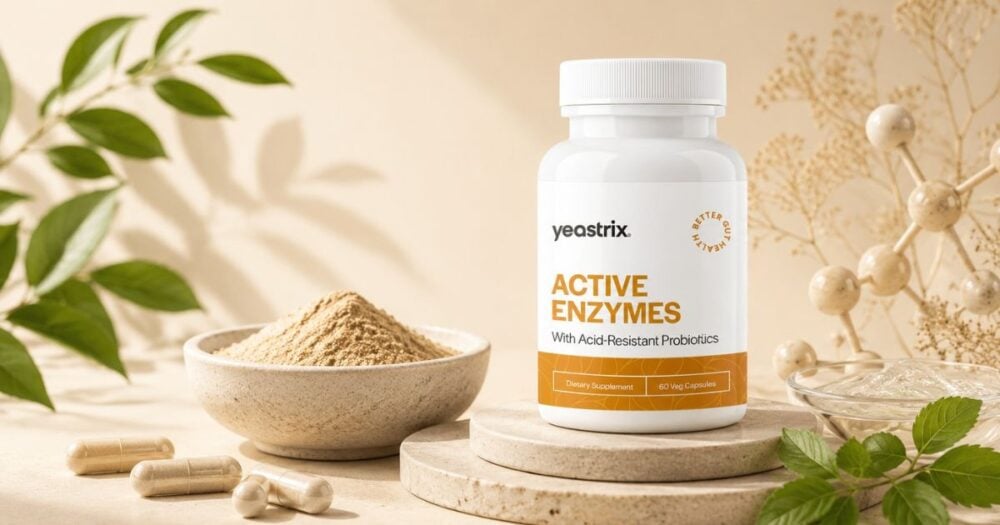
Yeastrix Active Enzymes combines a broad-spectrum enzyme blend with Bacillus coagulans, a shelf-stable probiotic, to support digestion and healthy gut function. The formula was designed to complement a comprehensive gut health approach, including a balanced diet and other supportive lifestyle measures.
Key features include:
- 13 digestive and biofilm-supporting enzymes
- Protease, serrapeptase and nattokinase
- Bacillus coagulans probiotic
- Vegetarian capsules
- Free from gluten, dairy and artificial additives
Learn more about Yeastrix Active Enzymes → View ingredients, directions and product information.
To learn how enzymes fit alongside probiotics, diet and lifestyle changes, see our complete guide to Candida Biofilms or Best Probiotics for Candida Biofilms: The Science Behind the Best-Studied Strains.
What’s the Difference Between Digestive and Systemic Enzymes?
Many enzymes can act as digestive or systemic enzymes depending on when they’re taken. When taken with meals, they primarily help digest food. When taken on an empty stomach, some enzymes are used with the intention of supporting processes beyond food digestion.
For example:
- Protease
- With food → digests dietary protein.
- On an empty stomach → commonly used as a “systemic enzyme.”
- Serrapeptase
- Typically taken on an empty stomach because it’s intended to act systemically rather than digest food.
By contrast:
- Amylase
- Lipase
- Alpha-galactosidase
are generally thought of as digestive enzymes because their primary role is breaking down food components in the gut.
| Enzyme Type | Primary Role |
|---|---|
| Digestive enzymes | Help break down proteins, fats and carbohydrates when taken with meals. |
| Systemic enzymes | Certain enzymes, when taken on an empty stomach, are used to support normal inflammatory processes and may help break down proteins and biofilms outside of food digestion. |
Yeastrix Active Enzymes combines digestive enzymes with enzymes commonly used for systemic support, alongside a shelf-stable probiotic, to complement a comprehensive gut health routine.
What to Expect
Some people report temporary changes when beginning a new gut health protocol, including:
- Low energy or fatigue
- Headaches
- Digestive discomfort
- Skin breakouts or itchiness
The exact cause isn’t always clear, and experiences vary from person to person. Go slowly, stay well hydrated and speak with your healthcare provider if symptoms are severe or persistent.
Should You Use Enzymes for Candida Biofilms?
Enzyme therapy may help if you’ve experienced:
- Chronic or recurring yeast infections
- Oral thrush or coated tongue
- Brain fog or fatigue linked to candida
- Digestive issues like bloating or food sensitivities
- Short-term success with antifungals, but no lasting results
Can You Take Enzymes with Antifungal Supplements?
Yes, enzymes are often used alongside antifungal supplements as part of a comprehensive gut health approach. While antifungals are intended to help reduce yeast overgrowth, certain enzymes may help break down components of the protective biofilm that can make Candida more difficult to reach.
Because enzymes and antifungals work in different ways, many practitioners use them together rather than viewing them as alternatives. Enzymes are typically taken on an empty stomach to support biofilm disruption, while antifungal supplements are taken according to the manufacturer’s directions.
If you’re taking prescription antifungal medication or have an underlying medical condition, it’s always best to speak with your healthcare provider before adding any new supplements to your routine.
The Bottom Line
Candida biofilms may be one of the reasons recurring yeast problems can feel so difficult to overcome. While enzymes aren’t designed to kill Candida directly, they may help break down the protective structures that allow yeast to persist.
Combined with a balanced diet, probiotics and good digestive health, biofilm-supporting enzymes can play an important role in a comprehensive gut health strategy.
If you’d like to understand how enzymes fit into a broader Candida management strategy, read our complete guide to Candida Biofilms, which explores diet, probiotics, lifestyle, and biofilm disruption together.
Enzymes for Candida Biofilms: Frequently Asked Questions
No. Enzymes don’t directly kill Candida. Instead, certain enzymes may help break down components of the protective biofilm that surrounds the yeast. This may make it easier for your body’s natural defences, probiotics and other gut-supportive strategies to access the yeast. Enzymes are best thought of as biofilm disruptors rather than antifungal agents.
Everyone responds differently depending on factors such as gut health, diet and the severity of the imbalance. Some people notice digestive improvements within a few weeks, while supporting a healthy gut microbiome is generally a gradual process. Consistency and a comprehensive approach are often more important than expecting rapid results.
It depends on the purpose of the enzyme supplement. Digestive enzymes are usually taken with meals to help break down food. Enzymes intended to support biofilm disruption or other systemic uses are commonly taken on an empty stomach or between meals. Always follow the directions provided with your supplement or those given by your healthcare professional.
Yes. Because they work in different ways, enzymes are often used alongside probiotics and antifungal supplements as part of a broader gut health strategy. While enzymes may help disrupt biofilms, probiotics help support a balanced gut microbiome, and antifungal products are designed to target yeast overgrowth. If you’re taking prescription medications, speak with your healthcare provider before adding new supplements.
Yes. Candida biofilms are well documented in laboratory research and are recognised as one way the organism can protect itself and adhere to surfaces. Researchers continue to study how biofilms contribute to persistent or recurring Candida infections and how biofilm-disrupting strategies may support treatment. Although much of the evidence comes from laboratory and experimental studies, biofilms remain an active area of scientific research
If you’re new to the topic, yes. Our cornerstone Candida Biofilms guide explains how biofilms form, why they matter, and the different strategies that may help support biofilm management. This enzyme guide focuses specifically on the role enzymes may play within that broader approach.
References
- Donlan RM, Costerton JW.2002.Biofilms: Survival Mechanisms of Clinically Relevant Microorganisms. Clin Microbiol Rev 15:.https://doi.org/10.1128/cmr.15.2.167-193.2002
- Douglas, L. J. (2003). Candida biofilms and their role in infection. Trends in Microbiology, 11(1), 30–36. https://doi.org/10.1016/S0966-842X(02)00002-1
- Finkel, J. S., & Mitchell, A. P. (2011). Genetic control of Candida albicans biofilm development. Nature reviews. Microbiology, 9(2), 109–118. https://doi.org/10.1038/nrmicro2475
- Gulati, M., & Nobile, C. J. (2016). Candida albicans biofilms: development, regulation, and molecular mechanisms. Microbes and infection, 18(5), 310–321. https://doi.org/10.1016/j.micinf.2016.01.002
- Nobile, C. J., & Johnson, A. D. (2015). Candida albicans Biofilms and Human Disease. Annual review of microbiology, 69, 71–92. https://doi.org/10.1146/annurev-micro-091014-104330
Disclaimer: This article is provided for educational purposes only and is not intended to diagnose, treat, cure, or prevent any disease. The information shared reflects current scientific research and general wellness principles but should not replace advice from your doctor or other qualified healthcare professional. Enzyme supplements are not intended to replace prescribed medical treatment for fungal or other infections. If you have a medical condition, are pregnant or breastfeeding, take prescription medications, or have ongoing or worsening symptoms, seek personalised medical advice before making changes to your diet, supplements, or healthcare routine.