Probiotics for Yeast Infections: What the Research Says About Prevention, Treatment & Recovery

Quick Answer: Can probiotics help yeast infections?
Certain probiotics may help reduce the risk of recurrent yeast infections by supporting a healthy vaginal microbiome and encouraging the growth of beneficial Lactobacillus bacteria. Current research suggests they are most useful as part of a broader treatment plan—particularly alongside appropriate antifungal therapy—rather than as a standalone treatment for an active infection.
The strongest evidence currently exists for several well-studied probiotic strains, including Lacticaseibacillus rhamnosus, Limosilactobacillus reuteri, and several other Lactobacillus species.While results vary between studies, probiotics may help restore microbial balance, maintain a healthy vaginal pH, and reduce the likelihood of recurrent vulvovaginal candidiasis (VVC) in some women.
If you’ve ever experienced a yeast infection, you’ll know how uncomfortable—and often frustrating—it can be. For many women, the challenge isn’t simply treating the first infection; it’s stopping it from coming back.
It’s no surprise, then, that probiotics have become one of the most talked-about natural approaches for supporting vaginal health. Some people take them after a course of antibiotics, others use them alongside antifungal medication, and many hope they’ll help break the cycle of recurring infections.
But do probiotics actually work for yeast infections?
The answer is more nuanced than a simple yes or no.
Research suggests that certain probiotic strains may help restore a healthy vaginal microbiome and reduce the risk of recurrent vulvovaginal candidiasis when used as part of a broader management plan. However, probiotics are not considered a replacement for appropriate medical treatment for an active yeast infection.
In this evidence-based guide, we’ll explore what current research says about probiotics and yeast infections, which probiotic strains have been studied most extensively, how probiotics may support the vaginal microbiome, and what to consider if you’re choosing a probiotic to support long-term vaginal and gut health.
Key Takeaways
- Probiotics are not a replacement for antifungal treatment, but certain strains may help support recovery and reduce the risk of recurrent yeast infections when used alongside conventional care.
- The strongest evidence is for specific probiotic strains, particularly Lacticaseibacillus rhamnosus and Limosilactobacillus reuteri, rather than probiotics in general.
- Not all probiotics are created equal. Strain identity, formulation quality, survivability and manufacturing standards are often more important than simply choosing the highest CFU count.
- Supporting the vaginal microbiome involves more than taking a probiotic. Diet, antibiotic use, hormonal health, blood sugar control and other lifestyle factors all influence long-term microbial balance.
- Current research is encouraging but still evolving. While probiotics show promise for helping prevent recurrent vulvovaginal candidiasis, they should be viewed as one part of a comprehensive, evidence-informed approach to vaginal and gut health.
Estimated reading time: 23 minutes
Understanding Yeast Infections and the Vaginal Microbiome
Yeast infections—known medically as vulvovaginal candidiasis (VVC)—are among the most common vaginal infections worldwide. Most cases are caused by Candida albicans, a yeast that naturally lives on the skin and mucous membranes, including the vagina, mouth, digestive tract, and gastrointestinal tract.
Under normal circumstances, Candida exists harmlessly alongside trillions of bacteria that make up the body’s microbiome. In the vagina, these beneficial bacteria are typically dominated by Lactobacillus species, which help maintain an acidic environment (usually a pH below 4.5). This acidic environment makes it more difficult for yeast and harmful bacteria to multiply.
Problems can arise when this delicate microbial balance is disrupted. Antibiotic use, hormonal changes, poorly controlled diabetes, pregnancy, chronic stress, or other factors can reduce the number of protective Lactobacillus bacteria, allowing Candida to multiply more easily. The result may be itching, irritation, abnormal discharge, soreness, and other symptoms associated with a vaginal yeast infection.
If you’re new to the topic, our Yeast Infections: Causes, Symptoms, Treatment & Natural Support guide explains how yeast infections develop, common symptoms, and the factors that increase the risk of recurrence.
This growing understanding of the vaginal microbiome has changed how researchers think about recurrent yeast infections. Rather than focusing solely on eliminating Candida, scientists are increasingly investigating ways to restore and maintain a healthy microbial ecosystem. This is where probiotics have attracted significant interest—not because they directly “kill” yeast, but because they may help support the beneficial bacteria that naturally keep Candida in balance.
🔬 Research Snapshot
A healthy vaginal microbiome is usually dominated by Lactobacillus species. These beneficial bacteria help maintain an acidic vaginal pH, produce antimicrobial compounds such as lactic acid, and make it more difficult for Candida and other harmful microorganisms to become established. When Lactobacillus populations decline, the risk of vulvovaginal candidiasis and bacterial vaginosis may increase.
Evidence strength: ★★★★☆
— Eric Bakker ND
“Over the years I’ve worked with thousands of people struggling with recurrent yeast infections. One of the biggest lessons I’ve learned is that lasting improvement rarely comes from chasing a single ‘miracle’ product. More often, it comes from understanding why the vaginal microbiome became unbalanced in the first place and taking practical steps to support its recovery.
That’s why I’ve always viewed probiotics as one part of a much bigger picture. They can be valuable, but they’re most effective when combined with appropriate medical care, good nutrition, healthy lifestyle habits, and a plan that’s tailored to the individual. My hope is that this guide helps you separate what the evidence actually shows from the many myths that continue to circulate online.”
Can Probiotics Treat an Active Yeast Infection?
This is one of the most common questions women ask, and the answer is important because expectations matter.
Current evidence suggests that probiotics should not be considered a standalone treatment for an active vaginal yeast infection. Clinical guidelines continue to recommend appropriate antifungal medications—either topical or oral—as the first-line treatment for uncomplicated vulvovaginal candidiasis.
However, probiotics may still have an important role.
Rather than directly eliminating Candida, probiotics appear to work by supporting the beneficial bacteria that help maintain a healthy vaginal microbiome. This may create conditions that make it more difficult for yeast to overgrow in the future, particularly after the active infection has been treated.
For women who experience recurrent vulvovaginal candidiasis (RVVC)—typically defined as three or more confirmed episodes within a year—this distinction is especially important. While antifungal medication is often needed to treat each episode, probiotics may help support long-term microbial balance and reduce the likelihood of recurrence in some individuals when used alongside conventional care.
At present, the strongest evidence suggests that probiotics are most helpful as part of a comprehensive management strategy, rather than as a replacement for evidence-based medical treatment.
Learn more in our guide to Candida Treatment Yeast Infection: What Actually Works (And What Doesn’t)
Research Snapshot
Several systematic reviews and clinical guidelines suggest that probiotics may provide the greatest benefit when used alongside conventional antifungal therapy, particularly in women with recurrent vulvovaginal candidiasis. Although study results vary, the overall trend suggests probiotics may help support a healthy vaginal microbiome and reduce the risk of future infections in some women.
Evidence strength: ★★★★☆
Why Isn’t the Evidence Stronger?
If you’ve searched online, you’ve probably noticed that some articles confidently claim probiotics “cure” yeast infections, while others suggest they don’t work at all.
The reality sits somewhere in the middle.
One reason the research can appear inconsistent is that not all studies investigate the same probiotics. Different clinical trials have used different probiotic strains, doses, treatment durations, and methods of delivery. Some have studied oral probiotics, others have examined vaginal probiotic preparations, and many have combined probiotics with antifungal medication rather than using probiotics alone.
Researchers have also studied different groups of women. Some participants experienced a single uncomplicated infection, while others had recurrent vulvovaginal candidiasis or other underlying health conditions that may influence treatment outcomes.
Because of these differences, it can be difficult to directly compare individual studies. This is why systematic reviews and clinical guidelines are often more helpful than relying on a single clinical trial—they evaluate the overall body of evidence rather than isolated findings.
The encouraging news is that, while probiotics are not a replacement for antifungal treatment, research increasingly supports their role in promoting a healthy vaginal microbiome and potentially reducing the risk of recurrent infections when used as part of a broader approach.
Which Probiotic Strains Have the Strongest Evidence?
One of the biggest misconceptions about probiotics is that all strains work in the same way. In reality, the word probiotic describes thousands of different microorganisms, and each strain can have unique characteristics and potential health benefits.
This is why choosing a probiotic based solely on the number of colony-forming units (CFUs) or the word “probiotic” on the label can be misleading. When it comes to supporting vaginal health, the specific strains matter just as much as the dose.
Researchers have investigated a variety of probiotic strains for their potential role in supporting women with vulvovaginal candidiasis. While no single strain can guarantee results, several have been studied more extensively than others.
| Probiotic strain | Evidence | Potential role |
|---|---|---|
| Lacticaseibacillus rhamnosus | ★★★★★ | Supports a healthy vaginal microbiome and may help reduce recurrence when used alongside conventional treatment. |
| Limosilactobacillus reuteri | ★★★★★ | Helps maintain a Lactobacillus-dominant vaginal environment and has frequently been studied alongside L. rhamnosus. |
| Lactobacillus acidophilus | ★★★★☆ | Supports digestive and vaginal microbial balance and has been widely used in probiotic formulations. |
| Lactobacillus crispatus | ★★★★☆ | Associated with a healthy vaginal microbiome and maintenance of normal vaginal pH. |
| Lactobacillus gasseri | ★★★☆☆ | May contribute to maintaining microbial balance and supporting vaginal health. |
| Bifidobacterium species | ★★★☆☆ | Primarily support gut microbial diversity, which may indirectly influence overall microbiome health. |
Taxonomy note: You may notice that some probiotic names look unfamiliar. In 2020, scientists updated the classification of several well-known Lactobacillus species based on new genetic research. For example, Lacticaseibacillus rhamnosus was previously known as Lactobacillus rhamnosus, while Limosilactobacillus reuteri was formerly called Lactobacillus reuteri. Many scientific papers, supplement labels, and healthcare practitioners still use the older names, so you’ll often see both used interchangeably.
Although these strains have attracted considerable scientific interest, it’s important to remember that probiotics do not all behave identically. Different strains have different properties, and even two probiotics containing the same bacterial species may perform differently depending on the specific strain, formulation, and manufacturing process.
For this reason, researchers increasingly recommend evaluating probiotic supplements based on the quality of the strains they contain, rather than simply choosing the product with the highest CFU count.
If you’re comparing probiotic supplements, it’s worth understanding why strain identity matters just as much as CFU count. We’ve explored this in more detail in our guide, How to Choose the Best Probiotic for Candidiasis, where we explain what to look for when comparing probiotic formulations.
🔬 Research Snapshot
Many of the clinical studies investigating probiotics for recurrent vulvovaginal candidiasis have focused on combinations of Lacticaseibacillus rhamnosus and Limosilactobacillus reuteri. While evidence remains mixed, these strains currently have some of the strongest clinical support for helping restore vaginal microbial balance when used alongside standard antifungal treatment.
Evidence strength: ★★★★★☆
Why the Exact Probiotic Strain Matters
One of the biggest sources of confusion in the probiotic world is the word “strain.”
Many supplement labels simply list the bacterial species—for example, Lactobacillus acidophilus. While that’s useful information, it doesn’t tell the whole story.
Think of it like dog breeds.
A Labrador and a Border Collie are both dogs, but they have very different characteristics. Probiotic bacteria work in a similar way. Two bacteria may belong to the same species yet behave quite differently because they are different strains.
For example, a label might list:
Lactobacillus acidophilus LA85
Here:
- Lactobacillus is the genus.
- acidophilus is the species.
- LA85 is the specific strain.
Clinical studies are usually performed on individual strains—not simply on the species as a whole. This means one strain may have published evidence for digestive health, while another strain of the same species may not have been studied at all.
This is one reason it’s worth looking beyond marketing claims and checking whether a probiotic identifies its strains clearly rather than simply listing bacterial species.
As probiotic science continues to evolve, researchers are placing increasing emphasis on strain identity, formulation quality and clinical evidence—not simply the number of bacteria listed on the label.
Oral or Vaginal Probiotics: Which Is Better?
Another common question is whether probiotics should be taken by mouth or directly into the vagina.
Both approaches have been studied, and each has potential advantages.
Vaginal probiotic preparations deliver beneficial bacteria directly to the vaginal environment. This may allow faster colonisation in some women, particularly when used alongside antifungal treatment. However, vaginal probiotics are not widely available in every country, and the quality and formulations can vary considerably.
Oral probiotics work differently. Rather than acting directly within the vagina, they first interact with the gut microbiome before potentially influencing the vaginal microbiome through what researchers often describe as the gut–vaginal axis. Although this process is more gradual, oral probiotics are generally easier to use, widely available, and may provide broader digestive and immune health benefits at the same time.
Current evidence has not established that one approach is universally superior. Instead, the best option may depend on the individual, the probiotic strains being used, and whether the goal is to support treatment of an active infection or help reduce the risk of recurrence after treatment.
For many women, particularly those seeking long-term microbiome support, oral multi-strain probiotics remain the most practical and commonly used option.
🔬 Research Snapshot
Clinical studies have investigated both oral and vaginal probiotics for recurrent vulvovaginal candidiasis. While both approaches have shown promise in certain settings, current evidence does not clearly establish one method as consistently superior. More high-quality research is still needed.
Evidence strength: ★★★☆☆
Can Men Benefit from Probiotics Too?
Although most clinical research has focused on women with recurrent vulvovaginal candidiasis, probiotics may also support overall gut health in men with recurrent Candida-related problems. At present, there is much less research specifically examining probiotics for male yeast infections, so recommendations are largely based on general microbiome science rather than male-specific clinical trials.
If you’re experiencing recurrent penile thrush or other Candida-related symptoms, our guides to Can Males Get Yeast Infections and How to Treat a Male Yeast Infection explain current treatment options, risk factors, and ways to support long-term recovery.
What Should You Look for in a Probiotic for Yeast Infections?
Not all probiotic supplements are formulated the same way. While marketing often focuses on impressive CFU numbers or long lists of ingredients, research suggests there are several other factors worth considering when choosing a probiotic to support vaginal and gut health.
Rather than looking for a single “best” probiotic, it’s often more helpful to evaluate the overall quality of the formulation.
1. Clinically Studied Strains
The most important consideration is which probiotic strains are included.
Many products simply list species such as Lactobacillus acidophilus or Bifidobacterium lactis. However, research is usually conducted on specific strains, each with unique characteristics and potential health effects.
While no probiotic guarantees results, choosing products that contain well-researched strains is generally a more evidence-based approach than selecting supplements based solely on marketing claims.
2. Strain Diversity
A healthy microbiome contains hundreds of different bacterial species working together.
Although researchers are still learning how these complex microbial communities interact, broad-spectrum probiotic formulations may offer advantages by providing a greater diversity of beneficial bacteria that support different aspects of gut and microbial health.
For example, some strains are more closely associated with vaginal health, while others have been studied primarily for digestive function or immune support. A combination of complementary strains may therefore provide broader microbiome support than a single-strain product.
3. Survivability
A probiotic only has the opportunity to support your microbiome if enough beneficial bacteria survive the journey through the digestive tract.
Factors such as capsule technology, manufacturing quality, storage conditions, and the natural resilience of different bacterial strains can all influence survivability.
Some products use delayed-release capsules or naturally robust strains designed to help more bacteria reach the intestines alive.
4. CFU Count: Bigger Isn’t Always Better
Colony-forming units (CFUs) indicate the number of live microorganisms present in a probiotic.
While an adequate CFU count is important, more isn’t always better.
A product containing extremely high CFU numbers may not necessarily perform better than a thoughtfully formulated probiotic containing well-researched strains with good survivability.
When comparing probiotics, it’s often more useful to consider the complete formulation—including strain selection, manufacturing quality, and delivery system—rather than focusing on CFUs alone.
5. Quality Manufacturing
Finally, consider how the probiotic is manufactured.
Independent quality testing, transparent ingredient lists, appropriate storage recommendations, and reputable manufacturing standards all contribute to the overall quality of a probiotic supplement.
Like any dietary supplement, probiotics should be chosen from manufacturers that provide clear information about their formulations and quality processes.
🔬 Research Snapshot
Current evidence suggests that probiotic effectiveness depends on more than CFU count alone. Researchers increasingly emphasise the importance of strain selection, formulation quality, survivability, and consistent use when evaluating probiotic supplements.
Evidence strength: ★★★★☆
Can Probiotics Make Symptoms Worse at First?
Some people notice temporary digestive changes after starting a probiotic, including mild bloating, increased gas, or changes in bowel habits during the first few days.
These symptoms are usually mild and often settle as the gut microbiome adapts.
When it comes to yeast infections, some people also report a temporary worsening of symptoms that they describe as a “Candida die-off” reaction. However, it’s important to understand that current scientific evidence does not clearly demonstrate that probiotics themselves trigger a die-off reaction.
Several explanations have been proposed, including normal adjustments within the gut microbiome, changes in bowel habits, or symptoms related to other aspects of a person’s treatment plan. Because many people begin probiotics at the same time as dietary changes, antifungal medications, or herbal supplements, it can be difficult to determine which factor is responsible for any temporary symptoms.
If symptoms are severe, continue to worsen, or are accompanied by fever, significant pain, or unusual discharge, it’s important to seek medical advice rather than assuming they represent a normal adjustment.
For most people, probiotics are well tolerated, and any mild digestive changes tend to improve within a week or two.
Should You Take Probiotics Alongside Antifungal Treatment?
For many women, probiotics aren’t used instead of antifungal medication—they’re used alongside it.
Current clinical guidelines continue to recommend antifungal medications, such as oral fluconazole or topical antifungal creams and pessaries, as the primary treatment for uncomplicated vulvovaginal candidiasis. These treatments are designed to reduce the overgrowth of Candida and relieve symptoms of an active infection.
Probiotics have a different role.
Rather than directly treating the infection, probiotics aim to support the beneficial bacteria that naturally help maintain a healthy vaginal microbiome. This has led researchers to investigate whether combining probiotics with conventional antifungal treatment may improve long-term outcomes, particularly for women who experience recurrent infections.
Several clinical studies and systematic reviews suggest that adding probiotics to antifungal therapy may reduce the likelihood of recurrence in some women, although results have not been entirely consistent. Differences in probiotic strains, treatment duration, and study design make it difficult to draw firm conclusions, but the overall trend is encouraging.
For this reason, many healthcare practitioners view probiotics as a supportive strategy that may help restore microbial balance after treatment rather than as a substitute for antifungal medication.
If you’re taking prescription medication or have recurrent or persistent symptoms, it’s always best to work with your healthcare provider to develop a treatment plan that’s appropriate for your individual circumstances.
🔬 Research Snapshot
Several systematic reviews suggest that probiotics may improve long-term outcomes when used alongside conventional antifungal treatment, particularly in women with recurrent vulvovaginal candidiasis. However, probiotics are not currently recommended as a replacement for standard antifungal therapy.
Evidence strength: ★★★★☆
Can Probiotics Help Prevent Recurrent Yeast Infections?
For many women, the biggest challenge isn’t treating a yeast infection—it’s preventing the next one.
Recurrent vulvovaginal candidiasis (RVVC) is generally defined as three or more confirmed yeast infections within a 12-month period. It affects millions of women worldwide and can have a significant impact on quality of life, relationships, work, and emotional wellbeing.
Researchers now believe that recurrence is often influenced by more than the presence of Candida alone. Factors such as the health of the vaginal microbiome, antibiotic use, hormonal fluctuations, blood sugar control, immune function, and individual susceptibility all appear to play important roles.
This is where probiotics may offer their greatest potential.
By helping to support a healthy population of Lactobacillus bacteria and maintain an acidic vaginal environment, probiotics may make it more difficult for Candida to become dominant again after successful treatment.
It’s important to understand that probiotics cannot guarantee that future infections won’t occur. However, current evidence suggests they may reduce the frequency of recurrence for some women when combined with appropriate medical care and healthy lifestyle measures.
For women with recurrent infections, healthcare providers may also recommend additional strategies, including identifying underlying risk factors, reviewing antibiotic use, improving blood sugar management where appropriate, and addressing other conditions that may contribute to repeated episodes.
Probiotics should therefore be viewed as one part of a comprehensive prevention strategy, rather than a single solution.
🔬 Research Snapshot
The strongest evidence for probiotics relates to reducing recurrence, rather than treating active infections. Several systematic reviews suggest that certain probiotic strains may help lower the risk of recurrent vulvovaginal candidiasis when used consistently alongside conventional management.
Evidence strength: ★★★★☆
Lifestyle Factors That Support a Healthy Vaginal Microbiome
While probiotics receive a great deal of attention, they’re only one piece of the puzzle.
The vaginal microbiome is influenced by many aspects of everyday health, and supporting these factors may be just as important as choosing the right probiotic.
Research suggests the following habits may help support long-term vaginal and gut health:
- Eating a varied, fibre-rich diet that supports a healthy gut microbiome.
- Limiting excessive added sugars if they contribute to poor dietary quality.
- Taking antibiotics only when medically necessary and following your healthcare provider’s advice.
- Managing conditions such as diabetes to help maintain healthy blood glucose levels.
- Prioritising quality sleep and stress management, both of which influence immune function.
- Avoiding unnecessary vaginal douching or harsh scented hygiene products that may disrupt the natural vaginal environment.
- Wearing breathable underwear and avoiding prolonged moisture after exercise or swimming.
These lifestyle measures won’t eliminate the risk of yeast infections, but together they help create an environment that supports a resilient microbiome and overall wellbeing.
Choosing a Probiotic: What Really Matters?
If you’ve searched online for probiotics, you’ve probably noticed that there are hundreds of products making similar promises.
Some highlight enormous CFU counts, others advertise dozens of strains, while many claim to be “the best” probiotic for yeast infections.
The reality is that there is no single probiotic that’s right for everyone.
Instead of focusing on marketing claims, it’s often more helpful to consider several important factors when comparing probiotic supplements.
Look Beyond the CFU Count
A higher CFU count doesn’t automatically mean a probiotic will be more effective.
Current research suggests that strain selection, formulation quality, survivability, and consistency of use may all be just as important as the total number of live microorganisms listed on the label.
Choose Well-Researched Strains
Some probiotic strains have been investigated more extensively than others for their potential role in supporting vaginal and gut health.
Choosing a product that clearly identifies its probiotic strains—and preferably includes strains that have been evaluated in clinical research—can help you make a more informed decision.
Think About Your Goal
Your needs may differ depending on why you’re taking a probiotic.
For example, someone recovering from a course of antibiotics may have different priorities from someone looking for long-term digestive support or trying to reduce the risk of recurrent yeast infections.
Matching the probiotic to your individual goals is often more helpful than simply choosing the product with the highest CFU count.
If you’d like a more detailed guide to comparing probiotic supplements, including strain diversity, delayed-release capsules, and quality considerations, read our article:
→ How to Choose the Best Probiotic for Candidiasis
An Example of What to Look For in a Quality Probiotic
At Yeastrix, we’ve always believed that education should come before products.
That’s why we’ve spent so much of this guide discussing the science before mentioning our own formulation.
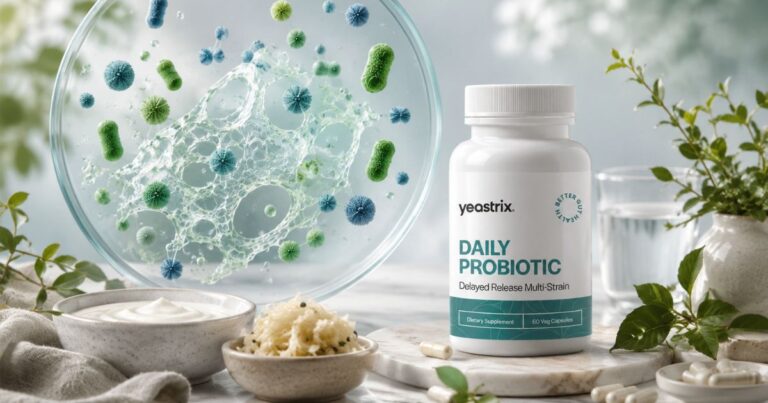
Yeastrix Daily Probiotic was developed by naturopath Eric Bakker to provide broad-spectrum support for the gut microbiome using a combination of carefully selected probiotic strains.
Rather than focusing on a single ingredient or an exceptionally high CFU count, the formula was designed around several principles discussed throughout this article:
- A diverse blend of probiotic strains to support overall microbial balance.
- Delayed-release capsules designed to help protect probiotics during digestion.
- A formulation intended to support digestive and gut health as part of a healthy lifestyle.
- High-quality ingredients without unnecessary fillers or artificial additives.
It’s important to note that no probiotic supplement can guarantee the prevention or treatment of yeast infections. However, a thoughtfully formulated probiotic may be a valuable addition to a broader approach that includes appropriate medical care, healthy lifestyle habits, and support for the gut and vaginal microbiome.
If you’re considering a probiotic, we encourage you to compare products carefully, understand the evidence behind different strains, and choose an option that aligns with your health goals.
| Look for | Why it matters |
|---|---|
| Identified strains | Clinical evidence is strain-specific |
| Multiple strains | Broader microbiome support |
| Delayed-release capsule | Improves survivability |
| Quality manufacturing | Helps ensure potency |
| Appropriate CFU count | Quality matters more than sheer numbers |
Frequently Asked Questions
No. Current evidence does not support probiotics as a standalone treatment for an active yeast infection. Antifungal medications remain the standard first-line treatment. Probiotics may help support the vaginal microbiome and reduce the risk of recurrence in some women when used alongside appropriate medical care.
Research has most commonly investigated strains such as Lacticaseibacillus rhamnosus, Limosilactobacillus reuteri, Lactobacillus acidophilus, and several other Lactobacillus species. Results vary between studies, but these strains have been among the most extensively researched.
There isn’t a single answer. Some people notice changes within a few weeks, while others require longer periods of consistent use. Benefits are generally associated with regular daily use rather than occasional supplementation.
Many healthcare practitioners recommend probiotics alongside antifungal treatment as part of a broader management strategy. If you’re taking prescription medication, discuss the timing of supplements with your healthcare provider.
Yes. Antibiotics can reduce populations of beneficial bacteria, including Lactobacillus species, making it easier for Candida to overgrow. This is one reason some people consider probiotics during or after antibiotic treatment.
Some people experience temporary digestive changes such as mild bloating or gas when first introducing probiotics. However, there is currently limited evidence that probiotics themselves trigger a true “Candida die-off” reaction.
Both have been studied. Oral probiotics are generally more widely available and may provide broader gut microbiome support, while vaginal probiotics deliver bacteria directly to the vaginal environment. Current evidence has not established one approach as consistently superior.
Many clinical studies have evaluated probiotics when taken consistently over weeks or months. If you choose to take a probiotic, regular daily use is generally considered more beneficial than taking it only occasionally.
Final Thoughts
Probiotics have become one of the most widely discussed approaches to supporting women with recurrent yeast infections, and it’s easy to see why. Our understanding of the vaginal microbiome has grown enormously over the past decade, shifting the focus from simply eliminating Candida to supporting the beneficial bacteria that help keep it in balance.
Current evidence suggests that certain probiotic strains may play a valuable role in supporting microbial health and reducing the risk of recurrent vulvovaginal candidiasis when used alongside appropriate medical treatment and healthy lifestyle habits. At the same time, it’s important to have realistic expectations. Probiotics are not a replacement for antifungal medication when treating an active infection, and no single supplement can prevent yeast infections in every person.
Perhaps the most important message is that lasting vaginal health rarely depends on one product alone. A balanced diet, appropriate medical care, good metabolic health, thoughtful antibiotic use, and consistent support for the gut and vaginal microbiome all work together.
As our understanding of the human microbiome continues to grow, probiotics are likely to become an increasingly important part of strategies aimed at supporting long-term vaginal health. While researchers continue to investigate which strains work best and who is most likely to benefit, one message is already clear: choosing a quality probiotic backed by sound science is far more important than simply choosing the one with the biggest number on the label.
References
Falagas, M. E., Betsi, G. I., & Athanasiou, S. (2006). Probiotics for prevention of recurrent vulvovaginal candidiasis: a review. The Journal of antimicrobial chemotherapy, 58(2), 266–272. https://doi.org/10.1093/jac/dkl246
Farr, A., Kiss, H., Holzer, I., Husslein, P., Petricevic, L., Mattsby-Baltzer, I., et al. (2021). Guideline: Vulvovaginal candidosis (AWMF 015/072, level S2k). Mycoses, 64(6), 583–602.
Hill, C., Guarner, F., Reid, G., Gibson, G. R., Merenstein, D. J., Pot, B., Morelli, L., Canani, R. B., Flint, H. J., Salminen, S., Calder, P. C., & Sanders, M. E. (2014). Expert consensus document: The International Scientific Association for Probiotics and Prebiotics consensus statement on the scope and appropriate use of the term probiotic. Nature Reviews Gastroenterology & Hepatology, 11(8), 506–514.
Huang, H., Song, L., Zhao, W., & Li, Y. (2023). Probiotics for vulvovaginal candidiasis: A systematic review and meta-analysis. Frontiers in Cellular and Infection Microbiology, 13, 1173943.
O’Hanlon, D. E., Moench, T. R., & Cone, R. A. (2013). Vaginal pH and microbicidal lactic acid when lactobacilli dominate the microbiota. PLoS ONE, 8(11), e80074.
Petrova, M. I., Lievens, E., Malik, S., Imholz, N., & Lebeer, S. (2015). Lactobacillus species as biomarkers and agents that can promote various aspects of vaginal health. Frontiers in Physiology, 6, 81.
Reid, G., Burton, J., Hammond, J. A., & Bruce, A. W. (2004). Probiotics for the prevention of urogenital infections: The rationale and evidence. Current Pharmaceutical Design, 10(1), 1–14.
Sobel, J. D. (2016). Recurrent vulvovaginal candidiasis. American Journal of Obstetrics and Gynecology, 214(1), 15–21.
van de Wijgert, J. H. H. M., & Jespers, V. (2017). The global health impact of vaginal dysbiosis. Research in Microbiology, 168(9–10), 859–864.
Evidence Note: Scientific understanding of the human microbiome continues to evolve. We regularly review and update our educational content as new high-quality research becomes available.
Continue Reading
Medical Disclaimer: This article is intended for educational and informational purposes only and is not a substitute for professional medical advice, diagnosis, or treatment. It should not be used to diagnose or treat any health condition, including vulvovaginal candidiasis (yeast infections).