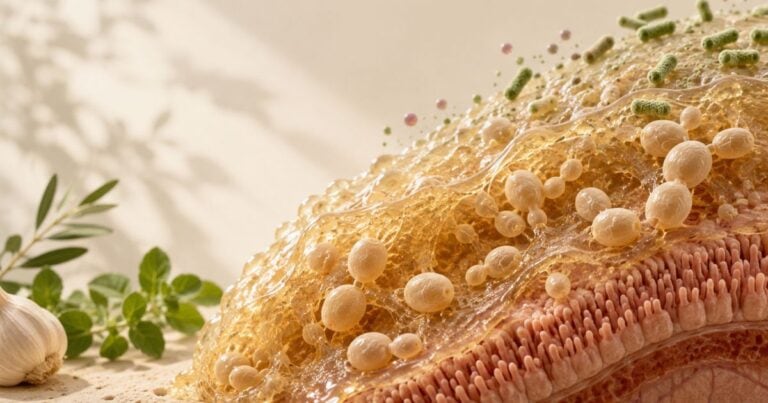
Cracked Corners of the Mouth: Causes, Symptoms, and Natural Support

Quick Answer: What Causes Cracked Corners of the Mouth?
Cracked corners of the mouth are commonly caused by a condition known as angular cheilitis. While Candida yeast is one possible cause, bacterial infections, repeated lip licking, dry skin, poorly fitting dentures, nutritional deficiencies, diabetes, and certain medications can also contribute. Because treatment depends on the underlying cause, persistent or recurring cracks should be assessed by a qualified healthcare professional.
Key Takeaways
- Cracked corners of the mouth are commonly caused by a condition called angular cheilitis, which may result from Candida, bacteria, irritation, or nutritional deficiencies.
- Common symptoms include redness, painful cracks, dryness, and bleeding in the affected area.
- Treatment focuses on identifying the underlying cause because the most appropriate treatment depends on why the condition developed.
- Seek medical advice if symptoms persist for more than two weeks, keep returning, or become increasingly painful.
- Maintaining good oral hygiene, staying well hydrated, and supporting overall health may help reduce the risk of recurrence.
What Are Cracked Corners of the Mouth?
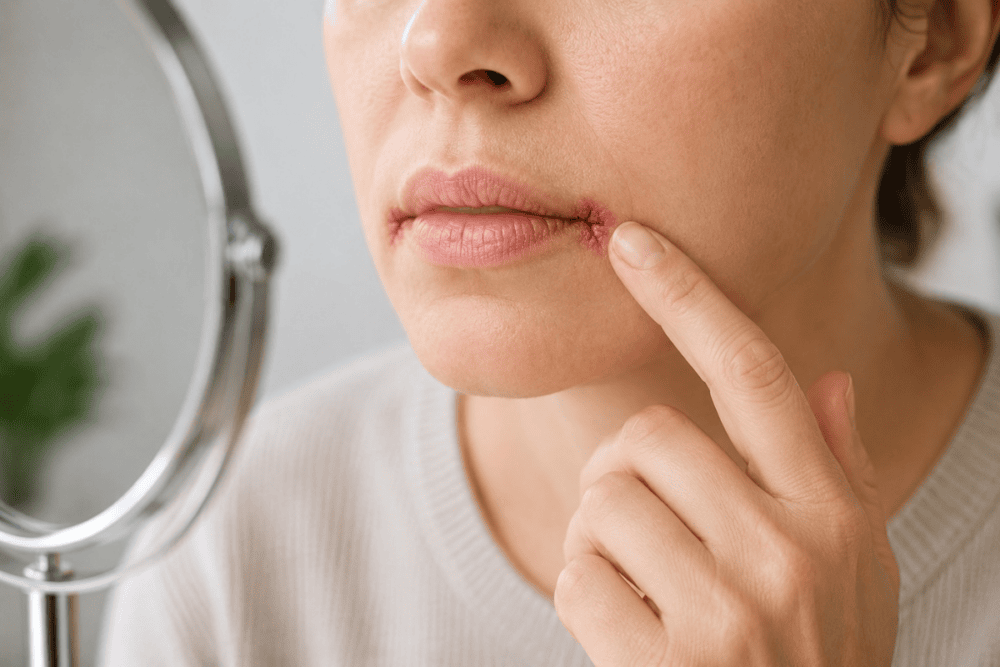
Cracked corners of the mouth are a common problem that can make everyday activities such as eating, drinking, smiling, or speaking uncomfortable. The skin at one or both corners of the mouth may become red, dry, inflamed, and split, sometimes forming painful cracks that bleed or crust over.
This condition is medically known as angular cheilitis. Although it may look like dry lips or a cold sore at first, angular cheilitis is a different condition with a range of possible underlying causes.
One of the most common misconceptions is that cracked mouth corners are always caused by Candida. While a Candida overgrowth can contribute to angular cheilitis in some people, it is far from the only explanation. Bacteria, irritation from saliva, nutritional deficiencies, poorly fitting dentures, diabetes, and certain medications can all play a role.
Understanding what is causing the cracks is the first step towards choosing the most appropriate treatment and reducing the likelihood of the problem returning.
What Causes Cracked Corners of the Mouth?
Cracked corners of the mouth usually develop because the delicate skin at the corners of the lips becomes irritated, inflamed, or infected. In many cases, more than one factor is involved. For example, saliva collecting at the corners of the mouth can weaken the skin, allowing yeast or bacteria to grow more easily.
Some of the most common causes include:
Angular Cheilitis
Angular cheilitis is the medical name for inflammation affecting one or both corners of the mouth. Rather than being a disease itself, it is a condition with a variety of possible underlying causes. Identifying those causes is important because successful treatment often involves addressing more than just the cracked skin.
Candida (Yeast)
Candida is a type of yeast that naturally lives on the skin and in the mouth. Under certain circumstances, it can multiply and contribute to angular cheilitis, particularly when saliva remains trapped at the corners of the mouth. People who wear dentures, have diabetes, have recently taken antibiotics, or have oral thrush may be at increased risk.
If you have white patches inside your mouth as well as cracked mouth corners, our guide to oral thrush explains the symptoms and causes in more detail.
Bacterial Infection
Not all cases are caused by yeast. Bacteria such as Staphylococcus aureus can also infect the damaged skin at the corners of the mouth. In some people, both bacteria and Candida are present at the same time, which is why obtaining the correct diagnosis can be important.
Repeated Lip Licking
Although licking dry lips may seem soothing, saliva quickly evaporates and leaves the skin even drier than before. Repeated wetting and drying of the corners of the mouth can cause irritation and create an environment where microorganisms are more likely to grow.
Nutritional Deficiencies
Deficiencies in iron, vitamin B12, folate, riboflavin (vitamin B2), and zinc have all been associated with angular cheilitis in some people. If cracked mouth corners keep returning despite good skin care, your healthcare professional may recommend investigating whether an underlying nutritional deficiency is contributing.
Symptoms of Cracked Corners of the Mouth
Symptoms can vary depending on the underlying cause and how severe the condition has become. Some people notice only mild dryness at the corners of the mouth, while others experience painful cracks that interfere with eating, drinking, or even smiling.
Common symptoms include:
- Redness and inflammation at one or both corners of the mouth
- Painful cracks or splits in the skin
- Dryness, scaling, or crusting
- Bleeding when opening the mouth widely
- Burning, stinging, or tenderness
- Itching around the affected area
- Difficulty eating spicy, salty, or acidic foods
- Recurrent cracking that heals and then returns
If Candida is contributing to the condition, you may also notice symptoms of oral thrush, such as creamy white patches inside the mouth, soreness, or changes in taste. In other cases, the cracks may be caused by bacteria, irritation, or nutritional deficiencies without any evidence of a yeast infection.
Because several conditions can produce similar symptoms, it’s important not to rely on appearance alone when deciding what treatment is appropriate.
Who Is More Likely to Develop Cracked Corners of the Mouth?
Although anyone can develop cracked corners of the mouth, some people are more likely to experience angular cheilitis than others. Often, several risk factors occur together rather than a single cause acting alone.
People Who Wear Dentures
Poorly fitting dentures can create folds at the corners of the mouth where saliva collects. Constant moisture softens the skin, making it easier for Candida or bacteria to grow.
People Who Frequently Lick Their Lips
Repeatedly licking the lips may seem to provide temporary relief, but saliva quickly evaporates, leaving the skin drier than before. Over time, this cycle can damage the delicate skin at the corners of the mouth.
People Taking Antibiotics
Antibiotics can alter the natural balance of bacteria in the mouth and digestive tract. In some people, this creates an opportunity for Candida to multiply, increasing the risk of oral thrush and, in some cases, angular cheilitis.
If you’ve recently taken antibiotics, you may find our article on Candida and antibiotics helpful.
People with Diabetes
Higher glucose levels and changes in immune function can increase the likelihood of developing fungal and bacterial infections, including angular cheilitis.
Nutritional Deficiencies
Low levels of iron, vitamin B12, folate, riboflavin (vitamin B2), or zinc may contribute to cracked mouth corners in some individuals. If symptoms keep returning, your healthcare professional may recommend investigating whether an underlying deficiency is present.
Dry Mouth
Saliva plays an important role in protecting the mouth and surrounding skin. When saliva production is reduced, the tissues may become more vulnerable to irritation and infection. Learn more about how reduced saliva affects oral health in our guide to Dry Mouth and Candida: Is There a Connection?
Older Adults
As we age, changes in facial structure, denture use, medications, and reduced saliva production can all increase the likelihood of developing angular cheilitis.
How Do You Treat Cracked Corners of the Mouth?
The most effective treatment depends on identifying the underlying cause. While many mild cases improve with simple self-care, persistent or recurring angular cheilitis often requires treatment directed at the specific reason the condition developed.
Keep the Area Clean and Dry
Gently cleanse the affected area and avoid repeatedly wetting the corners of your mouth. Excess moisture from saliva can delay healing and encourage the growth of yeast or bacteria.
Avoid Lip Licking
Although it may provide temporary relief, lip licking usually makes the problem worse. As saliva evaporates, it leaves the skin drier and more prone to cracking.
Use a Protective Barrier
Your healthcare professional may recommend a protective barrier such as petroleum jelly or another suitable ointment to help protect the damaged skin while it heals.
Address Nutritional Deficiencies
If blood tests identify low levels of iron, vitamin B12, folate, riboflavin, or zinc, correcting these deficiencies may help reduce recurring episodes of angular cheilitis.
Treat Underlying Infections
If Candida or bacteria are contributing to the condition, your healthcare professional may prescribe an antifungal or antibacterial treatment. Because the causes vary, it is important not to assume that every case requires the same approach.
Support Overall Oral Health
Good oral hygiene, staying well hydrated, eating a balanced diet, and ensuring dentures fit properly may all help reduce the risk of recurrence.
If Candida is suspected to be contributing to your symptoms, you may also find our articles on oral thrush, white tongue and Candida, and Candida overgrowth helpful for understanding the wider picture.
How Long Does It Take for Cracked Corners of the Mouth to Heal?
The healing time depends on the underlying cause and how quickly it is addressed. Mild cases caused by irritation or dry skin may begin to improve within a few days once the area is protected and further irritation is avoided.
If angular cheilitis is caused by a fungal or bacterial infection, appropriate treatment prescribed by a healthcare professional is often needed before the skin can heal completely. Likewise, if an underlying nutritional deficiency, poorly fitting dentures, or another medical condition is contributing, these factors may also need to be addressed to prevent the problem from returning.
Many people hope for a fast or overnight cure, but there is rarely a quick fix. The most effective approach is to identify and treat the underlying cause rather than simply managing the symptoms. If the cracks fail to improve, continue to worsen, or keep coming back, it’s important to visit your healthcare professional.
When Should You See a Healthcare Professional?
Occasional cracked mouth corners often improve with simple self-care. You should seek advice from a healthcare professional if:
- The cracks persist for more than one to two weeks.
- They are becoming increasingly painful or swollen.
- There is significant bleeding, crusting, or discharge.
- Eating, drinking, or opening your mouth becomes difficult.
- The condition keeps returning.
- You have diabetes, wear dentures, or have a weakened immune system.
- You suspect an underlying nutritional deficiency.
Because several different conditions can cause cracked corners of the mouth, obtaining an accurate diagnosis helps ensure you receive the most appropriate treatment.
Supporting Healthy Mouth Corners Naturally
Although treating the underlying cause is the most important step, there are several everyday habits that may help support healthy skin and reduce the risk of cracked corners of the mouth returning.
Maintain Good Oral Hygiene
Brush your teeth twice daily, clean between your teeth, and keep dentures clean if you wear them. Good oral hygiene may help reduce the build-up of microorganisms that can contribute to infection.
Avoid Repeated Lip Licking
Constantly licking your lips or the corners of your mouth can worsen irritation by creating a cycle of moisture followed by drying. Applying a protective barrier recommended by your healthcare professional may be more beneficial.
Eat a Balanced Diet
Iron, B vitamins, folate, and zinc all play important roles in maintaining healthy skin. Eating a varied, nutrient-rich diet can help support overall health, although supplements should only be taken if recommended by your healthcare professional.
Stay Well Hydrated
Adequate hydration supports saliva production and helps maintain the health of the tissues in and around the mouth.
Address Underlying Health Conditions
If cracked corners of the mouth keep returning, it’s important to investigate potential underlying causes such as diabetes, poorly fitting dentures, nutritional deficiencies, or oral infections. Treating the underlying problem is often the most effective way to prevent recurrence.
If Candida is thought to be contributing to your symptoms, our articles on oral thrush, white tongue and Candida, and Candida overgrowth provide additional information about recognising and understanding these conditions.
Final Thoughts
Cracked corners of the mouth are a common problem that can have many different causes. Although Candida may contribute to some cases of angular cheilitis, it is only one of several possible explanations. Bacterial infections, irritation, nutritional deficiencies, dry mouth, dentures, and certain medical conditions may all play a role.
Because treatment depends on identifying the underlying cause, persistent or recurring symptoms should always be assessed by a qualified healthcare professional rather than relying on self-diagnosis.
For many people, simple measures such as maintaining good oral hygiene, avoiding repeated lip licking, staying well hydrated, and addressing any underlying health concerns can help support healing and reduce the likelihood of recurrence.
Understanding what causes cracked corners of the mouth is the first step towards choosing the most appropriate treatment and supporting long-term oral health.
Frequently Asked Questions
The most common cause is angular cheilitis, a condition that can result from irritation, excess moisture, Candida, bacteria, nutritional deficiencies, or other underlying health conditions.
Yes. Candida can contribute to angular cheilitis in some people, particularly if saliva collects at the corners of the mouth or following antibiotic use. However, it is only one of several possible causes.
Low levels of iron, vitamin B12, riboflavin (vitamin B2), folate, and zinc have all been associated with angular cheilitis in some people. A healthcare professional can determine wh
Mild cases may improve within a few days once the underlying irritation is addressed. More persistent cases caused by infection or nutritional deficiencies may take longer and require specific treatment.
Angular cheilitis itself is not usually considered contagious. However, if Candida or certain bacteria are contributing, the underlying microorganisms may be present naturally on the skin or in the mouth. The condition typically develops because the local environment allows them to overgrow, rather than because they are “caught” from another person.
You should seek medical advice if the cracks persist for more than one to two weeks. Or if they keep returning, become increasingly painful, or are accompanied by other concerning symptoms.
Disclaimer: This article is for educational and informational purposes only and is not intended to diagnose, treat, cure, or prevent any disease. Always seek advice from a qualified healthcare professional before making changes to your diet, starting supplements, or beginning any new health programme, especially if you have an underlying medical condition or are taking medication. Individual needs and responses can vary.