White Tongue and Candida: Causes, Symptoms, and When to Seek Help

A white-coated tongue can have several possible causes. This guide explores the connection between white tongue, oral Candida, and overall gut health.
Quick Answer: Is a White Tongue Always Candida?
A white tongue can have many causes, and Candida is only one of them. While oral thrush often produces creamy white patches that may leave red, irritated tissue underneath when gently removed, a white-coated tongue can also result from dehydration, dry mouth, smoking, poor oral hygiene, certain medications, or other tongue conditions.
If your white tongue is persistent, painful, or accompanied by symptoms such as mouth soreness, difficulty swallowing, or recurring infections, it’s important to seek advice from a qualified healthcare professional for an accurate diagnosis.
Key Takeaways
- A white tongue can have many causes, including dehydration, poor oral hygiene, smoking, and Candida.
- Oral thrush caused by Candida often produces creamy white patches, a white tongue may appear as a thin coating and often improves with hydration and proper care.
- Symptoms like pain or difficulty swallowing, or a persistent white coating lasting more than two weeks, warrant medical advice.
- Understanding the differences between a white tongue and oral thrush helps in accurate diagnosis—oral thrush requires specific treatment.
- Maintaining good oral hygiene, staying hydrated, and supporting overall health can prevent or alleviate a white tongue.
Estimated reading time: 10 minutes
Why Does a White Tongue Happen?
A healthy tongue is normally pink with tiny bumps called papillae covering its surface. These papillae help you taste, chew, and move food around your mouth.
Sometimes, dead cells, food debris, bacteria, or yeast can become trapped between the papillae, causing the tongue to appear white or coated. In many cases, this is temporary and improves with good oral hygiene and hydration.
However, a persistent white tongue may indicate an underlying issue that deserves closer attention. While Candida is one possible cause, several other conditions can produce a similar appearance. This is why it’s important not to assume that every white tongue is oral thrush.
Understanding the possible causes can help you recognise when a simple lifestyle change may be enough and when it’s time to seek professional medical advice.
Is a White Tongue Always Candida?
No. Although oral thrush caused by Candida is a well-known cause of a white tongue, it is far from the only one.
A white coating on the tongue can develop for many different reasons, including:
- Dehydration
- Dry mouth
- Poor oral hygiene
- Smoking or vaping
- Certain medications
- Fever or illness
- Oral thrush (Candida)
- Geographic tongue
- Leukoplakia
- Oral lichen planus
Some of these conditions are harmless and temporary, while others may require medical assessment or treatment.
For example, a white tongue caused by dehydration often improves with better hydration and oral hygiene. By contrast, oral thrush usually produces creamy white patches that may reveal red, sore tissue underneath if gently removed. Conditions such as leukoplakia or oral lichen planus should always be assessed by a healthcare professional because they require a different approach to diagnosis and management.
Rather than trying to diagnose yourself based on appearance alone, it’s helpful to consider any accompanying symptoms, recent illnesses, medications, and lifestyle factors.
Common Causes of a White Tongue
A white tongue can develop for several reasons, ranging from temporary lifestyle factors to underlying medical conditions. While Candida is one possible cause, it’s important to consider the broader picture before drawing conclusions.
Oral Thrush (Candida)
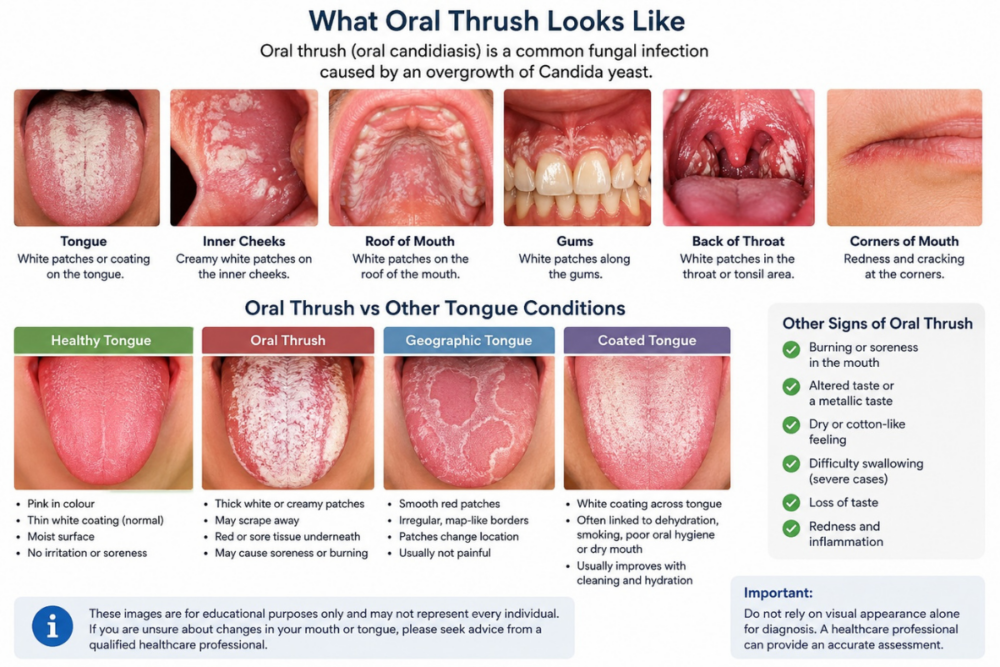
Oral thrush is a fungal infection caused by an overgrowth of Candida yeast in the mouth. It often produces creamy white patches on the tongue, inner cheeks, roof of the mouth, or throat. These patches may reveal red, tender tissue underneath if gently removed.
Oral thrush is more likely to occur after antibiotic use, when using inhaled corticosteroids, with poorly fitting dentures, or when the immune system is compromised. If you’d like to learn more about recognising and managing oral thrush, see our complete guide to oral thrush.
Dehydration
Not drinking enough water can reduce saliva production, allowing bacteria, dead cells, and debris to accumulate on the tongue. A white coating caused by dehydration often improves after increasing fluid intake and practising good oral hygiene.
Poor Oral Hygiene
If the tongue isn’t cleaned regularly, food particles, bacteria, and dead cells can build up between the papillae, creating a white or coated appearance. Brushing your tongue gently or using a tongue scraper may help remove this coating.
Dry Mouth
Saliva plays an important role in maintaining a healthy balance of microorganisms in the mouth. Conditions or medications that reduce saliva production may contribute to a white-coated tongue and increase the risk of oral infections, including oral thrush.
If you also experience a dry or sticky mouth, our article Dry Mouth and Candida: Is There a Connection? explains how reduced saliva can influence oral Candida and overall oral health.
Smoking and Vaping
Smoking and vaping can irritate the tissues of the mouth and alter the normal oral environment. They may also contribute to dry mouth and increase the likelihood of developing a white-coated tongue.
Geographic Tongue
Geographic tongue is a harmless condition that causes smooth, red patches surrounded by white borders. Because its appearance changes over time, it is sometimes mistaken for oral thrush or other tongue disorders.
Leukoplakia
Leukoplakia causes thick white patches that usually cannot be scraped away. It is more common in people who smoke or use tobacco products and should always be assessed by a healthcare professional, as it requires a different approach to diagnosis and management.
White Tongue vs Oral Thrush: What’s the Difference?
Although a white tongue and oral thrush can look similar, they are not the same thing.
A white tongue is a symptom that can have many different causes, whereas oral thrush is a specific fungal infection caused by an overgrowth of Candida yeast.
Here are some of the key differences:
| White Tongue | Oral Thrush |
|---|---|
| A symptom rather than a diagnosis | A fungal infection caused by Candida |
| May be caused by dehydration, dry mouth, smoking, poor oral hygiene, medications, or other conditions | Usually associated with Candida overgrowth in the mouth |
| Often appears as a thin white coating | Typically appears as creamy white patches |
| May improve with better hydration and oral hygiene | Often requires appropriate medical treatment, particularly if symptoms persist |
| Usually causes little or no discomfort | May cause soreness, burning, altered taste, or difficulty swallowing |
The appearance alone isn’t always enough to tell the difference. For example, some people with oral thrush have only a mild white coating, while others with dehydration or poor oral hygiene may develop a much thicker coating that closely resembles thrush.
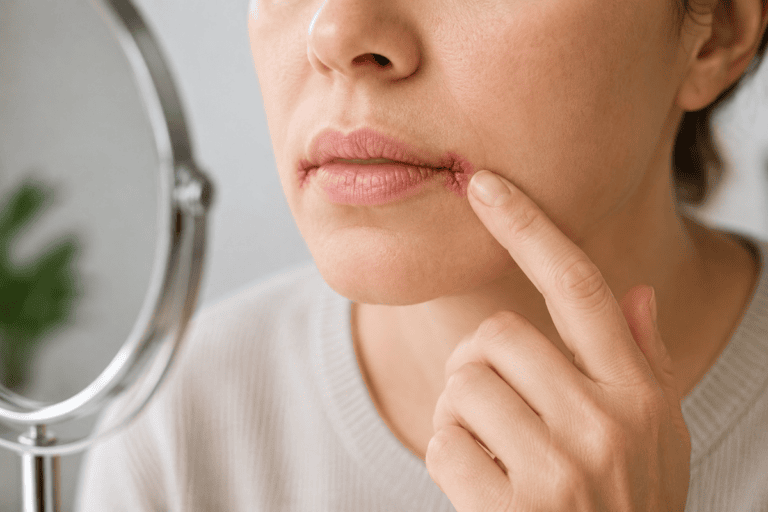
Some people may also notice cracked corners of the mouth (angular cheilitis) alongside a white tongue or oral thrush. If you’re experiencing soreness or splitting at the corners of your lips, our guide to cracked corners of the mouth explains the possible causes and treatment options.
If you’re unsure what you’re seeing, or if the white patches persist, become painful, or keep returning, it’s best to seek advice from a qualified healthcare professional.
For a more detailed look at recognising oral thrush, including photographs, symptoms, and treatment options, read our complete guide to oral thrush.
When Should You See a Healthcare Professional?
A temporary white coating on the tongue isn’t always a cause for concern, especially if it improves after increasing your fluid intake or improving your oral hygiene.
However, you should consider seeking medical advice if:
- The white coating lasts for more than two weeks.
- The patches cannot be easily removed.
- Your tongue becomes painful or swollen.
- You have difficulty eating or swallowing.
- You experience repeated episodes of oral thrush.
- You have diabetes or a weakened immune system.
- You’re unsure what is causing the changes in your tongue.
If oral thrush or Candida overgrowth keeps returning, your healthcare provider may recommend investigations to identify contributing factors such as diabetes, medication use, immune function, or the specific Candida species involved. Our guide to Candida Testing: How to Choose the Right Test explains the tests that may be used, when they’re appropriate, and how to interpret the results.
Supporting a Healthy Mouth Naturally
Keeping your mouth healthy involves more than simply brushing your teeth. Your oral microbiome—the community of bacteria, fungi, and other microorganisms living in your mouth—plays an important role in maintaining balance and protecting against infection.
Simple habits that may help support a healthy mouth include:
Practise Good Oral Hygiene
Brush your teeth twice a day, clean between your teeth daily, and gently brush your tongue or use a tongue scraper to remove excess debris and bacteria.
Stay Well Hydrated
Drinking enough water helps maintain saliva production. Saliva naturally cleanses the mouth and helps keep microorganisms in balance.
Limit Excess Sugar
A diet high in sugar and refined carbohydrates may encourage the growth of unwanted microorganisms, including Candida. Choosing whole, nutrient-rich foods may help support both oral and digestive health.
Avoid Smoking
Smoking and vaping can irritate the tissues of the mouth, reduce saliva production, and increase the risk of several oral health conditions.
Support Your Gut Health
The mouth and digestive tract are closely connected. Eating a varied, fibre-rich diet, managing stress, getting enough sleep, and supporting a healthy gut microbiome may contribute to overall wellbeing.
If you’re experiencing recurring oral thrush, you may also find our articles on Candida overgrowth, the Candida cleanse diet, and oral thrush helpful for understanding how these conditions can sometimes be related.
Final Thoughts
A white tongue can be alarming, but it isn’t a diagnosis on its own. While Candida and oral thrush are well-known causes, many other conditions—including dehydration, dry mouth, poor oral hygiene, smoking, and certain medications—can produce a similar appearance.
The key is to look beyond the colour of the tongue and consider any accompanying symptoms, recent illnesses, medications, and lifestyle factors. If the white coating is persistent, painful, or keeps returning, it’s important to seek advice from a qualified healthcare professional rather than relying on self-diagnosis.
For many people, simple measures such as improving oral hygiene, staying well hydrated, and supporting overall oral and gut health are valuable first steps. However, identifying the underlying cause remains the most important part of choosing the right treatment.
Remember, not every white tongue is oral thrush—but if oral thrush is suspected, early assessment and appropriate treatment can help prevent ongoing discomfort and recurrence.
Frequently Asked Questions
No. A white tongue can result from dehydration, poor oral hygiene, dry mouth, smoking, certain medications, or several other conditions. Oral thrush caused by Candida is just one possible cause.
Candida-related oral thrush often appears as creamy white patches on the tongue, inner cheeks, roof of the mouth, or throat. These patches may leave red, tender tissue underneath if gently removed.
Yes. Dehydration can reduce saliva production, allowing dead cells, bacteria, and debris to build up on the tongue, creating a white coating.
A white tongue is a symptom with many possible causes, while oral thrush is a specific fungal infection. If you’re unsure, or if symptoms persist, seek advice from a healthcare professional. Our complete guide to oral thrush explains the differences in more detail.
You should seek medical advice if the white coating lasts longer than two weeks, is painful, cannot be removed, keeps returning, or is accompanied by difficulty swallowing or other concerning symptoms.
A balanced diet that supports overall oral and digestive health may be beneficial, particularly if poor nutrition or excess sugar intake is contributing to oral health problems. However, treatment depends on the underlying cause of the white tongue.
Disclaimer: This article is for educational and informational purposes only and is not intended to diagnose, treat, cure, or prevent any disease. Always seek advice from a qualified healthcare professional before making changes to your diet, starting supplements, or beginning any new health programme, especially if you have an underlying medical condition or are taking medication. Individual needs and responses can vary.