
Oral Thrush: Symptoms, Causes, and Natural Support

Quick Answer: What Is Oral Thrush?
Oral thrush is a common fungal infection of the mouth caused by an overgrowth of Candida yeast. It often appears as creamy white patches on the tongue, inner cheeks, roof of the mouth, or throat and may be accompanied by soreness, redness, altered taste, or difficulty swallowing.
While Candida naturally lives in the mouth in small amounts, factors such as antibiotics, inhaled corticosteroids, dentures, dry mouth, smoking, diabetes, and a weakened immune system can sometimes allow it to grow out of balance.
Most cases of oral thrush respond well to appropriate treatment and good oral hygiene. Supporting overall gut and immune health may also help reduce the likelihood of recurrence in some individuals.
Key Takeaways
- Oral thrush is a fungal infection caused by an overgrowth of Candida yeast in the mouth.
- Common symptoms include white patches on the tongue, inner cheeks, gums, roof of the mouth, or throat.
- Oral thrush may cause soreness, redness, altered taste, cracking at the corners of the mouth, or difficulty swallowing.
- Antibiotics, inhaled steroid medications, dentures, smoking, diabetes, and dry mouth can increase the risk of oral thrush.
- Oral thrush is usually treatable, but recurrent infections may indicate an underlying imbalance that requires further investigation.
- Good oral hygiene, dietary habits, and supporting overall gut health may help reduce the likelihood of recurrence.
- Persistent symptoms should always be assessed by a qualified healthcare professional.
Estimated reading time: 15 minutes
Why Oral Thrush Deserves Attention
Oral thrush is often dismissed as a minor inconvenience, but it can sometimes be a sign that something deeper is going on. While many cases are linked to factors such as antibiotic use, dentures, dry mouth, or certain medications, recurrent oral thrush may indicate that the body’s natural microbial balance has been disrupted.
After nearly 40 years in clinical practice, naturopath Eric Bakker has seen many people struggle with recurring Candida-related symptoms affecting the mouth, digestive system, skin, and other areas of the body. While oral thrush itself requires appropriate diagnosis and treatment, understanding the factors that may contribute to Candida overgrowth can help support long-term health and wellbeing.
In this article, we’ll explore what oral thrush looks like, what causes it, common symptoms to watch for, and practical ways to support recovery.
Why Oral Thrush Happens
Your mouth is home to millions of microorganisms, including bacteria, fungi, and yeasts that normally exist in balance with one another. One of these yeasts is Candida, which naturally lives in the mouth, digestive tract, and other parts of the body.
Under normal circumstances, beneficial bacteria, saliva, and the immune system help keep Candida under control. However, when this balance is disrupted, Candida can multiply more rapidly and begin to cause symptoms.
This overgrowth may result in oral thrush, a fungal infection characterised by white patches, irritation, and inflammation within the mouth.
Several factors can increase the likelihood of oral thrush, including:
- Recent antibiotic use
- Inhaled corticosteroid medications
- Denture use
- Dry mouth
- Smoking
- Diabetes
- Nutritional deficiencies
- A weakened immune system
Not everyone with these risk factors will develop oral thrush. However, when multiple factors are present, the chances of Candida growing out of balance may increase.
For some people, oral thrush is an isolated problem that resolves quickly. For others, particularly those experiencing recurring infections, it may be worth exploring whether broader issues affecting gut health, immune function, or microbial balance are also playing a role.
What Does Oral Thrush Look Like?
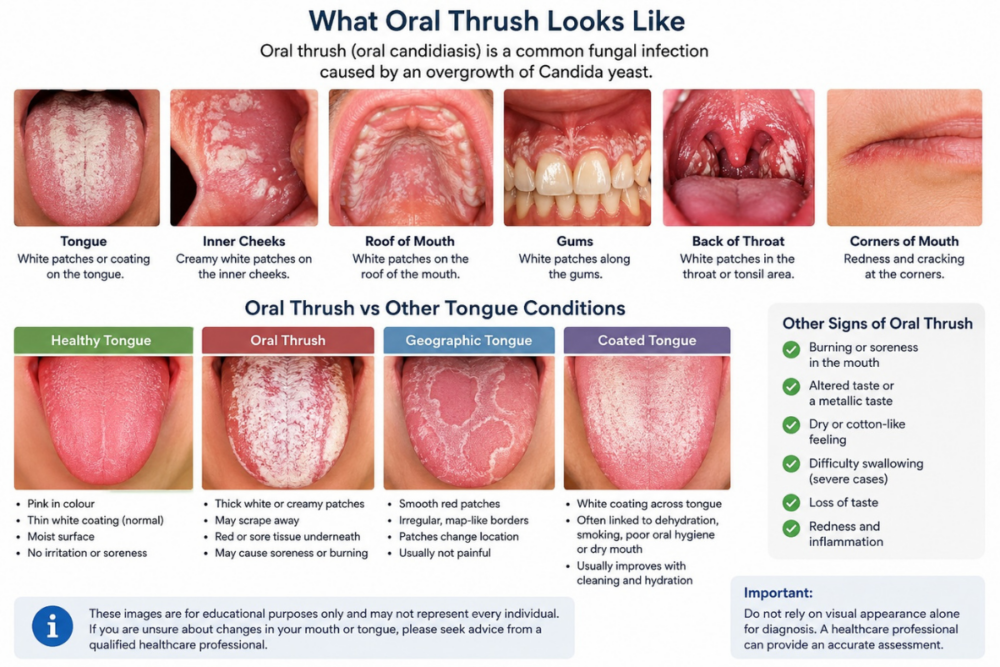
Oral thrush can appear slightly different from person to person, but the most common sign is the presence of creamy white or yellowish patches inside the mouth.
These patches may appear on:
- The tongue
- The inner cheeks
- The roof of the mouth
- The gums
- The back of the throat
- The tonsil area
In some cases, the patches can be gently scraped away, revealing red, irritated tissue underneath that may bleed slightly.
Other people may notice a thick white coating on the tongue, while some experience redness and soreness without obvious white patches.
Common signs of oral thrush include:
✅ White or cream-coloured patches
✅ A coated or furry-looking tongue
✅ Redness and irritation
✅ A burning sensation in the mouth
✅ Altered taste or a metallic taste
✅ Cracking at the corners of the mouth
✅ Difficulty swallowing in more severe cases
It’s important to remember that not every white tongue is caused by oral thrush. Dehydration, poor oral hygiene, smoking, geographic tongue, certain medications, and several other conditions can produce a similar appearance.
If you’d like to explore these differences in more detail, read our guide to White Tongue and Candida.
Because several conditions can produce similar symptoms, the appearance of your tongue or mouth alone can’t reliably confirm oral thrush. If your symptoms are persistent, recurring, or you’re unsure what’s causing them, it’s important not to assume Candida is responsible.
Our guide to Candida Testing: How to Test for Candida and Choose the Right Test explains when testing may be appropriate, which investigations healthcare practitioners may consider, and why identifying the underlying cause is often the most important first step.
Oral Thrush vs Other Tongue Conditions
One reason oral thrush can be confusing is that several other conditions may cause a white, coated, or unusual-looking tongue.
For example:
Oral Thrush
- Creamy white patches
- May scrape away
- Red tissue underneath
- Sometimes associated with soreness or burning
Geographic Tongue
- Smooth red patches with irregular borders
- Often resembles a map
- Usually harmless
- Patches may change location over time
Coated Tongue
- White coating across the tongue surface
- Often linked to dehydration, smoking, poor oral hygiene, or dry mouth
- Usually improves with tongue cleaning and hydration
Leukoplakia
- Thick white patches that do not easily scrape away
- More common in smokers
- Should always be assessed by a healthcare professional
Because these conditions can sometimes look similar, self-diagnosis is not always straightforward. If you’re unsure about changes in your mouth or tongue, seek advice from a qualified healthcare professional.
Common Symptoms of Oral Thrush
While the white patches associated with oral thrush are often the most noticeable sign, symptoms can vary from person to person. Some people experience only mild discomfort, while others find eating, drinking, or swallowing becomes uncomfortable.
Common symptoms of oral thrush include:
- White or cream-coloured patches inside the mouth
- A coated or furry-looking tongue
- Redness and inflammation
- Burning or soreness in the mouth
- Cracking at the corners of the lips (angular cheilitis)
- Loss of taste or an altered taste sensation
- Difficulty swallowing in more severe cases
- A cotton-like feeling inside the mouth
In infants, oral thrush may cause feeding difficulties, fussiness, or white patches inside the cheeks and on the tongue. In adults, symptoms are often more subtle and may come and go over time.
Some people also report experiencing oral thrush alongside other symptoms that may affect the digestive system, skin, or vaginal health. While this doesn’t necessarily mean Candida is affecting multiple areas of the body, recurring infections may warrant further investigation.
If symptoms persist, worsen, or repeatedly return after treatment, it’s important to seek professional medical advice.
What Causes Oral Thrush?
Oral thrush develops when Candida yeast grows beyond its normal levels in the mouth. While Candida naturally lives in the oral cavity, certain factors can disrupt the balance between yeast, beneficial bacteria, and the immune system.
Some of the most common causes and risk factors include:
Antibiotic Use
Antibiotics can reduce populations of beneficial bacteria that normally help keep Candida under control. This is one reason oral thrush sometimes develops after a course of antibiotics.
Inhaled Steroid Medications
People who use corticosteroid inhalers for asthma or respiratory conditions may be at increased risk, particularly if they do not rinse their mouth after use.
Dentures
Poorly fitting dentures or inadequate denture hygiene can create an environment where Candida thrives.
Dry Mouth
Some people with oral thrush notice that their mouth feels dry or sticky. Saliva helps maintain a healthy balance of bacteria and yeast within the mouth. When saliva production decreases, Candida may be able to multiply more easily, increasing the risk of oral thrush. Learn more in our article, Dry Mouth and Candida: Is There a Connection?
Smoking
Smoking can alter the oral environment and has been associated with an increased risk of Candida overgrowth.
Diabetes
People living with diabetes are more likely to develop oral thrush, particularly when blood sugar levels are not well controlled. If you’d like to explore this topic in more detail, read our guide to Can Diabetes Cause Oral Thrush? For a broader overview of diabetes and recurrent Candida infections throughout the body, see Diabetes and Yeast Infections: Causes, Symptoms & Natural Support.
A Weakened Immune System
People with compromised immune function may be more susceptible to oral thrush and other fungal infections.
In many cases, oral thrush develops because several risk factors occur together rather than from a single cause alone.
Is Oral Thrush a Sign of Candida Overgrowth?
This is one of the most common questions people ask after being diagnosed with oral thrush.
The answer is: sometimes, but not always.
Oral thrush is caused by an overgrowth of Candida yeast in the mouth. However, this does not automatically mean you have widespread Candida overgrowth throughout the digestive tract or elsewhere in the body.
Many cases of oral thrush are linked to specific local factors such as:
- Recent antibiotic use
- Inhaled corticosteroid medications
- Dentures
- Dry mouth
- Smoking
When these factors are addressed, the oral thrush often improves without further complications.
However, some people experience recurrent oral thrush alongside other symptoms such as:
- Digestive discomfort
- Bloating
- Excessive gas
- Sugar cravings
- Fatigue
- Recurrent vaginal yeast infections
- Skin-related symptoms
In these situations, some healthcare practitioners may explore whether broader factors affecting gut health, microbial balance, or immune function could be contributing to the recurrence of symptoms.
It’s important to remember that oral thrush alone cannot diagnose Candida overgrowth elsewhere in the body. Many conditions can cause similar symptoms, which is why a comprehensive assessment is often necessary.
Rather than focusing solely on the mouth, a broader view of overall health, diet, lifestyle, medications, and digestive function can sometimes provide valuable insights into why oral thrush keeps returning.
How Is Oral Thrush Treated?
Most cases of oral thrush respond well to appropriate treatment once the underlying cause is identified.
Treatment commonly involves:
- antifungal mouth gels or oral suspensions (such as miconazole or nystatin)
- antifungal tablets for more persistent infections
- improving oral hygiene
- cleaning dentures thoroughly
- rinsing the mouth after steroid inhalers
- correcting underlying causes where possible
Many people also choose to support their recovery through diet, probiotics and overall gut health, although these approaches should complement—not replace—appropriate medical treatment when it’s needed.
Natural Ways to Support Recovery
Treatment for oral thrush should always follow the advice of your healthcare professional. However, many people also look for practical ways to support oral health and reduce the likelihood of recurrence.
Maintain Good Oral Hygiene
Brush your teeth twice daily and gently clean your tongue. If you wear dentures, clean them thoroughly and remove them overnight unless otherwise advised.
Rinse After Using Inhalers
If you use a corticosteroid inhaler, rinse your mouth with water after each use. This simple habit may help reduce the risk of oral thrush developing.
Stay Hydrated
Adequate hydration supports saliva production, which plays an important role in maintaining a healthy oral environment.
Limit Excess Sugar
Candida thrives in sugary environments. Reducing excess sugar and highly processed foods may support both oral and digestive health.
Support Overall Gut Health
A healthy gut microbiome plays an important role in overall wellbeing. Many people choose to focus on a balanced diet rich in vegetables, fibre, healthy fats, and quality protein as part of a broader gut-health strategy.
Consider Probiotic Support
Some people choose to include probiotic-rich foods or probiotic supplements as part of their overall wellness routine. Probiotics may help support a healthy microbial balance within the digestive system.
Address Underlying Risk Factors
Managing underlying conditions such as diabetes is an important part of reducing the risk of recurrent oral thrush. For many people, improving blood sugar management not only supports overall health but may also help reduce the frequency of Candida infections.
Learn more: Diabetes and Yeast Infections: Causes, Symptoms & Natural Support.
When to See a Healthcare Professional
While oral thrush is often straightforward to treat, some situations warrant professional medical advice.
You should consider seeing a healthcare professional if:
- Symptoms persist despite treatment
- Oral thrush keeps returning
- You experience significant pain or difficulty swallowing
- The white patches spread or worsen
- You have an underlying health condition such as diabetes. If oral thrush keeps returning and you haven’t previously been diagnosed with diabetes, your healthcare provider may recommend checking your blood glucose levels, as recurrent Candida infections can sometimes be an early sign of diabetes or prediabetes. Our guide to Can Diabetes Cause Oral Thrush? explains why recurrent oral thrush may sometimes be associated with diabetes, the symptoms to watch for, and when it’s worth discussing blood glucose testing with your healthcare provider.
- You have a weakened immune system
- You are unsure whether the changes in your mouth are actually oral thrush
Because several conditions can resemble oral thrush, obtaining an accurate diagnosis is important. Early assessment may also help identify any underlying factors contributing to recurrent infections.
If symptoms are severe, persistent, or affecting your quality of life, don’t delay seeking professional advice.
Final Thoughts
Oral thrush is a common fungal infection that occurs when Candida grows out of balance within the mouth. While it can cause discomfort, irritation, and concern, most cases respond well to appropriate treatment and good oral hygiene practices.
For some people, oral thrush is an isolated event linked to factors such as antibiotics, dentures, inhaled steroid medications, or dry mouth. For others, recurrent infections may signal the need to explore broader issues affecting microbial balance, digestive health, or immune function.
The good news is that there are many practical steps that may help support recovery, including maintaining excellent oral hygiene, reducing excess sugar intake, staying hydrated, and addressing underlying risk factors where possible.
Most importantly, if symptoms persist or repeatedly return, seek advice from a qualified healthcare professional. An accurate diagnosis and personalised treatment plan remain the best foundation for long-term oral health and wellbeing.
FAQs About Oral Thrush
Oral thrush typically appears as creamy white or yellowish patches on the tongue, inner cheeks, roof of the mouth, gums, or throat. In some cases, these patches can be gently scraped away, revealing red, irritated tissue underneath.
Mild cases may sometimes improve if the underlying cause is addressed, such as completing a course of antibiotics or improving oral hygiene. However, many cases require treatment, particularly if symptoms are persistent, uncomfortable, or recurring.
Oral thrush is not generally considered highly contagious. Candida naturally lives in many people’s mouths without causing problems. However, infants, older adults, and people with weakened immune systems may be more susceptible to infection.
Common causes include antibiotic use, inhaled corticosteroid medications, dentures, smoking, dry mouth, diabetes, and conditions that affect immune function. Often, several risk factors occur together.
Yes. Antibiotics can reduce populations of beneficial bacteria that normally help keep Candida under control. This can create an environment where Candida is able to grow more readily, increasing the risk of oral thrush.
Not necessarily. Oral thrush is a Candida infection of the mouth, but it does not automatically mean Candida is overgrowing elsewhere in the body. However, recurrent oral thrush may prompt some healthcare practitioners to explore broader factors affecting gut health, microbial balance, or immune function.
Good oral hygiene, cleaning dentures properly, rinsing your mouth after using steroid inhalers, staying hydrated, reducing excess sugar intake, and addressing underlying health conditions may help reduce the risk of recurrence.
You should seek medical advice if symptoms persist, repeatedly return, cause significant discomfort, make swallowing difficult, or if you are unsure whether the condition is actually oral thrush. A healthcare professional can provide an accurate diagnosis and appropriate treatment recommendations.
Povidone-iodine (PVP-I) is a broad-spectrum antiseptic with well-established antibacterial and antifungal activity. Laboratory studies have shown it can inhibit Candida albicans and reduce Candida biofilms on surfaces such as dentures and medical devices. Older clinical studies have also investigated povidone-iodine as a treatment for Candida infections in other parts of the body.
However, there is currently limited clinical evidence that brushing the tongue with iodine or using povidone-iodine mouth rinses is an effective treatment for oral thrush. Mechanical cleaning of the tongue with a tongue scraper or toothbrush may help remove surface debris and microorganisms, but persistent oral thrush should be assessed and treated by a healthcare professional.
If you’re considering using iodine products in your mouth, speak with your dentist or healthcare provider first, particularly if you have thyroid disease, are pregnant, or are sensitive to iodine.
Yes, but gently.
A tongue scraper or soft toothbrush may help remove surface debris, bacteria, food particles and some of the fungal coating that can develop with oral thrush. However, tongue scraping alone will not eliminate a Candida infection. If the white patches persist, recur frequently or are painful, it’s important to seek appropriate medical assessment and treatment.
Some probiotic strains have demonstrated the ability to inhibit Candida albicans growth and adhesion in laboratory and experimental studies. While more human clinical research is needed, probiotics may help support a healthy balance of microorganisms within the mouth and digestive tract as part of an overall gut health strategy.
Oral thrush isn’t generally considered highly contagious between healthy adults. Candida naturally lives in many people’s mouths without causing disease. However, infants, older adults, and people with weakened immune systems may be more susceptible, so avoiding close oral contact until treatment has started is a sensible precaution.
Want to understand yeast infections beyond the mouth? Read our complete guide to Yeast Infections: Causes, Symptoms, Treatment & Natural Support to learn about the different types of yeast infections, their causes, treatment options, and practical ways to support long-term health.
References
Akpan, A., & Morgan, R. (2002). Oral candidiasis. Postgraduate medical journal, 78(922), 455–459. https://doi.org/10.1136/pmj.78.922.455
Williams, D., & Lewis, M. (2011). Pathogenesis and treatment of oral candidosis. Journal of oral microbiology, 3, 10.3402/jom.v3i0.5771. https://doi.org/10.3402/jom.v3i0.5771
Disclaimer: This article is for educational and informational purposes only and is not intended to diagnose, treat, cure, or prevent any disease. The information provided reflects a naturopathic perspective on diet, gut health, and Candida overgrowth and should not be considered medical advice.Always consult a qualified healthcare professional before making significant changes to your diet, taking supplements, or starting any new health program, especially if you are pregnant, nursing, have a medical condition, or are taking prescription medications.