
Can You Eat Potatoes on the Candida Diet?
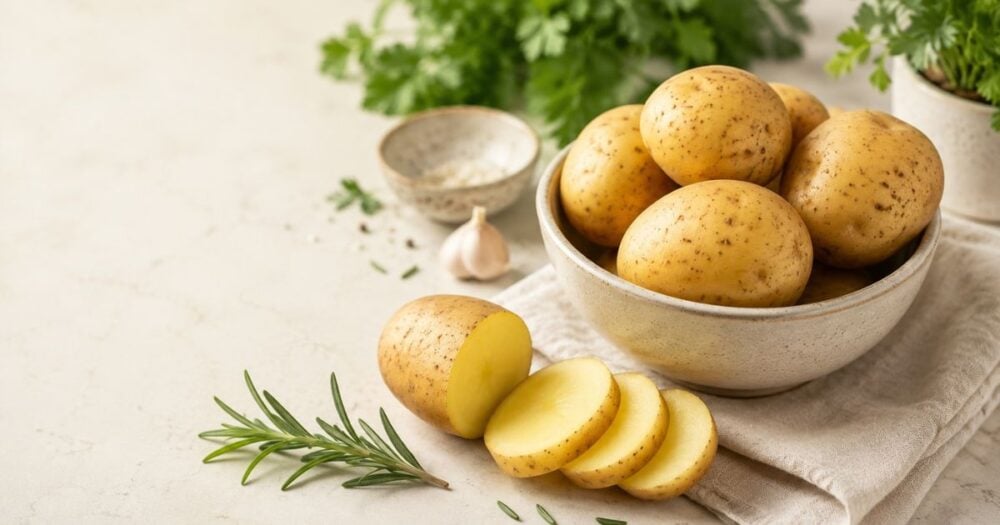
Quick Answer: Can You Eat Potatoes on the Candida Diet?
Yes. Many people can include potatoes as part of a balanced Candida-friendly eating pattern, although some choose to limit them during more restrictive phases of a Candida diet. Portion size, preparation method, the type of potato, and individual tolerance can all influence how potatoes fit into your diet.
Potatoes are nutrient-rich starchy vegetables that provide carbohydrates, potassium, vitamin C and other nutrients. Their effect on blood glucose can vary substantially depending on the variety, cooking method, serving temperature and what they are eaten with.
There is no good evidence that potatoes themselves cause Candida overgrowth. If you have diagnosed candidiasis, diet should not replace appropriate medical evaluation and treatment.
Key Takeaways
- Potatoes can be included on a Candida diet, but they are usually best introduced after the initial cleanse phase.
- White potatoes and sweet potatoes are both rich in carbohydrates, although sweet potatoes generally provide more fibre and nutrients.
- Potatoes contain a substantial amount of starch, which is digested into glucose and can contribute to the carbohydrate load of a meal. This is one reason some Candida-focused eating plans limit potatoes during more restrictive phases.
- Cooked and cooled potatoes contain resistant starch, which may help support beneficial gut bacteria.
- Portion size, preparation method, and individual tolerance are often more important than avoiding potatoes completely.
- Pairing potatoes with protein, healthy fats, and non-starchy vegetables may help reduce blood sugar spikes.
- Listening to your body and monitoring symptoms is the best way to determine whether potatoes fit into your Candida-focused eating plan.
Estimated reading time: 16 minutes
Why There Isn’t a Simple Yes or No Answer
Potatoes are one of the most debated foods on a Candida diet. Some people avoid them completely because they are rich in starch, while others successfully include small amounts as part of a balanced eating plan.
After nearly 40 years in clinical practice, naturopath Eric Bakker has found that there is rarely a one-size-fits-all answer when it comes to carbohydrates and Candida. Factors such as portion size, preparation method, symptom severity, and individual tolerance all play an important role.
In this article, we’ll explore how potatoes affect blood sugar, how different types of potatoes compare, and when they may fit into a Candida-focused diet.
Why Are Potatoes Controversial on a Candida Diet?
Potatoes often divide opinion in the Candida community. Some people consider them a healthy whole food packed with nutrients, while others avoid them entirely because of their starch content.
The concern comes down to one simple fact: potatoes are rich in carbohydrates. During digestion, these carbohydrates are broken down into glucose, which the body uses for energy.
However, the story doesn’t end there.
Unlike highly processed foods such as white bread, pastries, or sugary breakfast cereals, potatoes are whole foods that provide important nutrients including potassium, vitamin C, vitamin B6 and fibre. They also contain starch, including resistant starch, particularly after cooking and cooling.
This creates a dilemma for many people following a Candida diet:
- Are potatoes too high in starch?
- Do they feed Candida?
- Are sweet potatoes better than white potatoes?
- Does cooking method make a difference?
- Can resistant starch actually benefit gut health?
The answer is that potatoes aren’t automatically “good” or “bad.” Their suitability often depends on where you are in your healing journey, how they are prepared, and how your body responds to them.
For some people with active symptoms, potatoes may be best avoided temporarily. For others, particularly those further along in their recovery, potatoes can be included as part of a balanced, nutrient-dense diet.
Eric Bakker on Potatoes and the Candida Diet
Wondering whether potatoes really belong on a Candida diet? In this video, naturopath Eric Bakker takes a closer look at potatoes, their starch content, and where they may fit into a Candida-focused eating plan.
Eric has worked with dietary approaches to digestive and Candida-related concerns for almost 40 years, and in his experience, there isn’t always a simple “yes” or “no” when it comes to individual foods. Portion size, preparation, overall diet, and individual tolerance can all make a difference.
Watch the video below, then continue reading for a closer look at the nutritional differences between potatoes, sweet potatoes, and other starchy vegetables.
/
Are Potatoes Vegetables or Starches?
Technically, potatoes are vegetables. They grow underground and belong to the nightshade family, alongside tomatoes, capsicums, and eggplants. However, from a nutritional perspective, potatoes are often classified as a starchy vegetable because they contain significantly more carbohydrates than non-starchy vegetables such as broccoli, cauliflower, zucchini, or leafy greens.
This distinction is important when following a Candida diet.
Non-starchy vegetables tend to have a lower impact on blood sugar and are generally encouraged throughout a Candida cleanse. Potatoes, on the other hand, contain larger amounts of starch that are converted into glucose during digestion.
To put this into perspective:
- One cup of broccoli contains around 6 grams of carbohydrates.
- One medium potato contains around 30–35 grams of carbohydrates.
- Sweet potatoes contain similar carbohydrate levels, although they generally provide more fibre and certain nutrients.
This doesn’t mean potatoes are unhealthy. Far from it. Potatoes provide valuable vitamins, minerals, and energy. The question isn’t whether potatoes are nutritious—it’s whether the amount of starch they contain is appropriate for your current stage of healing.
For many people, non-starchy vegetables form the foundation of the early Candida diet, while potatoes are reintroduced later as symptoms improve and dietary restrictions become less strict.
Understanding the difference between non-starchy and starchy vegetables can help you make more informed food choices without unnecessarily eliminating nutritious foods from your diet. Individual tolerance varies, and your own experience is often the best guide.
Are Potatoes Bad for Candida?
No good evidence shows that eating potatoes causes Candida overgrowth. Potatoes are carbohydrate-rich foods, so some Candida-focused eating plans limit them during more restrictive phases. However, dietary carbohydrate intake should be considered in the context of the overall diet rather than assuming that a single food causes candidiasis.
Are Sweet Potatoes Better Than White Potatoes for Candida?
One of the most common questions people ask is whether sweet potatoes are a better choice than white potatoes during a Candida cleanse.
The short answer is: often yes, but not always.
Sweet potatoes can provide more fibre and beta-carotene than many white potato varieties, particularly orange-fleshed varieties. Their fibre content may help contribute to a slower digestive response, although the overall glycaemic response depends on the variety, preparation and meal.
White potatoes, however, shouldn’t automatically be dismissed. They provide valuable nutrients too, including potassium, vitamin C, and vitamin B6.
Here’s a simple comparison:
| White potatoes | Sweet potatoes |
|---|---|
| Glycaemic response varies considerably by variety and preparation | Glycaemic response varies considerably by variety and preparation |
| Good source of potassium and vitamin C | Rich in beta-carotene in orange-fleshed varieties |
| Can provide resistant starch when cooked and cooled | Can also provide resistant starch when cooked and cooled |
The way potatoes are prepared often matters more than the type of potato itself.
For example:
❌ Hot mashed potatoes with gravy may raise blood sugar quickly.
✅ Cooking and cooling can increase resistant starch and may reduce the glycaemic response compared with some freshly cooked preparations.
Similarly:
❌ Sweet potato fries cooked in unhealthy oils may not support your goals.
✅ Baked sweet potato served alongside vegetables and quality protein is a very different meal.
Rather than focusing solely on whether a potato is white or orange, it can be more helpful to consider the overall meal, portion size, and how your body responds.
Can You Eat Sweet Potato (Kūmara) on the Candida Diet?
Yes. Sweet potato, known as kūmara in New Zealand, can be included in a Candida-friendly eating pattern for many people. It is a nutrient-rich starchy vegetable that provides carbohydrate, fibre and plant compounds such as beta-carotene, depending on the variety.
Sweet potato is sometimes preferred over white potato because some varieties provide more fibre and have a lower glycaemic response. However, this can vary according to the variety, portion size and cooking method.
Sweet potato should not be considered automatically “safe” while white potato is “bad.” Both are whole-food sources of carbohydrate, and individual tolerance matters. A modest serving of baked or steamed sweet potato alongside protein, healthy fats and non-starchy vegetables may be a reasonable way to reintroduce starchy carbohydrates.
Kumara varieties also differ. Orange-fleshed kumara is particularly rich in beta-carotene, while purple and other varieties contain different naturally occurring plant compounds.
What About White, Red and Purple Potatoes?
| Potato | What to know |
|---|---|
| White potatoes | Starchy whole food providing potassium, vitamin C and other nutrients |
| Red potatoes | Often eaten with their skin, which contributes fibre and other nutrients |
| Purple potatoes | Contain anthocyanin pigments and other plant compounds |
| Baby potatoes | Usually simply younger/smaller potatoes; portion and preparation still matter |
| Sweet potato / kumara | Different plant from ordinary potato; provides fibre and carotenoids depending on variety |
Do Potatoes Raise Blood Sugar?
When discussing potatoes and Candida, you’ll often come across the term glycaemic index (GI). Understanding what it means can help you make more informed food choices.
The glycaemic index (GI) describes how quickly a carbohydrate-containing food raises blood glucose compared with a reference food. The glycaemic response can vary according to the type of potato, cooking and processing method, serving size, and what the potato is eaten with.
Because potatoes are rich in starch and can contribute a substantial amount of carbohydrate to a meal, some Candida-focused eating plans limit them during their more restrictive stages. However, there is no simple evidence that eating potatoes causes Candida overgrowth or that avoiding potatoes treats candidiasis. For this reason, many Candida diets focus on choosing foods that have a lower impact on blood sugar.
Potatoes can vary considerably in their glycaemic index depending on:
- The type of potato
- How it is cooked
- Whether it is eaten hot or cold
- What foods it is eaten with
For example:
- Hot, mashed or highly processed potato preparations can have a higher glycaemic response than some less-processed preparations.
- Boiled potatoes may have a lower glycaemic response than some mashed or processed preparations, although results vary by variety and cooking method.
- Cooked and cooled potatoes often have a lower glycaemic impact because some of their starch changes into resistant starch.
- Eating potatoes alongside protein, healthy fats, and fibre-rich vegetables can further reduce blood sugar spikes.
Sweet potatoes are often considered a lower-glycaemic option than some white potato varieties, although there is significant variation between different types and cooking methods.
The important takeaway is that the glycaemic impact of potatoes is not fixed. Preparation matters. A small serving of cooled potatoes alongside a balanced meal can affect the body very differently than a large serving of hot mashed potatoes eaten on their own.
This is one reason why some people successfully include potatoes in a Candida-focused diet, while others choose to avoid them during the early stages of a cleanse.
Does Cooking and Cooling Potatoes Make a Difference?
Here’s something that surprises many people:
A cooled potato may affect your gut differently than a freshly cooked hot potato.
What Is Resistant Starch?
When potatoes are cooked and then allowed to cool, some of their digestible starch changes into what is known as resistant starch. Cooked-and-cooled starch can undergo retrogradation and increase resistant starch; the resulting glycaemic response can differ from freshly cooked preparations.
In simple terms, resistant starch behaves more like fibre than sugar.
This is important because beneficial gut bacteria can use resistant starch as a food source. A healthy and diverse gut microbiome plays an important role in digestive health and may help maintain microbial balance within the gut.
Foods that can contain resistant starch include:
- Cooked and cooled potatoes
- Green bananas
- Cooked and cooled rice
- Legumes
- Some whole grains
If you’ve already read our articles on bananas or brown rice, you’ll recognise a common theme: preparation can sometimes be just as important as the food itself.
Does this mean potato salad is a health food?
Not necessarily! Potatoes still contain carbohydrates, and portion size remains important. However, cooling potatoes may reduce their glycaemic impact and increase their resistant starch content, making them a potentially better option than freshly cooked potatoes for some people.
As always, the best approach is to introduce foods gradually, monitor your symptoms, and pay attention to how your body responds.
When Can You Reintroduce Potatoes on a Candida Diet?
Whether potatoes belong in your Candida diet often depends on where you are in your healing journey.
During the early stages of a Candida cleanse, many people choose to focus on non-starchy vegetables, healthy fats, quality proteins, and lower-sugar foods. This approach may help reduce sugar cravings and support more stable blood sugar levels while the gut begins to rebalance.
As symptoms improve, however, some people find they can gradually reintroduce certain carbohydrate-rich foods without any noticeable problems. Potatoes are often one of the foods that gets tested during this phase.
You may be more likely to tolerate potatoes if:
✅ Your symptoms have improved significantly
✅ Sugar cravings are under control
✅ You have successfully reintroduced other whole-food carbohydrates
✅ You tolerate foods such as brown rice or oats without difficulty
✅ Your overall diet is rich in vegetables, protein, and healthy fats
You may wish to limit or avoid potatoes for a while longer if:
❌ You’re experiencing active symptoms such as bloating, thrush, digestive discomfort, or intense sugar cravings
❌ You’re in the first few weeks of a strict Candida-friendly eating pattern
❌ You notice symptoms worsen after eating starchy foods
❌ You’re struggling to maintain stable energy or blood sugar levels
It’s also worth remembering that potatoes rarely cause problems in isolation. A small serving of potatoes alongside protein, healthy fats, and vegetables is very different from a large plate of chips, fries, or heavily processed potato products.
Ultimately, there is no universal answer. Some people do well with moderate amounts of potatoes, while others prefer to wait until their symptoms have settled before reintroducing them. Paying attention to your body’s response is often more valuable than following rigid food rules.
Are Potato Chips and Fries OK on a Candida Diet?
Potato chips and French fries are different from eating a whole potato. While potatoes themselves can provide fibre, potassium, vitamin C and other nutrients, commercially prepared chips and fries are often highly processed and may contain added oils, excess salt, flavourings or other ingredients.
For this reason, chips and fries are generally not the best choice during a Candida-focused eating plan, particularly during a more restrictive phase. The concern isn’t that potatoes themselves cause Candida overgrowth, but that heavily processed potato foods can make it easier to consume large amounts of refined fat, salt and calories while providing less nutritional value than a whole-food potato.
What About Homemade Potato Chips or Fries?
Homemade versions can be a better option because you have more control over the ingredients and cooking method. Try baking or air-frying potato wedges with a small amount of extra virgin olive oil, herbs and spices rather than deep-frying them.
Portion size still matters. A modest serving of homemade potato wedges eaten alongside protein and plenty of non-starchy vegetables is very different from a large serving of deep-fried fries eaten on their own.
If you’re reintroducing potatoes after a more restrictive Candida diet, whole potatoes prepared simply are generally a better place to start than chips or fries. Once you know you tolerate potatoes well, an occasional homemade version can fit into an overall balanced eating pattern.
The bigger picture matters more than one food. A Candida-friendly diet doesn’t need to mean permanently avoiding every food containing starch—it is about building a sustainable eating pattern based on whole foods, dietary variety and your individual tolerance.
Candida-Friendly Potato Recipe: Herbed Potato Salad
If you’re ready to reintroduce potatoes, this simple recipe makes use of cooled potatoes to increase resistant starch content while pairing them with healthy fats and fresh herbs.
Ingredients
- 2 cups baby potatoes
- 1 tablespoon extra virgin olive oil
- 1 tablespoon chopped parsley
- 1 tablespoon chopped chives
- ½ avocado, diced
- Sea salt and black pepper to taste
- Optional: squeeze of fresh lemon juice
Instructions
- Boil the potatoes until tender.
- Allow them to cool completely in the refrigerator for several hours or overnight.
- Cut into bite-sized pieces and place in a bowl.
- Add avocado, parsley, chives, olive oil, and lemon juice.
- Season with sea salt and black pepper.
- Toss gently and serve chilled.
This simple dish provides fibre, healthy fats, and resistant starch while avoiding added sugars and heavily processed ingredients. It also pairs well with grilled chicken, fish, or eggs for a balanced meal.
Final Thoughts
Potatoes aren’t automatically off-limits on a Candida diet, but they aren’t a free-for-all either.
Because potatoes are rich in starch, many people choose to avoid them during the early stages of a Candida-focused eating plan. However, potatoes are also nutrient-dense whole foods that provide fibre, potassium, vitamin C, and resistant starch—particularly when cooked and cooled.
For some people, potatoes can be successfully reintroduced once symptoms improve and blood sugar is more stable. Preparation method, portion size, and individual tolerance often matter more than the potato itself.
The goal of a Candida diet isn’t to fear food. It’s to create a way of eating that supports digestive health, microbial balance, and long-term wellbeing. As with many foods, the best approach is to start slowly, pay attention to your body’s response, and focus on overall dietary patterns rather than any single ingredient.
Remember, healing isn’t about perfection—it’s about finding what works best for you.
FAQs About Eating Potatoes on a Candida Diet
Many people choose to avoid potatoes during the early stages of a Candida cleanse or Candida-friendly eating pattern because they are rich in starch, which breaks down into glucose during digestion. As symptoms improve, some people successfully reintroduce potatoes in moderation while monitoring their body’s response.
Sweet potatoes are often considered a better choice because they contain more fibre, beta-carotene, and antioxidants. They may also have a gentler effect on blood sugar depending on the variety and preparation method. However, both sweet potatoes and white potatoes can fit into a balanced Candida-focused diet when eaten appropriately.
Potatoes contain carbohydrates that are converted into glucose during digestion, which is why some people limit them during active Candida overgrowth. Whether potatoes contribute to symptoms depends on factors such as portion size, preparation method, overall diet, and individual tolerance.
Resistant starch is a type of starch that resists digestion in the small intestine and passes into the colon, where it can be used by beneficial gut bacteria. Cooked and cooled potatoes contain more resistant starch than freshly cooked potatoes, which may support gut health and microbial diversity.
Most commercially prepared chips and fries are not ideal during a Candida-friendly eating pattern. They are often highly processed and may contain unhealthy oils, additives, and excessive salt. Whole-food potato preparations are generally a better choice.
There is no fixed timeline. Many people wait until symptoms such as bloating, sugar cravings, digestive discomfort, or thrush have improved before reintroducing potatoes.Start with small portions and monitor how your body responds. Pay attention to your symptoms and introduce foods gradually.
Cooking potatoes softens their structure and makes their starch more accessible to digestive enzymes. Cooking and subsequent cooling can also change some of the starch into resistant starch. How easily potatoes are tolerated varies from person to person, so preparation method and portion size are worth considering.
There is no good evidence that eating potatoes causes or worsens a yeast infection. Potatoes are a starchy carbohydrate, so some people choose to limit them during restrictive Candida-focused diets. However, vaginal or other candidiasis should not be managed through diet alone, and persistent or recurrent infections warrant appropriate medical evaluation.
Disclaimer: This article is for educational and informational purposes only and is not intended to diagnose, treat, cure, or prevent any disease. The information provided reflects a naturopathic perspective on diet, gut health, and Candida overgrowth and should not be considered medical advice.