Oregano Leaf for Candida: Benefits, Research & Gut Health Support
Oregano Leaf for Candida: Traditional Botanical Support for Digestive Health
Oregano (Origanum vulgare) has been used in traditional Mediterranean herbal medicine for centuries and is now one of the most extensively researched botanical ingredients used in gut health formulations. It contains naturally occurring plant compounds—particularly carvacrol and thymol—that have demonstrated antifungal activity against Candida albicans in laboratory studies. While more human clinical research is needed, oregano continues to attract scientific interest because of its potential to support microbial balance as part of a comprehensive gut health programme.
If you’re new to this topic, it helps to understand what Candida overgrowth is, why it develops, and how restoring digestive health may support long-term microbial balance.
Quick Answer
Oregano contains naturally occurring compounds, particularly carvacrol and thymol, that have demonstrated antifungal activity against Candida albicans in laboratory studies. While more human clinical research is needed, oregano is commonly included in comprehensive gut health programmes because of its potential to support microbial balance alongside other complementary botanical ingredients rather than as a standalone solution.
Key Takeaways
- Oregano contains naturally occurring compounds that have demonstrated antimicrobial activity in laboratory studies.
- Carvacrol and thymol are the primary compounds that have attracted scientific interest for their antifungal properties.
- Oregano has traditionally been used to support digestion and digestive health.
- It is one of the 14 carefully selected ingredients in the Yeastrix Candida Cleanse.
- More human clinical research is needed to fully understand its effects.
Estimated reading time: 10 minutes
🧪 Research Snapshot
Laboratory studies suggest that oregano and its naturally occurring compounds, particularly carvacrol, may inhibit the growth of Candida albicans, reduce biofilm formation, disrupt established biofilms, and interfere with fungal virulence under laboratory conditions. Although these findings are promising, more well-designed human clinical studies are needed before these effects can be confirmed in people.
Growing interest in botanical compounds such as carvacrol has been driven partly by concerns about antimicrobial resistance and the search for complementary approaches to supporting microbial balance. However, botanical ingredients should not be viewed as substitutes for appropriate medical treatment when an infection requires it.
What Is Oregano?
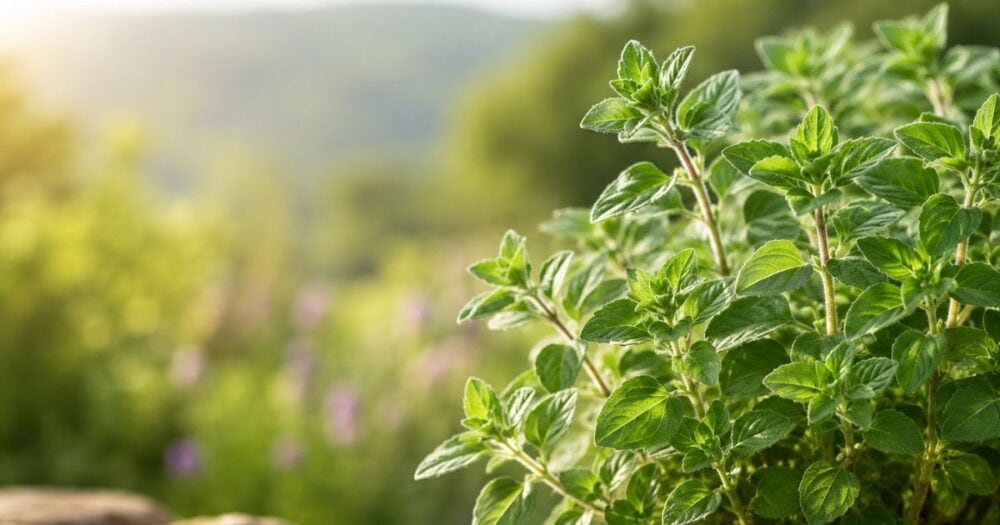
Oregano (Origanum vulgare) is a fragrant Mediterranean herb that has been used in cooking and traditional herbal medicine for centuries. While the dried leaves are widely used as a culinary herb, concentrated oregano extracts contain naturally occurring plant compounds that have attracted scientific interest for their antimicrobial properties.
The two best-known compounds are:
- Carvacrol – the primary compound studied for its antimicrobial and antifungal activity.
- Thymol – another naturally occurring phenolic compound that contributes antimicrobial and antioxidant properties.
Together, these naturally occurring compounds have made oregano one of the most widely investigated herbs in digestive health research. Laboratory studies suggest carvacrol and thymol can inhibit the growth of Candida albicans, interfere with biofilm formation, and affect fungal cell membranes under laboratory conditions, although more human clinical research is needed.
How Does Oregano Help with Candida?
1. May Help Inhibit Candida Growth
Carvacrol is the principal phenolic compound found in oregano and has demonstrated antifungal activity against Candida albicans in laboratory studies. Laboratory studies suggest carvacrol may disrupt fungal cell membranes, which may interfere with the organism’s ability to grow under experimental conditions.
While these findings are encouraging, most current evidence comes from laboratory studies rather than human clinical trials.
2. May Help Reduce Biofilm Formation
One reason oregano has attracted significant scientific interest is its potential effect on microbial biofilms. Biofilms are protective communities formed by microorganisms that may make them more resistant to environmental stress.
Laboratory studies have shown that oregano and its naturally occurring compounds can inhibit biofilm formation and reduce established biofilms under laboratory conditions. These findings help explain why oregano is frequently included in comprehensive botanical gut health formulations.
3. Traditionally Used to Support Digestive Health
Long before modern laboratory research, oregano was widely used in traditional Mediterranean herbal medicine to support digestion and digestive comfort. It has traditionally been consumed as teas, herbal preparations, and culinary herbs to promote normal digestive function.
Healthy digestion remains an important part of maintaining a balanced gut environment alongside a nutritious diet and healthy lifestyle.
4. Provides Broad Botanical Support
Oregano contains a wide range of naturally occurring plant compounds that have been investigated for their antimicrobial and antioxidant properties.
Rather than relying on a single mechanism, oregano contributes broad botanical support as part of a comprehensive gut health programme. Its diverse phytochemical profile is one of the reasons it continues to be one of the best-studied herbs used in digestive health formulations.
Why Oregano Is Included in Candida Supplements
Oregano is frequently combined with ingredients such as caprylic acid, garlic, berberine, pau d’arco, and black walnut because each botanical contributes different naturally occurring compounds. Rather than relying on a single ingredient, many formulations are designed to provide a diverse range of botanical constituents that support digestive health.
Why We Included Oregano in Yeastrix Candida Cleanse
Every ingredient in the Yeastrix Candida Cleanse was selected to contribute a different type of support for digestive health and microbial balance.
Oregano was included because it contains naturally occurring plant compounds—particularly carvacrol and thymol—that have demonstrated antimicrobial activity in laboratory studies. Rather than relying on a single mechanism, oregano complements the other botanical ingredients by contributing broad botanical support within the overall formulation.
Within the formula, oregano complements the other ingredients by providing:
- Botanical compounds that have demonstrated antifungal activity in laboratory studies
- Plant compounds that have been investigated for their effects on microbial biofilms
- Traditional support for digestive health
- Naturally occurring antioxidant plant compounds
- Additional diversity within the blend of complementary botanicals
Within the formulation, oregano is combined with ingredients such as garlic, black walnut, Pau d’Arco, caprylic acid and berberine, to provide a diverse blend of botanical compounds that support the overall formulation.
Oregano is one of the 14 carefully selected ingredients in the Yeastrix Candida Cleanse. While it contributes botanical compounds that have been studied for their antimicrobial activity, the complete formulation also includes herbs, fatty acids and digestive-support ingredients that work together to support digestion, microbial balance and a healthy gut environment. To see how every ingredient contributes to the formulation, read our complete guide to the Candida Cleanse Ingredients.
Common Mistakes When Using Oregano
Although oregano is one of the better-studied herbs used in digestive health formulations, there are a few common misunderstandings that may limit its value as part of a gut health programme.
Expecting oregano to work on its own. Oregano is generally used alongside other botanical ingredients, dietary changes, digestive support, probiotics, and healthy lifestyle habits rather than as a standalone solution.
Confusing oregano leaf with oregano essential oil. Culinary oregano, oregano extracts, and concentrated oregano essential oil are different preparations with different concentrations of naturally occurring plant compounds. They should not be considered interchangeable.
Assuming laboratory research guarantees the same effects in people. While laboratory studies have shown that oregano and its naturally occurring compounds can inhibit Candida albicans and affect biofilm formation under laboratory conditions, more human clinical research is needed before firm conclusions can be drawn.
Using concentrated oregano essential oil incorrectly. Essential oils are highly concentrated and should only be used according to appropriate directions. They are not intended to be consumed indiscriminately or substituted for culinary oregano.
Ignoring the importance of diet and digestive health. Supporting a healthy gut microbiome involves more than taking a single herb. Healthy digestion, a nutritious diet, hydration, sleep, and lifestyle habits all contribute to maintaining a healthy gut environment.
The bottom line: Oregano works best as one part of a comprehensive approach to supporting digestive health and microbial balance rather than as a single solution.
Is Oregano Safe?
Oregano is generally well tolerated by healthy adults when consumed as a culinary herb or taken in dietary supplements according to the manufacturer’s directions. However, like many concentrated botanical ingredients, it isn’t suitable for everyone.
Speak with your healthcare provider before using oregano supplements if you:
- are pregnant or breastfeeding
- have a known allergy to plants in the mint family
- are taking prescription medication
- are taking anticoagulant or antiplatelet medication (such as warfarin or clopidogrel)
- have an underlying medical condition and are unsure whether herbal supplements are appropriate
It’s also important to distinguish between culinary oregano, oregano leaf extracts, and concentrated oregano essential oil. Essential oils are far more concentrated than food or dietary supplements and should only be used according to appropriate directions.
As always, follow the recommended dosage and seek professional advice if you have any concerns.
Frequently Asked Questions
Laboratory studies suggest oregano and its naturally occurring compounds—particularly carvacrol—have antifungal activity against Candida albicans. However, there is currently limited human clinical evidence, so oregano is best viewed as one component of a broader approach that includes dietary and lifestyle measures.
Carvacrol and thymol are naturally occurring plant compounds found in oregano. They have attracted scientific interest because of their antimicrobial activity and are believed to contribute to many of oregano’s biological properties.
Oregano is commonly included in dietary supplements intended for daily use when taken according to the manufacturer’s directions. If you are pregnant, breastfeeding, have an underlying medical condition, or take prescription medication, consult your healthcare provider before starting any new supplement.
No. Culinary oregano, oregano leaf extracts, and oregano essential oil are different preparations. Essential oil is much more concentrated and should not be considered interchangeable with oregano used in food or dietary supplements.
There is no single timeframe because everyone’s digestive health is different. Supporting digestive health and maintaining microbial balance usually requires consistency over time alongside a nutritious diet and healthy lifestyle.
Oregano was selected because it contributes naturally occurring plant compounds that complement the other ingredients in the Yeastrix Candida Cleanse. Together, the herbs, fatty acids, and digestive-support ingredients work as part of a comprehensive approach to supporting digestion, microbial balance, and a healthy gut environment.
Final Thoughts
Oregano has been used in traditional herbal medicine for centuries and continues to be one of the most extensively researched botanical ingredients used in digestive health formulations. Its naturally occurring compounds, particularly carvacrol and thymol, have demonstrated antifungal activity against Candida albicans in laboratory studies. While more human clinical research is needed, oregano remains an important botanical ingredient used to support digestive health and microbial balance.
That’s why we’ve included oregano in the Yeastrix Candida Cleanse. Combined with 13 other carefully selected ingredients, it contributes to a comprehensive formula designed to support digestion, microbial balance, and a healthy gut environment.
Looking for a comprehensive digestive health formula?
Yeastrix Candida Cleanse combines oregano with 13 other carefully selected ingredients that work together to support digestive health and maintain a balanced gut environment as part of a healthy lifestyle.
This article is intended for educational and informational purposes only and is not a substitute for professional medical advice, diagnosis, or treatment. Always consult with a qualified healthcare provider before starting any new treatment or supplement, especially if you have a pre-existing medical condition or are taking medication. The recommendations here reflect a naturopathic approach and are not meant to replace conventional care when it is required. Individual results may vary.
References
Bakkali, F., Averbeck, S., Averbeck, D., & Idaomar, M. (2008). Biological effects of essential oils—A review. Food and Chemical Toxicology, 46(2), 446–475. https://doi.org/10.1016/j.fct.2007.09.106
Khan, M. S. A., Ahmad, I., & Cameotra, S. S. (2013). Carvacrol and thymol as potential inhibitors of microbial biofilm formation. Journal of Applied Microbiology, 115(6), 1425–1438.
Manohar, V., Ingram, C., Gray, J., Talpur, N. A., Echard, B. W., Bagchi, D., & Preuss, H. G. (2001). Antifungal activities of Origanum oil against Candida albicans. Molecular and Cellular Biochemistry, 228(1–2), 111–117. https://doi.org/10.1023/A:1013311632207
Nazzaro, F., Fratianni, F., De Martino, L., Coppola, R., & De Feo, V. (2013). Effect of essential oils on pathogenic bacteria. Pharmaceuticals, 6(12), 1451–1474. https://doi.org/10.3390/ph6121451
Sharifi-Rad, J., Sureda, A., Tenore, G. C., Daglia, M., Sharifi-Rad, M., Valussi, M., Tundis, R., Sharifi-Rad, M., Loizzo, M. R., Ademiluyi, A. O., Sharifi-Rad, R., Ayatollahi, S. A., & Iriti, M. (2018). Biological activities of essential oils: From plant chemoecology to traditional healing systems. Molecules, 22(1), 70. https://doi.org/10.3390/molecules22010070
Sharifi-Rad, J., Varoni, E. M., Salehi, B., Sharifi-Rad, M., Matthews, K. R., Ayatollahi, S. A., Kobarfard, F., Ibrahim, S. A., Mnayer, D., Zakaria, Z. A., Yousaf, Z., Iriti, M., Basile, A., Rigano, D., & others. (2018). Plants of the genus Origanum: From farm to pharmacy. Molecules, 23(7), 1820. https://doi.org/10.3390/molecules23071820
Sienkiewicz, M., Łysakowska, M., Ciećwierz, J., Denys, P., & Kowalczyk, E. (2013). Antibacterial activity of thyme and oregano essential oils. Molecules, 18(8), 9334–9351. https://doi.org/10.3390/molecules18089334