
GI-MAP vs GI360 vs GI Effects: Which Comprehensive Stool Test Is Best?

If you’ve ever searched for the best comprehensive stool test, you’ve probably discovered that there are almost as many opinions as there are laboratories.
The truth is, there isn’t one comprehensive stool test that is best for everyone.
Comprehensive stool testing is often discussed in relation to Candida, but a stool panel can investigate much more than yeast. Depending on the laboratory and profile selected, it may assess pathogens, parasites, bacteria, H. pylori, inflammatory markers, digestive function and aspects of the gut microbiome.
This makes comprehensive stool testing potentially useful in some Candida investigations—but it also creates an important problem: a positive Candida result does not automatically mean Candida is causing someone’s symptoms.
That’s why choosing a stool test should begin with the clinical question, not simply the name of the laboratory or the number of organisms listed on the report.
GI-MAP, GI360 and GI Effects use different laboratory technologies and measure different combinations of microorganisms, digestive markers, inflammatory markers and microbiome-related markers. The exact tests and markers included can also vary according to the laboratory profile ordered.
In this guide, we’ll compare GI-MAP, GI360 and GI Effects and explain how their laboratory methods, test menus and reporting approaches differ.
We’ll also explore what stool testing can and cannot tell you about Candida, why detecting an organism does not necessarily mean that it is causing symptoms, and why a laboratory report should never be interpreted in isolation.
The right question isn’t always “Which test is best?” It’s “What are we trying to find out?”
Key Takeaways
- There is no single “best” comprehensive stool test. The most appropriate test depends on the clinical question being investigated.
- GI-MAP, GI360 and GI Effects use different laboratory methods. They overlap in some areas but provide different types of information.
- GI-MAP primarily uses quantitative PCR (qPCR) to detect and quantify selected microbial DNA targets.
- GI360 combines several methods, including PCR, culture, microscopy and MALDI-TOF identification, alongside digestive, inflammatory and immune markers.
- GI Effects takes a broad gastrointestinal approach, combining microbial testing with digestive, inflammatory and immune markers, with Microbiomix available for broader metagenomic analysis in relevant profiles.
- More organisms, more data or more advanced technology doesn’t automatically mean a better test.
- Detecting Candida does not automatically mean Candida is causing symptoms or that treatment is required.
- Microbiome sequencing provides interesting information about microbial communities and genetic potential, but it is not a standalone diagnosis.
- Laboratory results need to be interpreted alongside symptoms, medical history and the clinical question.
Estimated reading time: 60 minutes
Table of contents
- What Is a Comprehensive Stool Test?
- Why Are There So Many Different Stool Tests?
- A Bigger Test Isn’t Necessarily a Better Test
- Why Your Practitioner Matters
- How Do Comprehensive Stool Tests Work?
- Is More Advanced Technology Always Better?
- What Does This Mean When Comparing Stool Tests?
- GI-MAP: What Does It Actually Test?
- GI360: A Multi-Method Approach to Stool Testing
- What Does GI360 Test?
- PCR + Culture: Why Use Both?
- What Does MALDI-TOF Add?
- GI360 and Microbiome Abundance
- What Does a “Dysbiosis Index” Actually Mean?
- What About Digestive and Inflammatory Markers?
- Does GI360 Test for Candida?
- What About H. pylori?
- GI360 Isn’t Just One Test
- GI360 vs GI-MAP: The Big Methodological Difference
- So What Is GI360 Particularly Good At?
- The Bottom Line on GI360
- GI Effects: A Broader Comprehensive Stool Profile
- What Does GI Effects Look At?
- The Microbial Side of GI Effects
- Culture and MALDI-TOF
- GI Effects and Parasitology
- GI Effects and Yeast
- What About H. pylori?
- GI Effects and the Microbiome
- What Is Microbiomix?
- What Does Shotgun Sequencing Add?
- More Microbiome Data Doesn’t Automatically Mean a Better Diagnosis
- GI Effects vs GI Effects with Microbiomix
- Does GI Effects Require One Stool Sample?
- What Makes GI Effects Different?
- So Is GI Effects Better Than GI-MAP or GI360?
- The Bottom Line on GI Effects
- GI-MAP vs GI360 vs GI Effects: What’s Actually Different?
- The Biggest Difference Isn’t the Number of Organisms
- GI-MAP: The Quantitative Molecular Approach
- GI360: The Multi-Method Approach
- GI Effects: The Broader Gastrointestinal Approach
- What About Microbiomix?
- So Which Test Is Best?
- GI-MAP, GI360 or GI Effects: A Simpler Way to Think About It
- What About Microbiome Sequencing?
- Why the Longest Report Isn’t Necessarily the Best Report
- Why Your Practitioner Should Choose the Test
- Your Practitioner Doesn’t Need to Order Every Test
- Can You Order These Tests Yourself?
- What About New Zealand and Australia?
- What About the Cost?
- Can a Stool Test Detect Candida?
- Candida Detection vs Candida Infection
- Why Can Candida Be Found in Healthy People?
- Does the Amount of Candida Matter?
- What About GI-MAP and Candida?
- What About Culture?
- Can a Stool Test Tell You Where Candida Is Causing Problems?
- What If My Stool Test Finds Candida?
- What If the Stool Test Doesn’t Find Candida?
- What If My Symptoms Sound Like Candida but My Tests Are Negative?
- When Might Comprehensive Stool Testing Be Useful?
- When Should You Speak With a Healthcare Practitioner?
- What Happens After Testing?
- Where Do Dietary Supplements Fit?
- Frequently Asked Questions
- Test Your Knowledge 🤔
- The Bottom Line
- References
- Continue Reading
What Is a Comprehensive Stool Test?
A comprehensive stool test is a laboratory investigation that examines a stool sample for a combination of microorganisms and other markers related to gastrointestinal health.
Unlike a more targeted stool test designed to answer a specific question—such as whether a particular pathogen is present—a comprehensive panel may investigate several aspects of gastrointestinal health at the same time.
Depending on the laboratory and the specific profile ordered, a comprehensive stool investigation may include some combination of:
- Bacteria, including potentially pathogenic, opportunistic and commensal organisms
- Yeasts and fungi, including Candida and other fungal organisms
- Parasites and protozoa
- Viruses
- Helicobacter pylori (H. pylori) and, in some tests, selected virulence-associated or antimicrobial-resistance markers
- Markers of inflammation, such as calprotectin or lactoferrin
- Digestive function, including markers such as pancreatic elastase
- Immune activity, such as faecal secretory immunoglobulin A (sIgA)
- Microbiome composition or abundance
- Other biochemical or metabolic markers, depending on the laboratory and profile ordered
The important word is “comprehensive.”
It does not mean that every comprehensive stool test measures everything.
In fact, two tests marketed as comprehensive can look quite different when you examine what they actually measure—and how those measurements are obtained.
Why does that matter?
Imagine three laboratories analysing stool samples.
One might primarily use quantitative PCR (qPCR) to look for specific microbial targets and report the amount of target DNA detected.
Another might combine PCR with culture, microscopy and culture-based organism identification such as MALDI-TOF, while also measuring digestive and inflammatory markers.
A third might add broader microbiome analysis using DNA sequencing.
All three approaches could be used as part of comprehensive stool investigations, but they are not performing the same investigation.
This is why comparing tests simply by counting the number of organisms listed on a report can be misleading.
The technology used, the markers measured and the clinical question being investigated all matter.

Why Are There So Many Different Stool Tests?
The short answer is that different stool tests are designed to answer different questions.
A person with persistent diarrhoea and a person with years of bloating and constipation may both undergo stool testing, but their healthcare practitioners may be looking for very different things.
For example, a practitioner might want to investigate:
- whether a specific gastrointestinal pathogen is present;
- whether parasites could be contributing to persistent digestive symptoms;
- whether H. pylori is present;
- whether there are signs of intestinal inflammation;
- whether pancreatic exocrine function may be impaired;
- whether yeast or other fungi are detected;
- whether there are signs of microbial imbalance; or
- whether a broader assessment of the gut microbiome would provide useful information.
There is no single laboratory method that is ideal for answering all of these questions.
A Bigger Test Isn’t Necessarily a Better Test
It’s tempting to assume that the test measuring the greatest number of organisms must be the most comprehensive—and therefore the best.
But that’s not necessarily true.
A test designed to detect a specific pathogen may be more appropriate than a broad microbiome panel when a particular infection is suspected. Likewise, a practitioner investigating possible inflammatory bowel disease may place greater emphasis on information about inflammatory markers rather than simply a larger list of microorganisms.
This is why test selection should begin with the clinical question, rather than with a particular laboratory brand.
The goal of testing isn’t simply to collect as much information as possible. It’s to obtain information that is relevant to the clinical question being investigated.
The exact organisms, markers and laboratory methods included in commercial stool-testing profiles can change over time, so current laboratory specifications should always be checked when comparing tests.
Why Your Practitioner Matters
Comprehensive stool reports can contain a large amount of information, and their significance depends on the laboratory methods used, the markers measured and the clinical context.
A suitably qualified healthcare practitioner can help determine:
- whether stool testing is appropriate in the first place;
- which type of investigation best matches the clinical question;
- how the laboratory methods used by different tests may affect the information obtained;
- what the findings mean in the context of your symptoms and medical history; and
- whether further investigation or treatment is appropriate.
This is particularly important because detecting an organism is not necessarily the same as diagnosing an infection or establishing that the organism is responsible for your symptoms.
A stool test provides data. Clinical interpretation provides context.
Treatment decisions should therefore be based on the broader clinical picture—not simply on whichever result happens to be flagged on a laboratory report.
How Do Comprehensive Stool Tests Work?
One reason comprehensive stool testing can be confusing is that different laboratories use different technologies to identify microorganisms and measure other features of the stool.
You may come across terms such as PCR, qPCR, culture, microscopy, MALDI-TOF and DNA sequencing. Although these methods can sometimes be used together, they do not all provide the same type of information.
Understanding the basic differences makes it easier to see why two comprehensive stool tests can produce very different-looking reports from similar samples.
PCR: Looking for Specific DNA Targets
Polymerase chain reaction (PCR) is a molecular laboratory technique used to detect specific sequences of DNA.
In simple terms, the laboratory uses carefully designed primers to target a genetic sequence associated with a particular microorganism. If that target is present in the sample, the PCR process amplifies the DNA so that it can be detected.
PCR can be used to look for selected bacteria, parasites, viruses, fungi and other microorganisms included among a test’s targets.
One advantage of molecular testing is that it can detect genetic material from microorganisms that may be difficult to grow using traditional culture techniques.
However, detecting microbial DNA is not necessarily the same as demonstrating that a living organism is present or that it is causing disease.
PCR tells the laboratory that a particular genetic target was detected. What that finding means clinically depends on the organism or target being measured, the characteristics of the assay, the person’s symptoms and the reason the test was ordered.
qPCR: When PCR Also Provides Quantification
Quantitative PCR (qPCR), also called real-time PCR, builds on PCR by monitoring the amplification process as it occurs.
This allows the laboratory to quantify the amount of a specific DNA target detected, according to the laboratory’s validated assay and reporting system.
The GI-MAP, for example, uses qPCR to detect and quantify selected microbial DNA targets. Diagnostic Solutions Laboratory identifies this quantitative approach as a defining feature of its methodology.
Quantitative reporting can provide more information than simply stating whether a target was detected.
But there is an important distinction:
Quantifying microbial DNA is not the same as quantifying viable organisms or proving clinical disease.
A higher amount of detected DNA may be relevant in some circumstances, but its meaning still depends on the microorganism or target being measured, the laboratory’s validated reference ranges or decision points, and the person’s clinical situation.
This is one reason we should be cautious about interpreting a number on a stool report as though it were automatically a measurement of “how sick” someone is.
Culture: Can the Organism Be Grown?
Culture is a traditional method used in clinical microbiology.
Instead of looking directly for microbial DNA, the laboratory places a specimen under conditions designed to encourage particular microorganisms to grow.
If an organism grows, it can then be identified and, where appropriate, tested for characteristics such as antimicrobial susceptibility.
Culture can therefore provide information that molecular testing does not provide in the same way—particularly when the laboratory needs a viable isolate for further identification or susceptibility testing.
However, not every microorganism grows easily under routine laboratory conditions.
Some require highly specialised environments, while others may be difficult or impossible to culture using conventional techniques. This means that a negative culture does not necessarily mean that no microbial genetic material is present.
Conversely, a molecular test may detect microbial DNA without demonstrating that the organism is viable.
PCR and culture can therefore complement one another rather than simply compete with one another.
That distinction becomes particularly important when comparing GI-MAP with tests such as GI360 and GI Effects, which incorporate culture-based methods.
Microscopy: Looking Directly at the Sample
Microscopy involves examining a prepared stool specimen under a microscope.
Depending on the preparation and the laboratory’s methods, microscopy can be used to look for:
- parasites and protozoa;
- ova and cysts;
- yeast or fungal structures;
- inflammatory cells; and
- other microscopic features of the specimen.
Microscopy can be particularly useful in parasitology, where the physical appearance of organisms or structures may provide important diagnostic information.
It also illustrates why different methods can produce different results.
A microorganism or parasite visible microscopically may not necessarily be included among the specific molecular targets of a PCR panel. Conversely, a PCR assay may detect a genetic target that is not readily visible under the microscope.
The usefulness of microscopy and molecular testing therefore depends on the organism being investigated and the laboratory method being used. Neither technique is universally superior for every stool investigation.
MALDI-TOF: Identifying Cultured Organisms
You may also see MALDI-TOF mentioned in descriptions of modern stool testing.
The full name is matrix-assisted laser desorption/ionisation time-of-flight mass spectrometry.
You don’t need to remember that mouthful. 😂
The important point is that MALDI-TOF can be used to identify microorganisms after they have been cultured.
The organism produces a characteristic protein profile, which can then be compared with reference databases to help identify it.
MALDI-TOF has become an important tool in clinical microbiology because it can rapidly identify many cultured microorganisms.
Doctor’s Data, for example, describes its GI360 profile as combining multiplex PCR with growth-based culture and identification by MALDI-TOF, alongside biochemical assays and microscopy.
In other words:
Culture → organism grows → MALDI-TOF helps identify it
That is a different pathway from PCR, which looks for a predefined genetic target.
DNA Sequencing: Looking More Broadly at the Microbial Community
This is where things become particularly interesting.
PCR generally asks a fairly specific question:
“Is this particular microbial target present?”
DNA sequencing can ask a broader question:
“What microorganisms are represented in this microbial community?”
There are several approaches to sequencing, but two you may encounter when reading about microbiome testing are amplicon sequencing and shotgun metagenomic sequencing.
Amplicon Sequencing
Amplicon sequencing targets particular genetic regions that can be used to identify groups of microorganisms.
For bacterial microbiome testing, 16S rRNA gene sequencing is a commonly used approach. Rather than sequencing the entire genome of every microorganism present, the laboratory targets selected regions of a gene that can help identify and classify bacteria.
This can provide useful information about the composition and diversity of a bacterial community, but it provides a narrower view of the microbial genome than shotgun metagenomic sequencing.
The level of identification also depends on the particular sequencing region, laboratory method and analysis pipeline. In many applications, 16S sequencing is more reliable for identifying bacteria at broader taxonomic levels than for consistently distinguishing individual species or strains.
Shotgun Metagenomic Sequencing
Shotgun metagenomic sequencing takes a much broader approach.
Rather than targeting one particular gene, it sequences DNA from across the microbial community in the sample.
This can potentially provide more detailed information about the organisms present—including bacteria, fungi, archaea and other microorganisms—and can sometimes identify organisms at species or strain level.
Because shotgun metagenomics sequences much broader portions of microbial DNA, it can also provide information about the genes present within the microbial community.
That means researchers can potentially investigate not only:
“Which microorganisms are there?”
but also:
“What genetic capabilities are represented within this community?”
This becomes particularly relevant when we discuss GI Effects with Microbiomix, because Genova uses shotgun metagenomic sequencing as an additional layer of microbiome analysis.
So Which Is Better: Amplicon or Shotgun Sequencing?
Neither is simply “better.”
They answer somewhat different questions.
Amplicon sequencing can be useful when the aim is to characterise microbial community composition using selected genetic markers.
Shotgun metagenomics provides a much broader view of the DNA in the sample and can potentially provide greater taxonomic resolution and information about microbial genes and functional potential.
An international consensus statement on clinical microbiome testing recognises both amplicon sequencing and whole-genome sequencing as appropriate approaches for microbiome community profiling, while emphasising that their strengths, limitations and interpretation differ.
And there is one very important caveat:
A broader view of the microbiome does not automatically mean a better clinical answer.
Sequencing can tell us an extraordinary amount about the microbial DNA in a stool sample. But translating that information into a diagnosis or treatment decision is much more complicated.
In fact, expert consensus currently concludes that evidence for clinical applicability of microbiome testing remains limited and recommends that changes in clinical management based on microbiome testing should be made by the referring healthcare professional.
That will become particularly important when we discuss microbiome reports, dysbiosis scores and functional predictions later in this article.
Is More Advanced Technology Always Better?
Not necessarily.
It is easy to assume that the newest or most technologically sophisticated test must automatically provide the most useful answer.
But laboratory testing does not work that way.
A highly targeted PCR test can be extremely useful when a practitioner is asking:
“Is this particular pathogen present?”
Culture may be valuable when the laboratory needs to grow a viable organism for identification or, where appropriate, antimicrobial susceptibility testing.
Microscopy may be particularly useful when examining parasites, ova, cysts or other microscopic findings.
And sequencing can be useful when the clinical or research question involves the composition and characteristics of a microbial community.
These methods aren’t simply competing technologies. They answer different questions and can sometimes complement one another.
So rather than asking:
“Which technology is the most advanced?”
a better question is:
“Which technology is appropriate for the question we’re trying to answer?”
And that is the principle that should guide the comparison of GI-MAP, GI360 and GI Effects.
What Does This Mean When Comparing Stool Tests?
Now we can see why GI-MAP, GI360 and GI Effects aren’t simply three versions of the same test.
A simplified comparison looks like this:
| Method | What it primarily does |
|---|---|
| PCR | Looks for specific genetic targets |
| qPCR | Detects specific genetic targets and quantifies the amplification signal |
| Culture | Attempts to grow viable microorganisms under laboratory conditions |
| Microscopy | Examines the specimen directly for microscopic findings |
| MALDI-TOF | Identifies microorganisms that have been cultured |
| Amplicon sequencing | Profiles selected microbial genetic regions to characterise community composition |
| Shotgun metagenomic sequencing | Profiles much broader microbial DNA and can provide deeper taxonomic information and insights into potential microbial functions |
These technologies are complementary rather than interchangeable. A laboratory combining several methods may therefore produce a very different kind of report from one using primarily targeted qPCR. That does not necessarily make one approach better than another—it means they are examining different aspects of the stool sample.
This is why the term “comprehensive stool test” does not tell you everything you need to know.
Before comparing the three tests themselves, we need to look at what each laboratory actually does.
GI-MAP: What Does It Actually Test?
The GI-MAP® (Gastrointestinal Microbial Assay Plus) from Diagnostic Solutions Laboratory is a comprehensive stool test that primarily uses quantitative polymerase chain reaction (qPCR) to detect selected microorganisms and other gastrointestinal markers from a stool sample.
Unlike a traditional stool culture, which attempts to grow microorganisms under laboratory conditions, GI-MAP uses molecular testing to look for specific DNA sequences associated with its selected targets.
The test assesses selected bacterial, fungal, viral and parasitic targets, along with markers related to digestion, inflammation and immune function. Diagnostic Solutions also offers additional markers and investigations that can be ordered alongside the core GI-MAP panel.
Diagnostic Solutions Laboratory — GI-MAP
Laboratory profiles and available markers can change over time, so the current laboratory specification should always be checked when comparing tests.
How Does GI-MAP Work?
The defining feature of GI-MAP is its use of quantitative PCR (qPCR).
The laboratory uses primers designed to recognise specific genetic sequences associated with the microorganisms being tested. When a target is present, the DNA is amplified and the amplification process is measured in real time.
Because the assay is quantitative, GI-MAP can report the amount of target DNA detected rather than simply providing a detected/not-detected result.
Diagnostic Solutions describes this quantitative approach as one of the distinguishing features of GI-MAP and states that its individual assays have been validated for the specific targets included in the test.
However, there is an important distinction for patients to understand:
A quantitative DNA result is a measurement of detected microbial DNA. It is not automatically a measurement of disease severity, nor does it by itself prove that an organism is causing symptoms.
The amount of DNA detected can provide useful information to a practitioner, but its clinical significance depends on what organism was detected, how the assay is designed and validated, the laboratory’s reference or decision framework, and the patient’s broader clinical picture.
That distinction becomes particularly important when interpreting organisms that can occur naturally within the gastrointestinal tract, including Candida and other microorganisms that may be present without causing disease.
What Does GI-MAP Look For?
The current GI-MAP panel includes several broad categories of analytes.
Bacterial pathogens
The test looks for selected bacterial pathogens associated with gastrointestinal infection.
Opportunistic bacteria
It also includes selected organisms that may be found in the gastrointestinal tract but can become clinically relevant under particular circumstances.
Normal or commensal bacterial flora
GI-MAP does not focus exclusively on pathogens. It also measures selected organisms considered part of the normal intestinal microbial community.
This reflects an important principle in microbiology:
Not every microorganism detected in stool is a pathogen. The clinical significance of a finding depends on the organism, the amount detected where applicable, the person’s circumstances and the wider clinical picture.
Parasites and protozoa
The panel includes selected parasitic organisms, including protozoa and worms.
Viruses
Selected viral gastrointestinal pathogens are also included.
Fungi and yeasts
GI-MAP includes fungal targets, including Candida, as well as other fungal organisms.
This is particularly relevant to our Candida discussion, but it is important not to jump from:
“Candida was detected”
to:
“Candida is causing your symptoms.”
Those are two very different conclusions.
H. pylori
GI-MAP also includes Helicobacter pylori (H. pylori) testing and, depending on the current configuration ordered, information about selected virulence factors and H. pylori resistance genes.
H. pylori is important because it isn’t simply another organism that can be placed into a generic “dysbiosis” category. It has an established role in gastrointestinal disease, and its diagnosis and management are addressed within conventional clinical medicine.
GI-MAP can provide additional information about the H. pylori target and selected genetic characteristics, but a comprehensive stool panel should not be confused with a universal replacement for every established H. pylori diagnostic pathway.
What Other Information Does GI-MAP Provide?
The current GI-MAP product information also lists markers relating to:
- digestion;
- inflammation;
- immune response;
- normal bacterial flora;
- opportunistic bacteria;
- fungi and yeasts;
- parasites;
- viruses; and
- H. pylori and associated genetic markers.
Diagnostic Solutions also offers additional testing options, including investigations such as zonulin, stool gluten peptides and a universal antibiotic-resistance gene panel.
This is another reason we shouldn’t treat “GI-MAP” as though it represents one completely fixed report in every circumstance.
The exact information available can depend on the version of the test and any additional markers ordered.
GI-MAP and Candida
Candida is one of the more interesting parts of GI-MAP because it illustrates both the usefulness and the limitations of molecular stool testing.
GI-MAP can detect selected fungal organisms using qPCR, including Candida targets. Diagnostic Solutions’ own educational material discusses Candida as part of the fungal organisms assessed by GI-MAP.
But finding Candida DNA in stool does not automatically establish:
- that Candida is causing someone’s symptoms;
- that there is an invasive infection;
- that treatment is required; or
- that Candida is the primary explanation for a person’s digestive problems.
Candida can be present in the gastrointestinal tract without causing clinical disease, which means that detection and disease are not synonymous.
This is one of the most important principles in interpreting comprehensive stool testing:
A laboratory result needs to be interpreted in context.
And that is precisely why we don’t want readers ordering a test, seeing a flagged Candida result and attempting to construct their own treatment protocol from the report.
GI-MAP and H. pylori
The GI-MAP material also highlights another useful example: H. pylori.
The test can detect H. pylori DNA and selected virulence-associated genetic markers. Diagnostic Solutions’ technical material discusses a range of H. pylori-associated genes that may be reported as part of the investigation.
These genes are associated with characteristics of different H. pylori strains, but we need to be careful about how we translate genetic findings into clinical conclusions.
For example, the presence of a virulence-associated gene may provide information about the characteristics of the strain detected, but it does not by itself establish that a patient will develop a particular disease.
This is another excellent example of why a sophisticated laboratory report can still require careful clinical interpretation.
👉 Coming Soon: H. pylori Testing: Stool Antigen, Breath Testing and Other Diagnostic Options
What Are the Advantages of GI-MAP?
The qPCR approach has several practical advantages.
Targeted detection
The test can look specifically for organisms that have been selected as clinically relevant targets.
Quantitative reporting
Rather than simply reporting whether a target was detected, qPCR can provide quantitative information about the amount of target DNA detected.
Broad coverage in a single investigation
GI-MAP combines numerous microbial targets with additional gastrointestinal markers in one stool investigation.
Single-sample collection
Diagnostic Solutions describes GI-MAP as being performed from a single stool sample, which can make collection considerably simpler than investigations requiring multiple specimens.
What Are the Limitations?
GI-MAP’s molecular approach is powerful, but no laboratory method answers every clinical question.
A qPCR result tells us that a particular genetic target was detected. It does not necessarily tell us:
- whether the organism is alive;
- whether it is actively causing disease;
- whether it is responsible for a person’s symptoms;
- whether treatment is necessary; or
- whether another condition is more important clinically.
Those questions require clinical interpretation beyond the laboratory measurement itself.
And because GI-MAP is a targeted molecular panel, it should not be confused with broad, untargeted microbiome sequencing.
A test can be highly sophisticated while still being designed around a defined list of organisms and markers.
That isn’t a weakness.
It’s simply a characteristic of the methodology.
The right test isn’t necessarily the one that measures the most things. It’s the one that provides useful information for the clinical question being asked.
Research Snapshot: What Does qPCR Actually Add?
GI-MAP uses qPCR to detect selected microbial targets and provide quantitative measurements of those targets. This can offer more information than a simple detected/not-detected result for the organisms included in the assay.
However, quantitative detection of microbial DNA should not automatically be interpreted as proof of active infection or causation. The clinical meaning of a result depends on the organism being measured, the characteristics of the assay and the patient’s broader clinical context.
Current Laboratory Information
For the most current information about GI-MAP’s available targets, methodology and test configuration, see the laboratory’s own documentation:
Diagnostic Solutions Laboratory — GI-MAP
Laboratory specifications can change, so the current laboratory information should be checked when comparing profiles.
👉 Coming Soon: H. pylori Testing: Stool Antigen, Breath Testing and Other Diagnostic Options
👉 Coming Soon: PCR vs Culture vs Sequencing: Which Stool Testing Method Is Best?
The key takeaway
GI-MAP is best understood as a targeted quantitative molecular stool investigation. Its qPCR methodology allows the laboratory to detect and quantify selected microbial DNA targets, alongside other gastrointestinal markers.
That can provide useful information—but a quantitative result is still a laboratory finding, not a diagnosis.
The clinical question comes first.
GI360: A Multi-Method Approach to Stool Testing
The GI360™ from Doctor’s Data takes a different approach from GI-MAP.
While GI-MAP is built primarily around targeted quantitative PCR, GI360 combines multiplex PCR, growth-based culture, MALDI-TOF identification, microscopy and biochemical testing. It also includes a targeted microbiome abundance and diversity component based on PCR, along with a range of gastrointestinal function, inflammatory and immune markers.
This makes GI360 less like a single testing technology and more like a multi-method stool investigation.
And this distinction is important.
GI-MAP and GI360 may investigate some of the same organisms, but they don’t necessarily investigate them in the same way.
The exact profile and markers should always be checked when ordering, because Doctor’s Data offers different GI360 configurations, including GI360, GI360 Essentials and GI360 Microbiome. The findings and laboratory methods included therefore depend on the specific GI360 profile ordered.
What Does GI360 Test?
The full GI360 profile combines several categories of testing.
Depending on the profile and markers included, these can include:
- gastrointestinal pathogens;
- parasites;
- viruses;
- bacteria;
- yeast and fungi;
- bacterial microbiome abundance;
- microbial diversity;
- digestive markers;
- inflammatory markers;
- immune markers;
- stool chemistry; and
- other gastrointestinal findings.
Doctor’s Data’s current comparison of gastrointestinal profiles lists GI360 as including microbiome diversity and abundance by PCR, pathogen and parasite PCR, bacterial and fungal culture with identification, yeast culture, parasitology, digestive markers and inflammatory and immune markers.
This is worth emphasising because GI360 isn’t simply a “Candida test” or even simply a “dysbiosis test.”
It is a broader gastrointestinal investigation.
PCR + Culture: Why Use Both?
One of the most interesting features of GI360 is that it combines molecular testing with culture.
Doctor’s Data explains that PCR and culture provide complementary information. PCR can detect specific microbial genetic targets, while culture allows microorganisms to be grown and subsequently identified and, where appropriate, tested for susceptibility.
This gives us a useful way of understanding the difference:
PCR asks:
“Is the genetic target I’m looking for present?”
Culture asks:
“Can I grow this organism under the laboratory conditions I’m using?”
Neither question is inherently “better.”
They’re simply different questions.
And because culture can produce a viable isolate, the laboratory can perform susceptibility testing on appropriate cultured bacterial and yeast isolates. Doctor’s Data states that GI360 includes direct susceptibility testing for cultured pathogenic and dysbiotic bacteria and cultured yeast when indicated.
That is an important distinction from a purely molecular test.
What Does MALDI-TOF Add?
Once an organism has been cultured, Doctor’s Data uses MALDI-TOF mass spectrometry to help identify the microorganism.
The full name is rather intimidating—matrix-assisted laser desorption/ionisation time-of-flight mass spectrometry—but you don’t need to remember that mouthful. 😂
The important point is that MALDI-TOF can identify microorganisms based on their characteristic protein profiles after they have been cultured.
So, in simplified form:
Culture → organism grows → MALDI-TOF helps identify it
That is different from using PCR to detect a predetermined genetic target.
Doctor’s Data describes GI360 as combining growth-based culture with identification by MALDI-TOF, alongside multiplex PCR and microscopy.
This is another example of why culture and molecular testing can complement one another rather than simply competing with each other.
GI360 and Microbiome Abundance
Here’s where GI360 gets particularly interesting.
GI360 includes a targeted microbiome abundance and diversity component based on PCR.
Doctor’s Data says this component uses targeted DNA probes to assess selected bacterial species and produces measures of microbial abundance and diversity. Its current GI360 information describes more than 45 targeted microbiome analytes in the GI360 Essentials profile, while the laboratory’s FAQ explains that its broader probe set was developed to characterise bacterial profiles associated with dysbiosis.
The report includes two measures that readers may encounter:
Diversity Score
The Diversity Score is based on the Shannon diversity index and is intended to describe the variety and balance of bacterial species detected within the tested profile.
Doctor’s Data currently reports the Diversity Score on a scale of 1 to 5, with higher scores representing greater diversity.
Dysbiosis Index
The Dysbiosis Index (DI) is a separate calculation comparing the measured bacterial profile with a reference population.
Doctor’s Data reports the Dysbiosis Index (DI) on a scale from 1 to 5. Its current information states that values above 2 indicate that the measured microbiota profile differs from its defined normobiotic reference population.
And this is where we need to be particularly careful with our wording.
What Does a “Dysbiosis Index” Actually Mean?
Seeing the word dysbiosis on a laboratory report can sound much more definitive than it actually is.
The Dysbiosis Index is a laboratory-derived calculation based on the organisms included in the test and the reference population used by that particular laboratory. It is not a universal medical measurement of “how unhealthy your gut is.”
Doctor’s Data has developed its own GI360 model for distinguishing what it describes as normobiosis and dysbiosis.
But readers shouldn’t assume that:
DI = 4
means:
“My gut is four times as unhealthy.”
It doesn’t.
The number needs to be interpreted according to the methodology and reference framework of the test that produced it.
This is another excellent example of why laboratory interpretation matters.
A laboratory-derived score can be useful information without being a universal diagnosis.
What About Digestive and Inflammatory Markers?
GI360 goes beyond microorganisms.
The current GI360 profile includes markers such as:
- calprotectin;
- lactoferrin;
- lysozyme;
- pancreatic elastase;
- fat stain;
- carbohydrates;
- secretory IgA;
- short-chain fatty acids;
- occult blood;
- pH;
- red and white blood cells;
- mucus; and
- beta-glucuronidase.
This means a practitioner can potentially assess several dimensions of gastrointestinal health within the same investigation.
For example:
Microorganisms
↓
Inflammation
↓
Immune activity
↓
Digestion and absorption
That’s quite different from a test whose principal purpose is simply to detect specific organisms.
Does GI360 Test for Candida?
Yes—but there’s an important distinction.
GI360 includes yeast culture and identification. Doctor’s Data’s current gastrointestinal profile comparison lists yeast culture and identification within GI360, with susceptibility testing for cultured yeast when indicated.
This makes GI360 particularly relevant to our Candida discussion.
It gives us an opportunity to explain something readers often don’t realise:
“Candida testing” isn’t one single laboratory technique.
Candida can be investigated using different approaches, depending on the clinical question and the laboratory.
And again, finding yeast in stool isn’t automatically equivalent to diagnosing Candida disease.
The laboratory finding is one piece of information.
Its clinical significance is another question.
What About H. pylori?
Here’s another important difference.
Unlike GI-MAP, where H. pylori is included as part of the core microbial panel, Doctor’s Data currently lists H. pylori stool antigen as an add-on to GI360. The laboratory states that it uses a stool antigen immunoassay for this purpose.
That’s actually a useful example of why simply comparing lists of organisms isn’t enough.
A reader might look at two reports and say:
“Both test for H. pylori, so what’s the difference?”
But the method used to investigate H. pylori also matters.
So we shouldn’t merely create a tick-box table saying:
H. pylori: yes/no
We need to explain how the organism is being investigated.
GI360 Isn’t Just One Test
This is worth mentioning because Doctor’s Data offers several GI360 configurations, and the available profiles can change over time.
There are currently several GI360 configurations:
- GI360
- GI360 Essentials
- GI360 Microbiome
The full GI360 combines the broadest range of microbial, parasitology, culture and gastrointestinal investigations.
GI360 Essentials retains a substantial microbial testing component but has a different marker configuration.
GI360 Microbiome focuses specifically on the microbiome abundance and diversity component.
So when somebody says:
“I had a GI360.”
we shouldn’t automatically assume that every GI360 report contains exactly the same investigations.
That’s another reason our eventual comparison needs an important caveat:
Test configurations can change, and laboratories periodically update their panels. Always check the current laboratory specification and the exact profile your practitioner is ordering.
GI360 vs GI-MAP: The Big Methodological Difference
Now we can give the reader a very simple picture.
GI-MAP is primarily a targeted quantitative molecular approach.
GI360 combines molecular testing with culture, microscopy, organism identification and gastrointestinal markers.
The important difference is not that one technology is inherently “better.” It is that the two tests examine the sample using different combinations of laboratory methods.
GI360’s combination of PCR, culture, MALDI-TOF identification and microscopy means that it can provide information that a primarily molecular panel does not provide in the same way—particularly when a viable organism is cultured and susceptibility testing is appropriate.
So What Is GI360 Particularly Good At?
Rather than declaring that GI360 is “better,” it may be more useful to describe what distinguishes its approach:
GI360 may be particularly attractive when a practitioner wants to combine:
molecular detection
+
culture-based microbiology
+
organism identification
+
susceptibility testing where appropriate
+
parasitology
+
digestive and inflammatory markers
+
a targeted microbiome abundance and diversity assessment
That combination is its distinguishing feature.
But whether those additional methods are useful for a particular patient is a clinical decision.
Research Snapshot: Why Combine Testing Methods?
PCR, culture and microscopy each have different strengths and limitations.
Molecular testing can detect selected genetic targets, while culture allows viable organisms to be isolated for identification and, where appropriate, susceptibility testing. Microscopy provides another method for examining organisms and structures directly.
Combining methodologies can therefore provide complementary information—but it does not mean that every patient requires every method.
The Bottom Line on GI360
GI360 is best understood as a multi-method gastrointestinal investigation, rather than simply another version of a PCR stool test.
Its current profiles combine molecular testing with culture-based microbiology, MALDI-TOF identification, parasitology and a range of gastrointestinal markers, while the microbiome component provides targeted information about bacterial abundance and diversity.
Its distinctive feature is therefore not simply the number of organisms it can investigate.
It is the combination of laboratory methods used to investigate them.
And just as with GI-MAP, a sophisticated laboratory report still needs to be interpreted in the context of the clinical question.
Future internal link:
GI360 Essentials vs GI360 vs GI360 Microbiome: What’s the Difference?
Doctor’s Data — official source
For the current GI360 profiles, analytes and methodology, refer to Doctor’s Data’s own laboratory information.
GI Effects: A Broader Comprehensive Stool Profile
The GI Effects® Comprehensive Stool Profile from Genova Diagnostics takes a broad approach to gastrointestinal assessment, combining information about digestion and absorption, intestinal inflammation, immune function, infection and the gut microbiome.
Rather than relying on a single laboratory technique, GI Effects combines several approaches, including microbial PCR, culture, parasitology and biochemical markers, depending on the specific profile ordered. Genova currently offers several GI Effects profiles, including GI Effects Comprehensive, GI Effects Fundamentals, GI Effects Gut Pathogen, GI Effects Microbial Ecology, and GI Effects with Microbiomix.
That means we need to be a little careful whenever we simply say “GI Effects.”
As with GI360, the exact information obtained depends on which profile has actually been ordered.
Genova Diagnostics — GI Effects
Laboratory profiles and available markers can change over time, so the current laboratory specification should always be checked when comparing tests.
What Does GI Effects Look At?
The current GI Effects Comprehensive Profile is organised around three broad areas of gastrointestinal health:
Digestion and absorption
Inflammation and immunology
The gut microbiome
This gives the GI Effects Comprehensive Profile a somewhat different emphasis from a stool panel whose primary purpose is simply to identify microorganisms.
Digestion and Absorption
GI Effects includes markers that can provide information about digestive function, including:
- pancreatic elastase-1;
- faecal fat; and
- products of protein breakdown.
Pancreatic elastase-1 can provide information about exocrine pancreatic function, while faecal fat and protein-breakdown markers can provide information about digestion and absorption.
This is important because persistent digestive symptoms aren’t necessarily caused by an infection or microbial imbalance.
Sometimes the more useful question is:
“Is there a problem with digestion or absorption?”
That can lead the practitioner in a very different direction from simply looking for Candida or dysbiosis.
Intestinal Inflammation and Immunology
GI Effects also includes markers associated with intestinal inflammation and immune activity.
These include:
- calprotectin;
- eosinophil protein X (EPX); and
- faecal secretory IgA (sIgA).
Calprotectin is associated with neutrophil-driven intestinal inflammation, while EPX provides information related to eosinophil activity. Faecal sIgA provides information about mucosal immune activity. These markers provide different types of information and should be interpreted in the context of the clinical picture.
This gives the practitioner another important layer of information.
A person with bloating, abdominal discomfort or altered bowel habits may have a problem involving digestion, inflammation, infection, immune activity—or a combination of factors.
A comprehensive investigation can therefore look beyond microorganisms alone.
The Microbial Side of GI Effects
GI Effects also investigates microorganisms using a combination of laboratory methods.
The current GI Effects offering includes microbial testing using PCR, culture and parasitology, depending on the profile ordered.
Genova describes its comprehensive profile as including bacterial and mycology cultures, culture-based identification using MALDI-TOF mass spectrometry, susceptibility testing for appropriate cultured organisms, and parasitology. It also includes PCR testing for selected protozoal targets.
So, like GI360, GI Effects isn’t simply a molecular PCR test.
It brings together different laboratory methods, each answering somewhat different questions.
Culture and MALDI-TOF
Genova uses culture-based methods to investigate selected bacteria and fungi.
When organisms are cultured, Genova uses MALDI-TOF mass spectrometry to assist with identification of bacterial and fungal species.
This follows the same basic principle we discussed earlier:
Culture → organism grows → MALDI-TOF helps identify it
Where appropriate, Genova also provides susceptibility information for cultured pathogenic or potentially pathogenic organisms.
That means culture can provide information that a purely molecular test cannot provide in exactly the same way.
Again, this doesn’t make culture universally “better” than PCR.
It means the two methods can provide different kinds of information.
GI Effects and Parasitology
Parasitology is another area where GI Effects uses more than one methodology.
Genova describes its parasitology investigation as including microscopic examination for ova and parasites, alongside real-time PCR testing for selected protozoa.
The current PCR targets include:
- Blastocystis species;
- Cryptosporidium parvum/hominis;
- Cyclospora cayetanensis;
- Dientamoeba fragilis;
- Entamoeba histolytica; and
- Giardia.
This is another good example of why the phrase “comprehensive stool test” doesn’t tell you enough by itself.
Two laboratories can both offer parasite testing while using different combinations of microscopy and molecular methods.
GI Effects and Yeast
This is particularly relevant to our Candida audience.
GI Effects includes mycology culture as part of its broader stool-testing approach. Genova also offers separate yeast culture and KOH preparation testing among its gastrointestinal investigations and additional testing options.
So GI Effects can investigate yeast, including Candida-related findings, using culture-based methods.
But once again, we need to resist the temptation to turn:
“Yeast detected”
into:
“Candida is causing your symptoms.”
The laboratory finding is one piece of information.
Its clinical significance is another question.
Candida can be detected in people without clinical Candida disease, which is why a positive stool finding should always be interpreted in context.
What About H. pylori?
H. pylori provides another useful example of why we shouldn’t compare stool tests simply by making a list of organisms.
Genova offers H. pylori stool antigen testing as an additional gastrointestinal investigation.
This means that the presence or absence of H. pylori on a particular comprehensive stool profile isn’t necessarily the whole story
If H. pylori is the actual clinical question, a practitioner may choose a dedicated H. pylori investigation rather than automatically ordering the largest available stool panel.
Future internal link:
H. pylori Testing: Stool Antigen, Breath Test and Other Diagnostic Options
GI Effects and the Microbiome
Here’s where GI Effects becomes particularly interesting.
The GI Effects Comprehensive Profile includes a targeted assessment of selected microbiome bacteria and dysbiosis-related scoring.
Genova’s current patient-facing information describes the Comprehensive Profile as including 24 key microbiome bacteria, dysbiosis scores and additional functional summary information.
This provides a different type of information from the pathogen-focused portion of the test.
Instead of asking only:
“Is this pathogen present?”
the microbiome component asks more broadly about patterns within the bacterial community being assessed.
But we should be careful with the word dysbiosis.
A laboratory dysbiosis score is a test-specific calculation based on the organisms included and the laboratory’s reference framework.
It isn’t a universal medical measurement of “how unhealthy your gut is.”
That distinction becomes particularly important when we compare GI Effects with GI360, because both use microbiome-related scoring but their methodologies and reference frameworks are not identical.
What Is Microbiomix?
This is where things get particularly interesting.
Microbiomix™ is Genova’s broader metagenomic microbiome analysis, available as a standalone profile or as an add-on to GI Effects Comprehensive.
Unlike a targeted PCR panel, which looks for predefined genetic targets, Microbiomix uses shotgun metagenomic/whole-genome sequencing to analyse DNA across the microbial community.
So:
GI Effects
provides information about digestion, inflammation, immune function and selected microbial findings.
GI Effects + Microbiomix
adds a much broader metagenomic layer of microbiome information.
That distinction is important.
Microbiomix isn’t simply another name for GI Effects.
What Does Shotgun Sequencing Add?
This takes us back to the technology discussion earlier in the article.
A targeted PCR test essentially asks:
“Is this particular organism or genetic target present?”
Shotgun metagenomics takes a much broader approach:
“What microbial DNA is present across this community?”
Genova describes its Microbiomix platform as capable of profiling bacteria, fungi, protists and archaea, using a reference library containing more than 28,000 species.
Because shotgun sequencing examines much broader portions of microbial DNA, it can potentially provide information about organisms that aren’t included among the predefined targets of a conventional PCR panel.
Microbiomix also analyses genes associated with potential microbial functions and metabolites.
Genova describes Microbiomix as providing information about genes associated with potential microbial functions and pathways involving compounds such as histamine, TMA, GABA, hydrogen sulfide and various vitamin and metabolic pathways.
And this is where we need to put the brakes on slightly.
More Microbiome Data Doesn’t Automatically Mean a Better Diagnosis
A sequencing report can contain an enormous amount of information.
But:
More information isn’t automatically more clinically useful information.
Finding the DNA of a microorganism doesn’t necessarily establish that it is causing symptoms.
Likewise, identifying genes associated with the potential production of a metabolite doesn’t necessarily mean that the person is producing clinically significant amounts of that metabolite at that moment.
There is a difference between:
what a microorganism is genetically capable of doing
and
what it is actually doing in that person’s body at that moment.
This distinction is particularly important when interpreting microbiome sequencing.
Microbiomix can provide information about genetic functional potential. That should not be presented as though the test directly measures every metabolite or physiological effect occurring in the person’s gut.
GI Effects vs GI Effects with Microbiomix
This distinction is worth making explicit.
| Feature | GI Effects Comprehensive | GI Effects + Microbiomix |
|---|---|---|
| Digestion markers | ✓ | ✓ |
| Inflammation/immunology markers | ✓ | ✓ |
| Yeast/fungal investigation | ✓ | ✓ |
| Parasitology | ✓ | ✓ |
| Culture | ✓ | ✓ |
| Targeted microbiome assessment | ✓ | ✓ + broader metagenomic analysis |
| Dysbiosis-related scoring | Test-specific | Test-specific |
| Shotgun metagenomic sequencing | — | ✓ (with Microbiomix) |
| Broad microbial community profiling | Limited/targeted | Broader metagenomic profiling |
| Microbial genetic functional potential | Limited | Potentially informative |
| Broader species detection | Limited to selected targets | Potentially broader |
Genova describes the combination as providing the GI Effects biomarker information alongside the broader microbiome analysis provided by Microbiomix.
Does GI Effects Require One Stool Sample?
This is another area where we need to avoid an oversimplified statement.
Genova provides different collection protocols depending on the GI Effects profile and the clinical circumstances, including one-day and three-day collection options for some profiles.
For example, Genova indicates that collection requirements may differ depending on the level of clinical suspicion for parasitic infection.
That doesn’t mean every patient needs the same number of stool collections.
The appropriate collection protocol depends on the specific profile being ordered and the laboratory’s current collection instructions.
This is another good reason to avoid telling readers:
“A comprehensive stool test always requires three stool samples.”
It doesn’t.
What Makes GI Effects Different?
If we boil it right down, I’d describe the philosophy of GI Effects like this:
GI Effects takes a broader gastrointestinal-health approach.
“It isn’t focused solely on:
”Which organisms are present?’”
It also asks:
- How well is digestion working?
- Is there evidence of intestinal inflammation?
- What information is available about immune activity?
- Are pathogens, parasites or yeast detected?
- What does the targeted microbiome assessment show?
- And, when Microbiomix is added, what does broader metagenomic analysis reveal about the microbial community and its genetic potential?
That combination gives GI Effects a different emphasis from GI-MAP and GI360, although there is considerable overlap between the three approaches.
So Is GI Effects Better Than GI-MAP or GI360?
Not automatically.
And I really want this sentence in the article:
GI Effects has a different combination of methodologies and biomarkers from GI-MAP and GI360.
That may make it particularly useful for certain clinical questions, but it doesn’t make it universally superior.
For example:
GI-MAP may appeal to a practitioner wanting a targeted quantitative molecular panel.
GI360 may appeal when combining molecular detection with culture, microscopy, organism identification and susceptibility testing is important.
GI Effects may appeal when a broader assessment of digestion, inflammation, immune activity and microbial findings is desired—with the option of adding broader metagenomic sequencing through Microbiomix.
The choice should therefore be driven by the clinical question, not by whichever report looks the most impressive.
Research Snapshot: What Makes GI Effects Different?
GI Effects combines several categories of gastrointestinal assessment, including digestive and inflammatory markers, microbial testing, culture and parasitology, depending on the specific profile ordered. Its current offering can also be paired with Microbiomix, a shotgun metagenomic analysis designed to provide broader information about the composition and genetic functional potential of the gut microbiome.
These approaches provide different types of information and should not be treated as interchangeable diagnostic tests.
The Bottom Line on GI Effects
GI Effects is best understood as a broad gastrointestinal investigation that can combine digestive, inflammatory, immune and microbial information, depending on the profile ordered.
Its conventional stool profiles can use several laboratory approaches, including PCR, culture, microscopy/parasitology and biochemical markers, depending on the specific profile ordered.
That can make GI Effects particularly useful when the clinical question extends beyond simply asking: ‘Which microorganism is present?
and includes questions about:
digestion → inflammation → immune activity → microbial findings → microbiome composition.
But, just as with GI-MAP and GI360, a larger or more sophisticated report doesn’t automatically produce a better diagnosis.
The most useful test is the one that provides relevant information for the clinical question being asked.
Future internal link:
H. pylori Testing: Stool Antigen, Breath Testing and Other Diagnostic Options
Future internal link:
Shotgun Metagenomic Testing: What Can a Microbiome Test Really Tell You?
Official laboratory sources
Genova Diagnostics — GI Effects
Genova Diagnostics — GI Effects Stool Profiles
Genova Diagnostics — Microbiomix
Genova Diagnostics — Microbiomix
GI-MAP vs GI360 vs GI Effects: What’s Actually Different?
At first glance, GI-MAP, GI360 and GI Effects can look remarkably similar.
All three are comprehensive stool investigations. All can provide information about microorganisms and gastrointestinal health. And all may be used by practitioners investigating persistent or unexplained digestive symptoms.
But when you look more closely, their laboratory methodologies, analytes and reporting approaches differ.
The table below is therefore not intended to declare a winner. Instead, it shows why choosing between these tests is a clinical decision rather than a simple matter of choosing the test with the longest list of organisms.
| Feature | GI-MAP® | GI360™ | GI Effects® |
|---|---|---|---|
| Laboratory | Diagnostic Solutions Laboratory | Doctor’s Data | Genova Diagnostics |
| Primary microbial approach | Targeted quantitative PCR (qPCR) | Multiplex PCR + culture | PCR + culture + parasitology |
| Quantitative microbial reporting | Yes, for selected targets | Quantitative/abundance measures within selected components | Selected quantitative or relative microbiome measures |
| Culture | Not the primary approach | Yes | Yes |
| MALDI-TOF identification | No | Yes | Yes, for cultured organisms |
| Microscopy/parasitology | Targeted molecular detection | Yes | Yes |
| Yeast/Candida investigation | Molecular detection of selected fungal targets | Yeast culture and identification | Yeast/mycology culture and related testing |
| H. pylori | Included, with selected associated genetic markers | Available as an additional investigation | Available through relevant testing/add-ons, depending on profile |
| Parasites | Selected molecular targets | PCR + parasitology/microscopy | PCR + parasitology/microscopy |
| Digestive markers | Yes | Yes | Yes |
| Inflammatory markers | Yes | Yes | Yes |
| Immune markers | Selected markers | Yes | Yes |
| Microbiome assessment | Selected microbial targets | Targeted bacterial abundance/diversity | Targeted microbiome assessment |
| Shotgun metagenomics | Not the core GI-MAP methodology | Not the core GI360 methodology | Available through Microbiomix add-on |
| Susceptibility testing | No cultured isolate | Yes, where appropriate | Yes, where appropriate |
| Collection requirements | Typically one stool sample for the standard profile | Depends on profile | Depends on profile |
| Main distinguishing feature | Quantitative targeted molecular testing | Molecular + culture + microscopy + MALDI-TOF + GI markers | Broad GI assessment + microbial testing + optional Microbiomix metagenomics |
Test configurations can change. Always check the current laboratory specification and the exact profile being ordered.
The laboratories themselves describe their methodologies and test configurations differently, so this table is intended as a practical overview, not a substitute for the current laboratory test specification.
More importantly, these tests are not interchangeable simply because they share the label “comprehensive stool test.”
The Biggest Difference Isn’t the Number of Organisms
It’s tempting to compare the three tests by counting how many organisms each one can detect or report.
But that doesn’t tell the whole story.
Consider the difference between these approaches:
GI-MAP
Primarily asks:
Which selected microbial DNA targets are present, and what quantity of target DNA is detected according to the assay?
GI360
Adds another question:
Can selected organisms be cultured, identified and, where appropriate, tested for susceptibility?
GI Effects
Broadens the investigation further:
What can we learn about digestion, inflammation, immune activity and microbial findings, with the option of adding broader microbiome sequencing?
Those aren’t simply three ways of asking the same question.
They’re different investigations that overlap in some areas.
GI-MAP: The Quantitative Molecular Approach
GI-MAP’s defining feature is its use of qPCR to detect and quantify selected microbial targets.
That can be particularly useful when a practitioner wants quantitative information about specific microbial targets included in the panel.
But remember the important qualification from earlier:
A quantitative result is still a measurement of detected microbial DNA
It isn’t automatically a measurement of disease severity.
And it doesn’t automatically establish that an organism is causing symptoms.
GI360: The Multi-Method Approach
GI360’s distinguishing feature is its combination of molecular testing with culture-based microbiology.
That means the laboratory can investigate selected microorganisms using different methods.
PCR can detect selected predefined genetic targets.
Culture attempts to grow viable microorganisms under appropriate laboratory conditions.
MALDI-TOF can help identify microorganisms after they have been cultured.
Where appropriate, cultured microorganisms can then undergo susceptibility testing.
GI360 also incorporates parasitology, targeted microbiome abundance and diversity measures, and a range of gastrointestinal markers.
So its distinctive characteristic isn’t simply the amount of testing.
It’s the combination of methodologies.
GI Effects: The Broader Gastrointestinal Approach
GI Effects takes another slightly different approach.
It combines microbial testing with information about:
- digestion and absorption;
- intestinal inflammation;
- immune activity;
- parasites;
- yeast and fungi; and
- selected microbiome characteristics.
And when Microbiomix is added, the investigation can be expanded into much broader shotgun metagenomic analysis.
That makes GI Effects particularly interesting when the clinical question extends beyond microorganisms alone.
What About Microbiomix?
Microbiomix deserves a special mention because it can make GI Effects look dramatically different from the other two.
GI-MAP and GI360 do not use shotgun metagenomic sequencing as their core methodology.
GI Effects can be paired with Microbiomix to add a much broader metagenomic analysis.
That can potentially provide information about a wider range of microorganisms and their genetic functional potential.
But—and this is important—
more microbiome data does not automatically mean more clinically useful information.
A sequencing result still needs to be interpreted in context.
A microorganism can be present without causing disease, and the presence of genes associated with a metabolic pathway doesn’t necessarily prove that the associated metabolite is being produced at a clinically meaningful level.
So Which Test Is Best?
This is where the answer becomes more interesting than simply choosing a winner.
There isn’t one universally “best” comprehensive stool test.
The appropriate investigation depends on what your healthcare practitioner is trying to find out.
For example:
“Could a particular gastrointestinal pathogen be causing these symptoms?”
A targeted molecular or pathogen investigation may be appropriate.
A comprehensive panel isn’t necessarily required simply because it contains more organisms.
“Is there evidence of intestinal inflammation?”
Markers such as calprotectin, lactoferrin or other inflammatory measures may be more important than simply testing for a larger number of microorganisms.
“Could a parasite be contributing to persistent diarrhoea?”
Parasitology, microscopy and/or targeted molecular testing may be relevant.
The appropriate combination depends on the suspected organism and the clinical circumstances.
“Could digestive insufficiency be contributing to these symptoms?”
Markers such as pancreatic elastase or faecal fat may provide useful information.
In this situation, a test’s digestive-function markers may be more relevant than the number of microbial targets it contains.
“Is Candida present?”
This is a more complicated question.
A stool investigation may detect Candida or other yeast, but the significance of that finding depends on the test method, the organism detected, the amount detected where applicable, and the person’s clinical circumstances.
A positive stool finding does not automatically establish Candida disease or prove that Candida is causing symptoms.
“What does the gut microbial community look like?”
That’s a different question again.
A practitioner interested in microbial community composition may consider microbiome profiling or sequencing rather than relying solely on a conventional pathogen panel.
And even then, microbiome findings require careful interpretation.
GI-MAP, GI360 or GI Effects: A Simpler Way to Think About It
Rather than asking which test is “best,” it may help to think about the main emphasis of each approach.
GI-MAP
Targeted quantitative molecular testing
Its defining feature is qPCR-based detection and quantification of selected microbial targets.
GI360
Multi-method microbiology
It combines molecular testing with culture, microscopy, MALDI-TOF identification and gastrointestinal markers.
GI Effects
Broad gastrointestinal assessment
It combines microbial investigation with digestion, inflammation, immune activity and other gastrointestinal markers, with the option, in relevant profiles, of adding broader metagenomic analysis through Microbiomix.
These descriptions aren’t rankings.
They’re simply a way of understanding why the three tests can produce different kinds of information.
What About Microbiome Sequencing?
This deserves its own little warning label. 😂
Microbiome sequencing is fascinating, and the technology has advanced enormously.
But a microbiome profile is not the same thing as a conventional stool pathogen test.
International expert consensus on clinical microbiome testing distinguishes community-level microbiome profiling from targeted clinical testing such as multiplex PCR and bacterial culture.
Amplicon sequencing and whole-genome sequencing can be appropriate approaches for characterising microbial communities, but the same consensus emphasises that evidence supporting routine clinical use remains limited.
That means we should be cautious about statements such as: ‘Your microbiome test will tell you exactly what’s wrong with your gut.
A microbiome test cannot, on its own, tell you exactly what is wrong with your gut.
This is particularly important when a report contains elaborate dysbiosis scores, microbial ratios or predicted functional pathways, because these findings require careful interpretation and should not be treated as standalone diagnoses.
These can be interesting pieces of information without being standalone diagnoses.
Why the Longest Report Isn’t Necessarily the Best Report
This is perhaps the most important message in the whole comparison.
Imagine two reports.
One contains:
50 pages of microbial data.
Another contains:
15 pages of targeted findings that directly answer the clinical question.
It would be easy to assume the first test is better.
But if the second test answers the clinical question your practitioner was actually asking, it may be the more useful investigation.
The value of a laboratory test isn’t determined by the length of the report.
It is determined by whether the information is:
- analytically sound;
- clinically relevant;
- appropriately interpreted; and
- capable of helping answer the question that led to testing.
More data is not automatically more useful data.
Why Your Practitioner Should Choose the Test
You don’t necessarily need to choose the specific test yourself.
A comprehensive stool test can produce a substantial amount of information, and interpreting the results properly requires understanding:
- the laboratory method;
- the organism or marker being measured;
- the laboratory’s reference ranges or decision framework;
- the difference between detection, colonisation and disease;
- the person’s symptoms and clinical history;
- medications and other relevant treatments;
- diet and other relevant lifestyle factors;
- medical history;
- previous treatment and investigations; and
- other possible explanations for the symptoms or findings.
This is particularly important when interpreting microbiome testing.
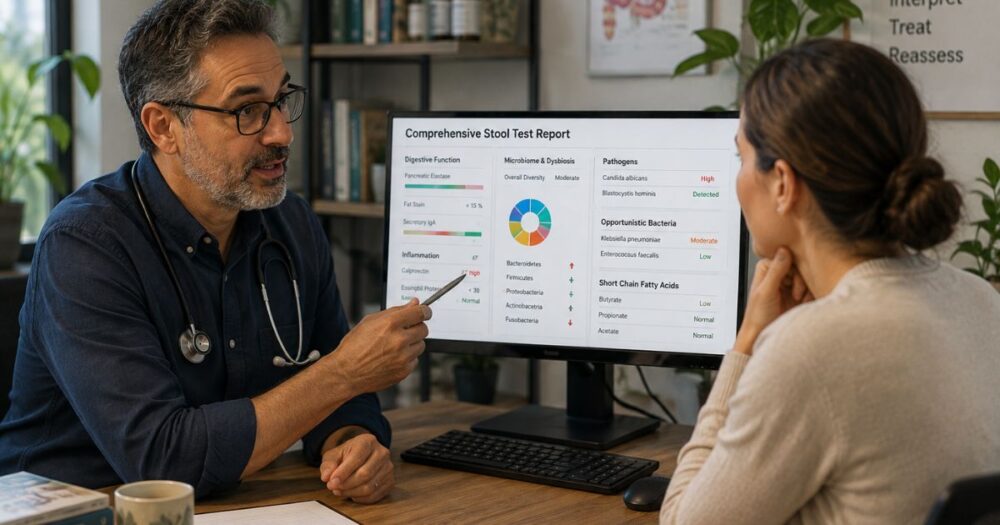
A practitioner can help determine not only which test to order, but whether testing is likely to provide information that could meaningfully influence the next clinical decision.
That leads to a much more useful sequence:
Clinical question → appropriate test → laboratory result → clinical interpretation → next steps
rather than:
Symptoms → biggest test available → positive result → treatment
Your Practitioner Doesn’t Need to Order Every Test
It can be tempting to look at GI-MAP, GI360 and GI Effects and think:
“Perhaps I should have all three.”
More testing isn’t automatically better.
Different tests overlap in some areas while providing different information in others.
Ordering multiple comprehensive panels without a clear clinical reason can generate more data without necessarily generating more useful information.
A good testing strategy starts with:
What are we trying to find out?
Then:
Which investigation is most appropriate for answering that question?
And finally:
How will the result change what we do next?
That last question is particularly important.
If a result is unlikely to change the clinical decision-making process, the value of ordering the test may be limited.
Can You Order These Tests Yourself?
This is another area where terminology can cause confusion.
A person may be able to collect a stool sample at home without necessarily being able to determine independently which clinical investigation is appropriate.
Those are two very different things.
Some laboratories provide collection kits that can be sent directly to patients, while ordering requirements may still depend on the laboratory, practitioner, country or local regulations.
Availability and ordering pathways also vary internationally.
So if you see a laboratory offering home collection, don’t automatically assume that:
“I can diagnose myself with this test.”
The collection process may simply be convenient because a practitioner has already selected the test.
What About New Zealand and Australia?
This is worth mentioning because Yeastrix has an international audience, including readers in countries where access to specialist stool testing may differ.
The availability of functional and specialty stool testing varies considerably between countries.
Some laboratories operate directly in particular countries, while others work through practitioner networks, distributors or collection partners.
That means a test mentioned in an American article may not be available in New Zealand, Australia, Canada or the UK—or may be available through a different ordering pathway.
The test name alone doesn’t tell you whether the test is available, or how it can be accessed, where you live.
This is another reason we should avoid telling readers:
“Just order a GI-MAP.”
Instead:
“Discuss the available testing options with your healthcare practitioner.”
What About the Cost?
Cost is one practical consideration when choosing a test, but it shouldn’t be the deciding factor on its own.
Prices can vary between laboratories, practitioners and countries, and may depend on the specific profile ordered, additional markers, collection requirements and other factors
A more expensive or more comprehensive panel isn’t necessarily more clinically appropriate.
The better question is:
Will this test provide information that is useful for the clinical question being investigated?
Can a Stool Test Detect Candida?
Yes—but that answer needs considerably more explanation.
Candida can be detected in stool using different laboratory methods, including molecular techniques such as PCR and culture-based methods.
Some comprehensive stool investigations specifically include Candida or other fungal targets, while others investigate yeast using culture.
The more important question, however, is not simply:
“Was Candida detected?”
It is:
“What does this finding mean in this particular person?”
That distinction matters because Candida can be found in healthy people without causing illness.
And this brings us to the most important part of the article for our Candida readers.
Candida Detection vs Candida Infection
These terms can sound interchangeable, but they describe different things.
Detection
The laboratory has detected Candida, Candida DNA, or another Candida-associated target in the sample.
Colonisation or carriage
Colonisation or carriage Candida is present without necessarily causing clinically recognised disease.
Infection
Candida is causing a clinically recognised infection at a particular body site.
This distinction is well established in infectious-disease medicine and is important when interpreting Candida findings. The presence of Candida does not automatically mean that a person has a clinically significant Candida infection requiring treatment.
And this is precisely why we should be cautious about language such as:
“Your stool test proves you have Candida overgrowth.”
A stool result may provide useful information, but it does not automatically establish causation.
Why Can Candida Be Found in Healthy People?
Candida is a yeast that can live on and within humans without necessarily causing disease.
It has been detected in the gastrointestinal tract and other mucosal environments of healthy people, although estimates of how commonly it is present vary depending on the population and the testing method used.
For example, a study of 695 healthy adults detected Candida albicans DNA in 82.9% of stool samples using quantitative PCR (Delavy et al., 2023)
This is one reason a positive stool result should not automatically be interpreted as proof that Candida is responsible for someone’s symptoms.
There is also an interesting scientific complication here: different studies don’t necessarily reach identical conclusions about the origin and significance of fungi detected in stool.
Some fungi may represent organisms living within the gastrointestinal tract, while others may reflect material passing through the digestive tract from food or other sources.
That apparent disagreement isn’t necessarily a problem for the reader.
In fact, it demonstrates the point:
Stool fungal findings can be more complicated to interpret than a simple positive-or-negative result suggests.
Does the Amount of Candida Matter?
Potentially—but we should be very careful here.
A quantitative test can tell a practitioner how much target DNA was detected (Kralik & Ricchi, 2017).
That is useful analytical information.
But a numerical result should not automatically be interpreted as:
low = harmless
or:
high = disease
There isn’t a universal stool-Candida threshold that allows us to diagnose symptomatic “Candida overgrowth” simply from a number.
The clinical meaning depends on factors including:
- the organism or target being measured;
- the laboratory method;
- the assay’s reference range or decision framework;
- the amount detected, where applicable;
- the person’s symptoms;
- medical history; and
- the clinical question that led to testing.
This is one of the strongest reasons for having a practitioner interpret the result rather than treating the laboratory report as a diagnosis.
What About GI-MAP and Candida?
GI-MAP uses quantitative PCR to detect selected fungal organisms, including Candida targets.
That means the test can provide quantitative molecular information about the target DNA detected in the stool sample.
But even highly sensitive technology doesn’t eliminate the need for clinical interpretation.
A molecular test can answer:
“Can we detect this target?”
with considerable analytical precision.
It doesn’t necessarily answer:
“Is this target causing this person’s symptoms?”
That second question requires clinical context.
And this distinction is particularly important when investigating microorganisms that can occur within the normal human microbial environment.
👉 Coming Soon: GI-MAP: What Does It Actually Test?
What About Culture?
Culture asks a different question.
Rather than detecting DNA directly, the laboratory attempts to grow microorganisms under appropriate laboratory conditions.
If an organism grows, the laboratory may then identify it and, where appropriate, perform susceptibility testing.
Culture therefore has an important place in clinical microbiology because it can provide a viable isolate for further investigation.
This is one of the interesting differences between the stool-testing approaches discussed in this article.
For example, Doctor’s Data incorporates yeast culture into GI360, while Genova also uses culture-based methods within relevant GI Effects investigations.
So:
PCR and culture aren’t simply competing versions of the same test.
They can provide different kinds of information.
A PCR result may indicate that a particular genetic target was detected.
A culture result indicates that the laboratory was able to grow an organism under the conditions used.
Those findings are not necessarily interchangeable.
Can a Stool Test Tell You Where Candida Is Causing Problems?
Not necessarily.
This is one of the most important limitations to understand.
A stool sample comes from the gastrointestinal tract.
Finding Candida DNA or yeast in stool does not tell you that Candida is causing:
- vaginal symptoms;
- oral thrush;
- a skin infection;
- a nail infection;
- urinary symptoms; or
- an invasive Candida infection.
Those conditions require assessment of the relevant body site and, where appropriate, different diagnostic tests.
For example, recurrent vaginal symptoms may require a vaginal examination and appropriate vaginal testing rather than a stool test.
Oral thrush may be diagnosed clinically, with a swab used where appropriate.
Suspected invasive candidiasis is a completely different clinical situation requiring medical assessment and, in many cases, hospital-based diagnostic approaches.
This is why our broader Candida Testing guide looks at testing according to the site and clinical question, rather than treating every Candida test as interchangeable.
What If My Stool Test Finds Candida?
Don’t panic—and don’t automatically start treating the laboratory result.
Instead, take the result back to the healthcare practitioner who ordered the test.
They can consider:
- why the test was ordered;
- which Candida species or target was detected;
- which laboratory method was used;
- the amount detected, where applicable;
- the laboratory’s reference information;
- your symptoms;
- your medical history;
- medications;
- recent antibiotic exposure;
- immune status; and
- other possible explanations for your symptoms.
The result may be clinically useful.
It may also be incidental.
Or it may form one part of a much larger pattern.
The laboratory report doesn’t make that decision by itself.
What If the Stool Test Doesn’t Find Candida?
A negative result doesn’t necessarily answer every Candida-related question either.
Different tests have different detection capabilities, and they investigate different body sites and biological markers.
A stool test that doesn’t detect Candida doesn’t rule out:
- oral candidiasis;
- vaginal candidiasis;
- skin or nail infection; or
- other forms of Candida infection.
Likewise, a negative stool result doesn’t automatically explain persistent digestive symptoms.
If symptoms continue, the appropriate next step may be to investigate other possible causes rather than simply ordering a different Candida test.
That’s why our Candida Testing cornerstone looks at testing according to the site and clinical question, rather than treating every Candida test as interchangeable.
What If My Symptoms Sound Like Candida but My Tests Are Negative?
This is where things get particularly important.
Symptoms such as:
- bloating;
- gas;
- altered bowel habits;
- abdominal discomfort;
- fatigue;
- food-related symptoms; and
- brain fog
are not specific to Candida.
They can occur with many gastrointestinal and other health conditions.
So if testing doesn’t support Candida—or if the findings don’t adequately explain the symptoms—the answer isn’t necessarily:
“We need an even bigger Candida test.”
It may instead be:
“What else could be causing these symptoms?”
Depending on the clinical picture, a practitioner may consider conditions such as IBS, coeliac disease, inflammatory bowel disease, food intolerance, SIBO, pancreatic insufficiency, gastrointestinal infection, medication effects or other gastrointestinal disorders.
That is one of the advantages of working with a practitioner: they can change direction when the evidence points somewhere else.
When Might Comprehensive Stool Testing Be Useful?
A comprehensive stool investigation may be considered when gastrointestinal symptoms are:
- persistent;
- recurrent;
- unexplained;
- associated with changes in bowel habits;
- accompanied by other concerning features; or
- not responding as expected to previous management.
It may also be useful when a practitioner wants to investigate several possible contributors at once—for example, pathogens, parasites, inflammation and digestive function.
But comprehensive stool testing isn’t automatically necessary for everyone with digestive symptoms.
Sometimes a simpler, more targeted investigation is more appropriate.
The right question isn’t:
“Which is the biggest test I can get?”
It’s:
“Which investigation is most likely to answer the clinical question?”
When Should You Speak With a Healthcare Practitioner?
You should seek professional assessment if you have persistent or recurrent symptoms, particularly if you experience:
- unexplained weight loss;
- blood in the stool;
- persistent diarrhoea;
- significant or worsening abdominal pain;
- recurrent infections;
- symptoms that continue despite treatment;
- fever or significant systemic illness; or
- a weakened immune system.
And if you’re simply unsure whether Candida is actually responsible for your symptoms, that’s also a reasonable reason to seek professional guidance.
You don’t have to arrive at the consultation already knowing which test you need.
That’s the practitioner’s job.
What Happens After Testing?
Testing is not the destination.
It is information that may help guide the next decision.
Your practitioner may recommend:
No treatment change
If the findings aren’t clinically significant or don’t change the current assessment.
Further investigation
If the results raise another question that requires clarification.
Conventional medical treatment
If a recognised infection, inflammatory condition or other disorder is identified that requires medical care.
Dietary or lifestyle changes
Where appropriate to the individual and the clinical situation.
Nutritional support
Where appropriate as part of a broader plan.
Or a combination of these approaches.
The important point is that treatment should follow the clinical picture, not simply whichever box happens to be highlighted on a laboratory report.
Where Do Dietary Supplements Fit?
This is where we can bring Yeastrix into the article without suddenly turning an educational article into a sales page.
At Yeastrix, we believe dietary supplements can be one part of a broader approach to digestive health.
Depending on an individual’s circumstances, a qualified healthcare practitioner may consider nutritional support such as:
- probiotics;
- digestive enzymes;
- botanical ingredients; or
- other dietary and nutritional interventions.
However, supplements should not be viewed as substitutes for appropriate diagnosis or medical treatment.
If testing identifies a condition that requires conventional medical care, that care should not be delayed in favour of dietary supplements.
Likewise, if a practitioner believes nutritional support may be appropriate, they can help determine which products, ingredients and approach are suitable for the individual.
The approach is:
Testing → interpretation → appropriate plan → support.
Not:
Testing → positive result → supplement.
That’s an important distinction.
At Yeastrix, we believe informed health decisions start with understanding the evidence, asking the right questions and working with qualified healthcare professionals.
Frequently Asked Questions
Is a stool test the best way to test for Candida?
Not necessarily.
The appropriate test depends on where Candida is suspected and what the practitioner is trying to determine. Stool testing may be relevant when investigating gastrointestinal symptoms, but localised infections such as vaginal or oral candidiasis generally require assessment of the affected site and, when appropriate, testing of that site.
Can GI-MAP detect Candida?
Yes.
GI-MAP uses quantitative PCR to detect selected fungal targets, including Candida.
However, detecting Candida DNA does not by itself establish that Candida is causing symptoms.
Does a positive Candida stool test mean I have Candida overgrowth?
Not necessarily.
Candida can be detected in people without clinically significant Candida disease, so a positive result needs to be interpreted in context.
Is Candida in stool always abnormal?
No.
Candida and other fungi may be detected in stool from people without clinically significant Candida disease. The significance of the finding depends on the individual, the testing method and the clinical question.
Which is better: PCR or culture?
Neither is universally better.
PCR and culture use different methodologies and can provide different information. PCR detects selected genetic targets, while culture attempts to grow viable microorganisms under appropriate laboratory conditions. The most appropriate method depends on the microorganism being investigated and the clinical question.
Should I order GI-MAP, GI360 and GI Effects?
There is usually no reason to order multiple comprehensive stool tests simply because they offer more information.
A qualified healthcare practitioner can help determine which investigation is most appropriate for the clinical question being investigated.
Can I order a comprehensive stool test myself?
Availability and ordering requirements vary between laboratories, countries and sometimes U.S. states.
Some laboratories allow home collection, while the test itself may still require an order from a qualified healthcare practitioner. Home collection does not necessarily mean that a person should independently select or interpret the test.
What should I do if my test finds Candida?
Discuss the result with the healthcare practitioner who ordered the test.
Don’t assume that detecting Candida automatically means that it is causing your symptoms or that treatment is required.
What if my stool test is negative but I still have symptoms?
A negative stool test doesn’t automatically explain persistent symptoms.
Depending on your symptoms and clinical history, your practitioner may consider other possible causes or different types of testing.
Test Your Knowledge 🤔
The Bottom Line
Comprehensive stool testing can provide a remarkable amount of information about gastrointestinal health.
But more information doesn’t automatically mean a better diagnosis.
GI-MAP, GI360 and GI Effects use different combinations of molecular testing, culture, microscopy, biochemical markers and, in some configurations, broader microbiome sequencing.
Each can provide useful information—but none should be treated as a universal answer to every digestive problem.
And when it comes to Candida, one principle is particularly important:
Finding Candida is not the same as proving Candida is causing your symptoms.
The most useful approach is to begin with the clinical question, choose an investigation that can genuinely help answer it, and interpret the results alongside symptoms, medical history and other relevant findings.
If Candida is suspected, testing may be one part of the investigation—but it should not replace a proper clinical assessment.
At Yeastrix, we believe informed health decisions start with understanding the evidence, asking the right questions and working with qualified healthcare professionals.
Testing should support clinical judgement—not replace it.
References
American College of Gastroenterology. (2024, April). H. pylori. https://gi.org/topics/h-pylori/
Centers for Disease Control and Prevention. (n.d.). Testing for candidiasis. https://www.cdc.gov/candidiasis/testing/index.html
Delavy, M., Sertour, N., Patin, E., Le Chatelier, E., Cole, N., Dubois, F., Xie, Z., Saint-André, V., Manichanh, C., Walker, A. W., Quintana-Murci, L., Duffy, D., d’Enfert, C., Bougnoux, M.-E., & Milieu Intérieur Consortium. (2023). Unveiling Candida albicans intestinal carriage in healthy volunteers: The role of micro- and mycobiota, diet, host genetics and immune response. Gut Microbes, 15(2), 2287618. https://doi.org/10.1080/19490976.2023.2287618
Kralik, P., & Ricchi, M. (2017). A basic guide to real time PCR in microbial diagnostics: Definitions, parameters, and everything. Frontiers in Microbiology, 8, 108. https://doi.org/10.3389/fmicb.2017.00108
Porcari, S., Mullish, B. H., Asnicar, F., Ng, S. C., Zhao, L., Hansen, R., O’Toole, P. W., Raes, J., Hold, G., Putignani, L., Hvas, C. L., Zeller, G., Koren, O., Tun, H., Valles-Colomer, M., Collado, M. C., Fischer, M., Allegretti, J., Iqbal, T., … Ianiro, G. (2025). International consensus statement on microbiome testing in clinical practice. The Lancet Gastroenterology & Hepatology, 10(2), 154–167. https://doi.org/10.1016/S2468-1253(24)00311-X
Medical & Testing Disclaimer: This article is provided for educational and informational purposes only and is not intended to diagnose, treat, cure or prevent any disease or to replace professional medical advice, diagnosis or treatment. Comprehensive stool tests and microbiome tests can provide useful laboratory information, but their results may be affected by the testing method, laboratory reference ranges, test configuration and clinical context. A positive or negative result does not necessarily establish the cause of symptoms or confirm or exclude a particular condition. Test availability, methodologies and laboratory profiles can change over time, so current laboratory information should always be checked. If you have persistent, severe or concerning symptoms, or are concerned about a possible infection or other medical condition, consult a qualified healthcare professional. Do not delay or discontinue medical treatment based on information presented in this article.