Bacillus coagulans: Benefits, Gut Health, Candida & Uses Explained

Quick Answer: What Is Bacillus coagulans?
Bacillus coagulans (B.coagulans) is a spore-forming probiotic that helps support digestive and gut health. Unlike many traditional probiotics, it forms a protective spore that allows it to survive stomach acid and reach the intestine, where it becomes active. Researchers have studied specific strains for their potential to support a healthy gut microbiome, digestive comfort, immune function, and recovery after antibiotic use, although benefits can vary depending on the strain and the individual.
The bottom line: Bacillus coagulans is one of the most thoroughly researched spore-forming probiotics available today. While it isn’t a cure for digestive conditions or Candida overgrowth, current evidence suggests it may be a valuable part of a broader gut health strategy when combined with a healthy diet and lifestyle.
If you’ve been searching for information about Bacillus coagulans, you’re probably wondering whether it’s just another probiotic—or whether it really offers something different.
Unlike many traditional probiotics, Bacillus coagulans is a spore-forming bacterium that can survive stomach acid and reach the intestine, where it becomes active. Researchers have become increasingly interested in its potential role in supporting digestive health, maintaining a healthy gut microbiome, supporting immune function, and helping restore microbial balance after disruptions such as antibiotic use.While research is still evolving, several human clinical studies have reported benefits for digestive symptoms including bloating, abdominal discomfort, and irritable bowel syndrome (IBS).
In this evidence-based guide, we’ll explore what Bacillus coagulans is, how it differs from other probiotics, what the current science says about its potential benefits, possible side effects, and whether it may have a role in supporting people with digestive issues or suspected Candida overgrowth. We’ll also explain why this unique probiotic is included in our Yeastrix Active Enzymes formula as part of a broader gut health approach.
Key Takeaways
- Bacillus coagulans is a spore-forming probiotic that naturally survives stomach acid better than many traditional probiotic species, allowing it to reach the intestines alive.
- Unlike many probiotics, it is naturally shelf-stable and typically does not require refrigeration because of its protective spore coating.
- Research suggests certain strain-specific Bacillus coagulans probiotics may support digestive comfort, a balanced gut microbiome, and normal immune function, although benefits vary depending on the strain studied.
- Not all Bacillus coagulans supplements are the same. The specific strain, dose (CFU), and product quality all influence how a probiotic performs.
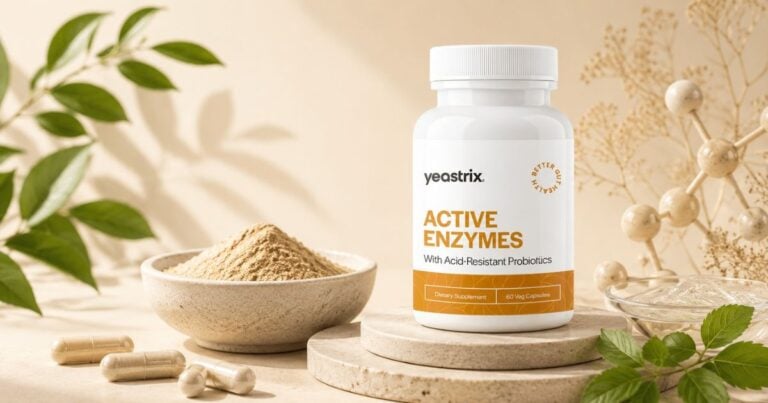
- Yeastrix Active Enzymes combines 13 digestive enzymes with 100 million CFU of Bacillus coagulans to support healthy digestion as part of a balanced diet and healthy lifestyle.
Estimated reading time: 17 minutes
What Is Bacillus coagulans?
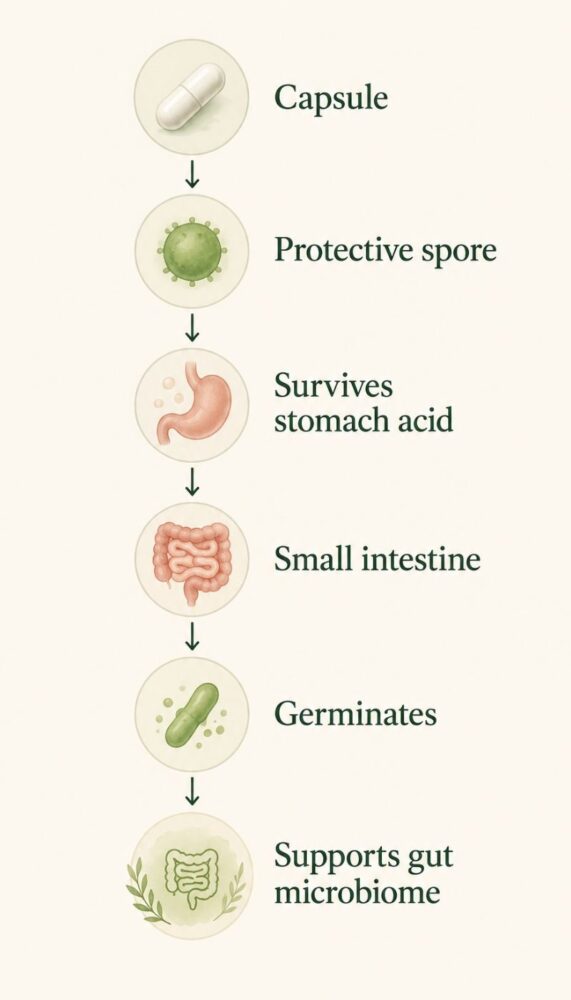
Bacillus coagulans is a spore-forming probiotic bacterium that supports digestive and gut health. Although it produces lactic acid like many familiar probiotic bacteria, it differs in one important way: it forms a tough protective spore that allows it to survive heat, stomach acid, and many of the harsh conditions that destroy other probiotics before they reach the intestine.
Once the spore reaches the small intestine, it germinates into its active form, where it can interact with the gut microbiome and support normal digestive function. Unlike some probiotic species that may persist for longer periods, Bacillus coagulans is generally considered a transient probiotic. It doesn’t permanently colonise the gut, which means regular intake is usually needed to maintain its potential benefits.
Because of its exceptional stability, Bacillus coagulans has become one of the most widely studied spore-forming probiotics. Researchers have investigated specific strains for their potential to support digestive comfort, immune function, nutrient metabolism, and a healthy balance of the gut microbiome. As with all probiotics, however, the effects depend on the individual strain being studied, and not every strain has the same level of scientific evidence.
Did you know?
Why is Bacillus coagulans sometimes called Heyndrickxia coagulans?
If you’ve been reading scientific papers, you may have noticed that Bacillus coagulans is sometimes referred to as Heyndrickxia coagulans (and occasionally Weizmannia coagulans).
This reflects updates in bacterial classification, not a different probiotic. As scientists learn more about bacterial genetics through DNA sequencing, some organisms are moved into new genera to better reflect their evolutionary relationships. In 2023, researchers proposed reclassifying Bacillus coagulans into the genus Heyndrickxia.
However, most healthcare professionals, supplement manufacturers, scientific studies, and consumers still use the familiar name Bacillus coagulans. To avoid confusion, that’s the name we’ve used throughout this article.
Why Is Bacillus coagulans Different from Other Probiotics?
Not all probiotics behave in the same way. While many familiar probiotic bacteria, such as Lactobacillus and Bifidobacterium, are relatively delicate, Bacillus coagulans belongs to a unique group known as spore-forming probiotics.
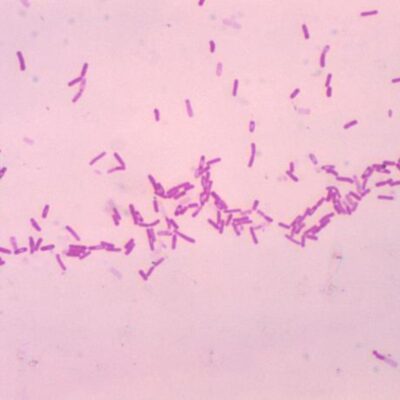
Think of a spore as nature’s protective survival capsule. When environmental conditions become harsh—including exposure to stomach acid, heat, or moisture—the bacterium forms a tough outer coating that protects it until conditions become favourable again. This remarkable adaptation allows Bacillus coagulans to survive the journey through the stomach far more effectively than many non-spore-forming probiotics.
Once it reaches the small intestine, the protective spore begins to germinate, transforming into its active bacterial form. From there, it can interact with the gut microbiome, produce lactic acid, and contribute to a healthy digestive environment. Unlike permanent residents of the gut, however, Bacillus coagulans is considered a transient probiotic, meaning it typically remains in the digestive tract for only a few days after supplementation has stopped. For this reason, regular intake is generally recommended if you’re looking to maintain its potential benefits.
Another advantage is its excellent stability. Because the spores tolerate heat, moisture, and acidic conditions, Bacillus coagulans can often remain stable during manufacturing and storage without requiring refrigeration. This resilience makes it a popular choice for both dietary supplements and functional foods.
Bacillus coagulans vs. Traditional Probiotics
| Bacillus coagulans | Many Traditional Probiotics |
|---|---|
| Forms protective spores | Do not form spores |
| Highly resistant to stomach acid | More sensitive to stomach acid |
| Excellent shelf stability | Often require more careful storage |
| Germinates in the small intestine | Survival depends on the strain and formulation |
| Temporary (transient) resident of the gut | Some strains may persist for longer periods |
Good to know: Although Bacillus coagulans survives stomach acid extremely well, that doesn’t automatically make it “better” than every other probiotic. Different probiotic species have different strengths, and the best choice depends on your individual health goals and the specific strains being used.
How Bacillus coagulans Works
From spore to gut support in six simple steps.
Understanding CFUs: How Much Bacillus coagulans Is Enough?
You might have seen CFUs listed on supplement bottles. CFU stands for colony-forming units. It is a measure used to estimate the number of viable microorganisms capable of forming colonies under specified laboratory conditions. A higher CFU count does not necessarily mean a probiotic will be more effective or permanently colonise the gut.
In Yeastrix Active Enzymes, we include 100 million CFU of Bacillus coagulans per serving. That means plenty of live bacteria ready to support your digestion.
While CFU counts can give you an idea of potency, they’re not the whole story. The strain’s quality, delivery method, and your unique gut environment also play big roles in how well a probiotic works.
So, while it’s important to have a good CFU count, it’s just one piece of the puzzle.
Good to know: A higher CFU count doesn’t automatically mean a probiotic is better. The specific strain, the quality of the product, and the clinical research behind it are often more important than the number on the label alone.
Potential Benefits of B. coagulans
Research into Bacillus coagulans has grown rapidly over the past two decades. Although different strains have been studied for different purposes, the strongest evidence currently relates to digestive health, with emerging research also exploring its effects on immune function, the gut microbiome, and overall wellbeing. As with all probiotics, it’s important to remember that benefits are strain-specific, so results seen with one strain may not apply to every supplement.
Supports Digestive Health
The best-studied benefit of Bacillus coagulans is its ability to support digestive comfort. Clinical studies have found that certain strains may help reduce symptoms such as bloating, abdominal discomfort, excess gas, and indigestion in some adults. These benefits are thought to result from interactions with the gut microbiome and improvements in the overall digestive environment rather than by permanently changing the bacteria that live in the gut.
May Help Some People with Irritable Bowel Syndrome (IBS)
Several randomised controlled trials have investigated Bacillus coagulans in people with irritable bowel syndrome (IBS). Some studies reported improvements in abdominal pain, bloating, bowel habits, and quality of life compared with placebo. A recent systematic review concluded that certain strains may be a useful addition to IBS management, although more high-quality research is still needed.
Related reading: If digestive symptoms are affecting your daily life, you may also find our guide to Irritable Bowel Syndrome (IBS) helpful.
Supports a Healthy Gut Microbiome
Rather than permanently colonising the gut, Bacillus coagulans works as a transient probiotic, interacting with the existing microbiome while it passes through the digestive tract. Researchers believe this may help support microbial balance, encourage a healthy intestinal environment, and contribute to normal digestive function.
May Support Normal Immune Function
Because the gut microbiome plays an important role in immune regulation, researchers have also investigated whether Bacillus coagulans may help support normal immune function. Some clinical studies have reported improvements in immune-related measures, although further research is needed before firm conclusions can be drawn.
Remember: No probiotic is a magic bullet. The greatest benefits are usually seen when probiotics are combined with a nutrient-rich diet, adequate fibre, quality sleep, regular physical activity, and other healthy lifestyle habits that support the gut microbiome.
Bacillus coagulans probiotics and Candida: What Does the Research Say?
Many people interested in gut health wonder whether Bacillus coagulans may also help support a healthy balance of Candida, particularly after antibiotic use or during periods of digestive imbalance. It’s a sensible question—but the current evidence requires a balanced interpretation.
Laboratory studies have shown that certain strains of Bacillus coagulans can inhibit the growth of Candida albicans and reduce some of the mechanisms that allow the yeast to attach to tissues and form biofilms. Researchers believe this may occur through several mechanisms, including the production of antimicrobial compounds, competition for nutrients and attachment sites, and support for a healthier microbial environment.
However, it’s important to distinguish laboratory findings from human clinical evidence. While these early studies are promising, there is currently insufficient clinical evidence to conclude that Bacillus coagulans alone can prevent or treat Candida overgrowth in people. More well-designed human studies are needed before firm recommendations can be made.
That doesn’t mean it has no place in a gut health programme. Because Bacillus coagulans may help support a healthy gut microbiome—particularly after disruptions such as antibiotic use—it may complement broader strategies aimed at maintaining microbial balance. These strategies typically include a nutrient-rich diet, appropriate medical care when needed, and, in some cases, carefully selected probiotics and other supportive measures.
If you’re trying to understand Candida overgrowth, start with our guide What Is Candida Overgrowth?
You may also find our articles on Can Antibiotics Cause Candida Overgrowth? and the Candida Diet: Complete Food List and Beginner’s Guide helpful
Is Bacillus coagulans Safe? Side Effects and Precautions
Bacillus coagulans has been extensively studied and is generally considered safe for healthy adults when consumed in the amounts used in foods and dietary supplements. Several strains have been evaluated in human clinical trials, and serious adverse effects have been uncommon. In the United States, certain strains have also been recognised as Generally Recognized As Safe (GRAS) for their intended uses.
Common Side Effects
Most people tolerate Bacillus coagulans well. However, as with many probiotics, some people notice mild digestive symptoms when they first begin taking it, particularly if they are new to probiotic supplements.
These may include:
- Mild bloating
- Increased gas
- Temporary changes in bowel habits
- Mild abdominal discomfort
These symptoms are usually short-lived as the digestive system adjusts and often settle within a few days.
Who Should Speak with a Healthcare Professional First?
Although Bacillus coagulans has an excellent safety profile for most people, probiotics aren’t appropriate for everyone.
It’s sensible to seek medical advice before taking probiotic supplements if you:
- have a severely weakened immune system
- are receiving chemotherapy or immunosuppressive medicines
- have a central venous catheter
- are seriously ill or hospitalised
- have concerns about introducing any new supplement during pregnancy or breastfeeding
Your healthcare provider can help determine whether a probiotic is appropriate for your individual circumstances.
Can You Take Bacillus coagulans Every Day?
For most healthy adults, daily use has been well tolerated in clinical studies. Because Bacillus coagulans is considered a transient probiotic, it doesn’t usually remain in the digestive tract permanently after supplementation stops. Regular intake may therefore be needed if you wish to continue receiving its potential benefits.
Good to know: More isn’t always better. Taking larger doses than recommended isn’t known to provide greater benefits. Following the manufacturer’s directions and maintaining healthy lifestyle habits remains the best approach.
Why We Include Bacillus coagulans in Yeastrix Active Enzymes
At Yeastrix, we believe that supporting gut health is about more than adding a single ingredient. Healthy digestion depends on many factors, including the efficient breakdown of food, a balanced gut microbiome, and healthy everyday habits such as good nutrition, adequate fibre, regular physical activity, and quality sleep.
One reason we included Bacillus coagulans in our Active Enzymes formula is that it complements the digestive enzyme blend by supporting the gut microbiome while the enzymes help break down food.
Digestive enzymes and probiotics perform different but complementary roles. Digestive enzymes help break down proteins, fats, carbohydrates, and fibre into smaller components that your body can absorb more efficiently. Bacillus coagulans, on the other hand, is a spore-forming probiotic that survives the journey through the stomach before becoming active in the intestine, where it may help support a healthy gut microbiome and digestive environment. Rather than doing the same job, these ingredients work alongside one another to support normal digestive function.
Our Yeastrix Active Enzymes formula contains 13 carefully selected digestive and systemic enzymes together with Bacillus coagulans. The aim isn’t to offer a quick fix, but to complement a balanced diet and healthy lifestyle as part of a broader approach to digestive wellbeing.
The formula includes enzymes such as:
- Protease to help digest proteins
- Amylase to break down carbohydrates
- Lipase to assist with fat digestion
- Cellulase and hemicellulase to help break down plant fibres
- Alpha-galactosidase to support the digestion of certain complex carbohydrates
- Beta-glucanase, xylanase, and other specialised enzymes that broaden digestive support
Together with Bacillus coagulans, these ingredients are designed to support comfortable digestion as part of an overall gut health programme. They are not intended to diagnose, treat, cure, or prevent disease, but to work alongside healthy lifestyle habits and appropriate medical care where needed.
If you’d like to learn more about digestive enzymes and how they work, explore our guide What Are Digestive Enzymes?
Final Thoughts
Bacillus coagulans is one of the most thoroughly researched spore-forming probiotics available today. Its unique ability to survive stomach acid, combined with growing evidence supporting digestive health, makes it an interesting option for people looking to support their gut microbiome as part of a healthy lifestyle. Recent reviews suggest it may help support digestive comfort, microbial balance, and aspects of immune function, although benefits remain strain-specific and more research is still underway.
It’s also important to keep expectations realistic. No single probiotic can replace a balanced diet, regular physical activity, adequate sleep, stress management, or appropriate medical care. Gut health is influenced by many factors, and probiotics work best as one part of a broader, long-term approach to supporting digestive wellbeing.
If you’re considering adding a probiotic to your routine, choose a product that clearly identifies its ingredients, follows good manufacturing practices, and is supported by quality research. If you have a medical condition, are pregnant or breastfeeding, or take prescription medications, speak with your healthcare provider before starting any new supplement.
Whether you’re exploring probiotics for digestive comfort, recovering after antibiotics, or simply looking to better understand your gut microbiome, we hope this guide has helped you make a more informed decision.
Frequently Asked Questions
Bacillus coagulans is a spore-forming probiotic commonly used to support digestive health and a healthy gut microbiome. Research has investigated certain strains for their potential to help with bloating, abdominal discomfort, irritable bowel syndrome (IBS), and immune function, although benefits vary depending on the specific strain studied.
Many researchers consider Bacillus coagulans to be a valuable probiotic because it forms protective spores that help it survive stomach acid and reach the intestine. Like all probiotics, however, its effectiveness depends on the specific strain, the dose, and the health condition being studied.
For most healthy adults, daily use is generally considered safe when taken as directed. Because Bacillus coagulans does not permanently colonise the gut, regular use may be needed to maintain its potential benefits. If you’re pregnant, breastfeeding, immunocompromised, or have a serious medical condition, speak with your healthcare provider before taking any probiotic supplement.
Some laboratory studies suggest that certain strains of Bacillus coagulans may inhibit the growth of Candida albicans. However, there is currently insufficient clinical evidence to recommend Bacillus coagulans as a treatment for Candida overgrowth in humans. It may be best viewed as one part of a broader gut health strategy rather than a standalone solution.
The main difference is that Bacillus coagulans forms protective spores, allowing it to survive stomach acid more effectively than many traditional probiotics. Lactobacillus species do not form spores, although many are also well-researched and offer important health benefits. Neither group is inherently “better”—they simply have different characteristics and uses.
Most Bacillus coagulans supplements are shelf stable because the bacteria are protected within hardy spores. Always follow the storage instructions on the product label, as recommendations may vary between manufacturers.
This varies from person to person. Some clinical studies have reported improvements in digestive symptoms within two to four weeks, although results depend on the probiotic strain used, the individual’s gut health, and the condition being addressed.
Yes. Digestive enzymes and Bacillus coagulans perform different roles. Digestive enzymes help break down food, while Bacillus coagulans supports the gut microbiome. Some formulations combine both ingredients as part of a broader digestive health programme.
Unlike many other probiotic bacteria, Bacillus coagulans is not naturally abundant in everyday foods. It is most commonly consumed as a dietary supplement or added to certain functional foods. Other fermented foods, such as yoghurt, kefir, kimchi, and sauerkraut, contain different beneficial bacteria that can also support gut health.
No. Although both are probiotics that produce lactic acid, Bacillus coagulans forms protective spores that help it survive stomach acid. Lactobacillus species do not form spores and have different characteristics, although many are also well-studied probiotics.
References
Liang J, Li C, Chen Z, Guo F, Dou J, Wang T and Xu ZS (2024) Progress of research and application of Heyndrickxia coagulans (Bacillus coagulans) as probiotic bacteria. Front. Cell. Infect. Microbiol. 14:1415790. doi: 10.3389/fcimb.2024.1415790
Mazhar S, Simon A, Khokhlova E, Colom J, Leeuwendaal N, Deaton J and Rea K (2024)
In vitro safety and functional characterization of the novel Bacillus coagulans strain CGI314. Front. Microbiol. 14:1302480. doi: 10.3389/fmicb.2023.1302480
Kallur RK, Madapati S, Mathur A and Bhattacharya S (2024) The role of Weizmannia (Bacillus) coagulans LMG S-31876 in treating IBS-diarrhea. Front. Nutr. 10:1310462. doi: 10.3389/fnut.2023.1310462
Hill, C., Guarner, F., Reid, G., Gibson, G. R., Merenstein, D. J., Pot, B., Morelli, L., Canani, R. B., Flint, H. J., Salminen, S., Calder, P. C., & Sanders, M. E. (2014). Expert consensus document. The International Scientific Association for Probiotics and Prebiotics consensus statement on the scope and appropriate use of the term probiotic. Nature reviews. Gastroenterology & hepatology, 11(8), 506–514. https://doi.org/10.1038/nrgastro.2014.66
Sanders, M. E., Merenstein, D. J., Reid, G., Gibson, G. R., & Rastall, R. A. (2019). Probiotics and prebiotics in intestinal health and disease: from biology to the clinic. Nature reviews. Gastroenterology & hepatology, 16(10), 605–616. https://doi.org/10.1038/s41575-019-0173-3
Rinninella, E., Raoul, P., Cintoni, M., Franceschi, F., Miggiano, G. A. D., Gasbarrini, A., & Mele, M. C. (2019). What is the Healthy Gut Microbiota Composition? A Changing Ecosystem across Age, Environment, Diet, and Diseases. Microorganisms, 7(1), 14. https://doi.org/10.3390/microorganisms7010014
International Scientific Association for Probiotics and Prebiotics. (n.d.). What are probiotics?
National Center for Complementary and Integrative Health. (2023). Probiotics: What you need to know.
Continue Reading
Disclaimer: This article is intended for educational and informational purposes only and is not a substitute for professional medical advice, diagnosis, or treatment. Always consult with a qualified healthcare provider before starting any new treatment or supplement, especially if you have a pre-existing medical condition or are taking medication. The recommendations here reflect a naturopathic approach and are not meant to replace conventional care when it is required. Individual results may vary.