
Cinnamon Bark for Candida: Benefits, Research & Gut Health Support
An Ancient Botanical for Candida and Gut Health
Cinnamon bark has been used for centuries in both Ayurvedic and Traditional Chinese Medicine to support digestion, circulation and overall wellbeing. Today, it is increasingly recognised for its naturally occurring plant compounds, including cinnamaldehyde, which have demonstrated antifungal activity against Candida albicans in laboratory studies.
In addition to its potential antifungal properties, cinnamon bark has been widely studied for its role in supporting healthy blood sugar levels, reducing oxidative stress and maintaining a balanced gut environment. These combined actions make it a valuable botanical ingredient in comprehensive Candida support formulas.
For these reasons, cinnamon bark is included in the Yeastrix Candida Cleanse, where it works alongside other carefully selected botanicals to support gut health and microbial balance.
If you’re new to this topic, it helps to understand what Candida overgrowth is, why it develops, and how restoring gut health may help support long-term microbial balance.
Quick Answer
Cinnamon bark contains naturally occurring compounds, including cinnamaldehyde, that have demonstrated antifungal activity against Candida albicans in laboratory studies. Traditionally used in both Ayurvedic and Traditional Chinese Medicine, cinnamon bark may help support gut health, microbial balance and healthy blood sugar levels as part of a comprehensive Candida support programme. More human clinical research is needed to fully understand its effects.
🧪 Research Snapshot
Laboratory studies suggest that cinnamon bark contains naturally occurring compounds, including cinnamaldehyde, that have demonstrated antifungal activity against Candida albicans. Research has also explored cinnamon’s potential to support a healthy microbial balance, interfere with biofilm formation, and provide antioxidant benefits. While these findings are encouraging, much of the current evidence comes from laboratory and animal studies, and further human clinical research is needed to better understand cinnamon’s role in supporting digestive and gut health.
Key Takeaways
- Cinnamon bark has been used in Ayurvedic and Traditional Chinese Medicine for centuries to support digestion, gut health and overall wellbeing.
- Ceylon cinnamon (Cinnamomum verum) is generally preferred over cassia cinnamon for dietary supplements because it naturally contains much lower levels of coumarin.
- Cinnamon bark contains naturally occurring compounds that have demonstrated antifungal activity against Candida albicans in laboratory studies and may help support a healthy microbial balance.
- The Yeastrix Candida Cleanse combines Ceylon cinnamon with other carefully selected botanical ingredients to support gut health and maintain a balanced gut microbiome.
- While Ceylon cinnamon is generally well tolerated, it’s important to consult your healthcare provider before taking cinnamon supplements if you have an underlying medical condition, are pregnant, or take prescription medication.
Estimated reading time: 9 minutes
What Is Cinnamon Bark?
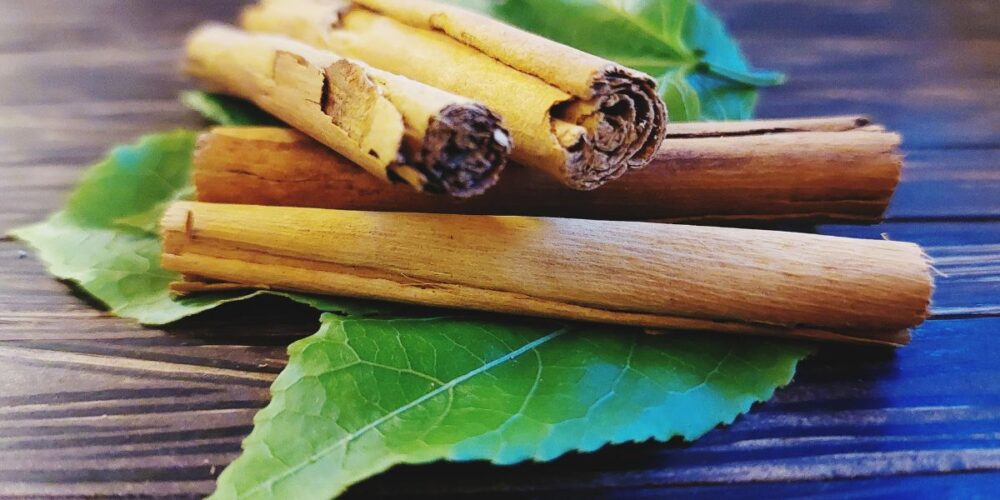
Cinnamon bark is harvested from several species of the Cinnamomum tree, an evergreen native to parts of Asia. Once the outer bark is removed, the inner bark is dried and naturally curls into the familiar cinnamon quills used in cooking and traditional herbal medicine.
The two species most commonly used are Cinnamomum verum (also known as Ceylon or true cinnamon) and Cinnamomum cassia (commonly called cassia cinnamon). While both have a long history of traditional use, Ceylon cinnamon is generally preferred for dietary supplements because it contains much lower levels of coumarin, a naturally occurring compound found in higher amounts in cassia.
When cinnamon bark is carefully dried and prepared as a concentrated extract, it provides naturally occurring plant compounds, including cinnamaldehyde, that have demonstrated antifungal and antimicrobial activity in laboratory studies.
Why We Use Ceylon Cinnamon Instead of Cassia
Not all cinnamon is the same. The two most common varieties are Ceylon cinnamon (Cinnamomum verum) and cassia cinnamon (Cinnamomum cassia). Although both have a long history of culinary and traditional medicinal use, they differ in their natural composition.
Cassia cinnamon contains considerably higher levels of coumarin, a naturally occurring compound that may not be suitable in large amounts or for long-term use. By comparison, Ceylon cinnamon contains only trace amounts of coumarin, making it the preferred choice for many high-quality dietary supplements.
For this reason, the Yeastrix Candida Cleanse uses Ceylon cinnamon bark extract, providing the botanical benefits of cinnamon while using the variety generally preferred for regular supplementation.
How May Cinnamon Bark Support Gut Health During a Candida Cleanse?
1. Supports a Healthy Microbial Balance
Cinnamon bark contains naturally occurring compounds, including cinnamaldehyde, that have demonstrated antifungal activity against Candida albicans in laboratory studies. Researchers believe these compounds may interfere with fungal cell membranes and other cellular processes involved in the growth of yeast.
Some laboratory research has also explored cinnamon’s potential effects on microbial biofilms—protective layers that can make microorganisms more resistant to environmental stresses. While these findings are promising, further human clinical research is needed to better understand cinnamon’s role in supporting a healthy microbial balance.
Cinnamon bark is often combined with other botanical ingredients in comprehensive gut health formulas because different herbs contribute different naturally occurring plant compounds and complementary forms of digestive support.
2. Supports Healthy Blood Sugar Levels
Maintaining healthy blood sugar levels is an important part of overall metabolic and digestive health. Cinnamon has been widely studied for its potential role in supporting normal glucose metabolism and healthy insulin sensitivity.
For people following a Candida-friendly diet, stable blood sugar levels may also help reduce fluctuations in appetite and sugar cravings, making dietary changes easier to maintain.
While cinnamon bark is not a treatment for blood sugar disorders, its traditional use and ongoing scientific interest make it a valuable addition to a comprehensive gut health programme.
3. Supports Digestive Comfort and Gut Health
Cinnamon has traditionally been valued as a warming herb that supports healthy digestion. It has long been used to help promote digestive comfort and is often included in herbal formulations designed to support normal gastrointestinal function.
In addition to its traditional use, laboratory studies suggest cinnamon possesses broad-spectrum antimicrobial activity. This combination of traditional knowledge and emerging scientific research makes cinnamon bark a valuable botanical ingredient in comprehensive gut health formulas.
4. Antioxidant and Anti-Inflammatory Plant Compounds
Cinnamon bark contains naturally occurring antioxidants that help protect cells from oxidative stress. It has also been studied for compounds that may help support a healthy inflammatory response.
Because digestive health and microbial balance are closely linked, these properties may complement cinnamon’s broader role within a comprehensive gut health programme.
Why We Included Cinnamon Bark in Yeastrix Candida Cleanse
At Yeastrix, we believe that no single herb has all the answers. That’s why our Candida Cleanse combines Ceylon cinnamon with a carefully selected blend of botanical extracts and natural compounds, each chosen for its unique role in supporting digestive health and maintaining a balanced gut microbiome.
Ceylon cinnamon was included because it has a long history of traditional use and contains naturally occurring plant compounds that have attracted modern scientific interest. Alongside ingredients such as oregano oil, garlic, clove bud, neem leaf, olive leaf, black walnut, pau d’arco, caprylic acid, and undecylenic acid, it contributes to a comprehensive formula designed to support gut health from multiple angles.
Want to learn more about every ingredient in our formula? Explore our complete guide to the ingredients in Yeastrix Candida Cleanse and discover how each botanical contributes to our comprehensive gut health formula.
Is Cinnamon Bark Safe?
Ceylon cinnamon is generally well tolerated by healthy adults when taken as directed in dietary supplements. However, like any botanical ingredient, it may not be suitable for everyone.
You should speak with your healthcare practitioner before taking cinnamon supplements if you:
- are pregnant or breastfeeding
- have diabetes or take blood sugar-lowering medication
- take blood-thinning medication
- have liver disease or another significant medical condition
- are taking prescription medication and are unsure whether herbal supplements are appropriate
Our Candida Cleanse uses Ceylon cinnamon (Cinnamomum verum), which naturally contains much lower levels of coumarin than cassia cinnamon and is generally preferred for dietary supplements intended for regular use.
As always, follow the recommended dosage and seek professional advice if you have any concerns.
Frequently Asked Questions
For dietary supplements, Ceylon cinnamon (Cinnamomum verum) is generally preferred because it naturally contains much lower levels of coumarin than cassia cinnamon (Cinnamomum cassia). Coumarin is a naturally occurring compound that may not be suitable in large amounts or for long-term use. This is why Yeastrix Candida Cleanse uses Ceylon cinnamon bark extract.
Cinnamon has a long history of traditional use for supporting healthy digestion. Laboratory studies suggest its naturally occurring compounds may also help support a healthy microbial balance and provide antioxidant activity. While more human research is needed, cinnamon remains a popular botanical ingredient in digestive health supplements.
Cinnamon used in cooking can certainly be part of a healthy diet. However, dietary supplements typically contain carefully measured amounts of concentrated cinnamon bark extract, providing a more consistent level of naturally occurring plant compounds than you would usually obtain from food alone.
We include Ceylon cinnamon because it complements the other carefully selected botanical ingredients in the formula. Alongside herbs such as oregano, garlic, clove, neem, olive leaf, and black walnut, Ceylon cinnamon contributes naturally occurring plant compounds that support digestive health and a balanced gut microbiome.
Final Thoughts
Cinnamon bark has been valued in traditional herbal medicine for centuries and continues to attract scientific interest for its naturally occurring plant compounds. While more human clinical research is needed, laboratory studies and traditional use suggest cinnamon bark may be a valuable addition to a comprehensive approach to supporting gut health and maintaining microbial balance.
That’s why we’ve included Ceylon cinnamon bark in the Yeastrix Candida Cleanse. Combined with other carefully selected botanical ingredients, it contributes to a balanced formula designed to support digestive health, immune function, and a healthy intestinal microbiome.
Looking for a comprehensive Candida support formula?
The Yeastrix Candida Cleanse combines Ceylon cinnamon bark with a carefully selected blend of traditional botanical ingredients to support gut health and microbial balance as part of a healthy lifestyle.
This article is intended for educational and informational purposes only and is not a substitute for professional medical advice, diagnosis, or treatment. Always consult with a qualified healthcare provider before starting any new treatment or supplement, especially if you have a pre-existing medical condition or are taking medication. The recommendations here reflect a naturopathic approach and are not meant to replace conventional care when it is required. Individual results may vary.