Candida Biofilms: Why Candida Keeps Coming Back (and How to Support Biofilm Disruption Naturally)
Quick Answer: What Are Candida Biofilms?
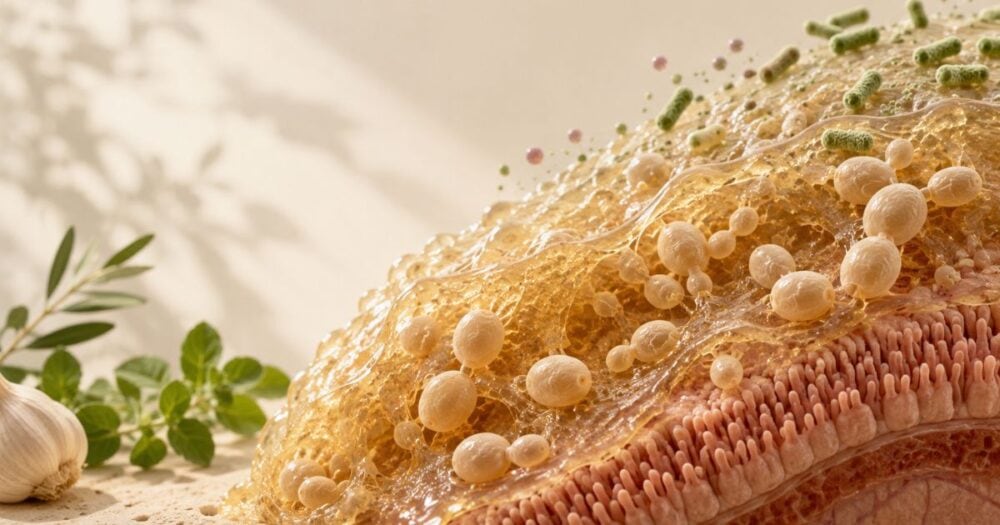
Candida biofilms are protective layers that Candida and other microorganisms can produce to help them attach to surfaces and survive in challenging environments. Some research suggests these biofilms may contribute to persistent or recurring Candida overgrowth by helping protect yeast cells from immune responses and reducing the effectiveness of some antimicrobial treatments. While more human studies are needed, supporting gut health with a balanced diet, probiotics, digestive enzymes, and targeted herbal ingredients may help support a comprehensive approach to managing Candida.
In This Guide
You’ll learn:
- What Candida biofilms are
- Why they can make Candida harder to eliminate
- Signs biofilms may be contributing to recurring symptoms
- Natural ways to support biofilm management
- The role enzymes, probiotics, and herbal ingredients may play
- Where to learn more about enzyme therapy
Have you ever followed a Candida programme, only to find your symptoms gradually return? For some people, one possible explanation may be the presence of Candida biofilms.
Biofilms are protective communities that Candida and other microorganisms naturally produce to help them attach to surfaces and survive in challenging environments. Researchers believe these structures may contribute to persistent or recurring Candida overgrowth by making yeast cells more difficult for the immune system and some antimicrobial treatments to reach.
Research into Candida biofilms continues to evolve, with recent reviews highlighting their important role in persistent infections and ongoing efforts to develop more effective biofilm-targeted therapies.
In this guide, we’ll explain what Candida biofilms are, how they form, the symptoms they may be associated with, and the natural strategies commonly used to support biofilm management as part of a comprehensive gut health programme.
Key Takeaways
- Candida biofilms may contribute to persistent symptoms such as fatigue, digestive discomfort, and recurring yeast infections.
- Biofilms form in stages and create a barrier that antifungal agents struggle to penetrate.
- Signs of a Candida biofilm problem include chronic infections and poor response to antifungal therapies.
- A comprehensive approach including diet, probiotics, digestive enzymes, and selected herbal ingredients may help support biofilm management.
- Managing stress, ensuring adequate sleep, and supporting gut health are essential to overcoming biofilm-related issues.
Estimated reading time: 17 minutes
What Is a Biofilm?
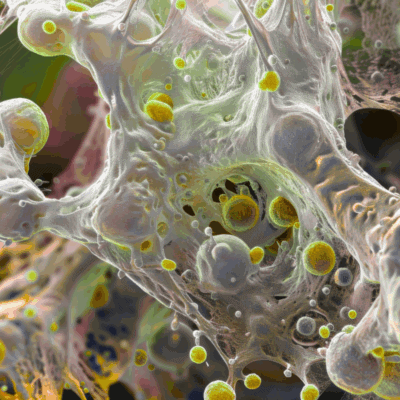
Imagine Candida wrapped in a microscopic slime suit—that’s a biofilm. It’s a protective barrier made of proteins, polysaccharides, and DNA that microbes like Candida and bacteria build to shield themselves from immune responses and make some antimicrobial treatments less effective.
Biofilms form on both internal and external surfaces—your gut lining, your sinuses, even your teeth (think plaque). Biofilms are extremely common in nature. According to the National Institutes of Health, an estimated 60–80% of microbial infections involve biofilm formation.
Candida albicans, the species most commonly associated with yeast infections, is particularly effective at forming biofilms. Once established, these complex structures help the organism attach to surfaces and may make persistent infections more difficult to manage.
It’s important to remember that biofilm formation isn’t unique to Candida. Many bacteria and fungi naturally produce biofilms as part of their normal survival strategy. Problems arise when Candida becomes overrepresented, allowing these protective structures to contribute to ongoing imbalance.
The 5 Key Stages of Biofilm Formation
Although biofilm formation is a complex biological process, researchers generally describe it as developing through several overlapping stages:
- Initial Adhesion: Candida cells attach to a surface, such as the intestinal lining or mucosal tissues.
- Cell Multiplication: The attached cells begin multiplying and forming small microbial communities.
- Extracellular Matrix Production: Candida secretes a sticky matrix composed primarily of polysaccharides, proteins, lipids, and extracellular DNA. This matrix forms the biofilm itself.
- Protection Development: As the matrix thickens, it helps protect the yeast from environmental stress, immune responses, and some antimicrobial compounds.
- Biofilm Maturation: The biofilm becomes increasingly organised and may contain yeast, hyphal, and pseudohyphal forms of Candida, making it more resilient and difficult to disrupt.
How Biofilms May Contribute to Persistent Candida
When Candida forms a biofilm, it’s a bit like building a microscopic fortress. The protective matrix helps shield the yeast from its surroundings and may reduce the effectiveness of some antifungal strategies.
Biofilm blocks antifungals
Laboratory research suggests that Candida growing within mature biofilms can be far more tolerant of antifungal agents than free-floating Candida cells. Although laboratory findings don’t always reflect what happens in the human body, they help explain why some recurrent Candida infections may be more difficult to manage.
Some laboratory studies have reported biofilm-associated Candida tolerating antifungal concentrations many times higher than free-floating cells, although the exact degree varies between studies and antifungal agents.
Biofilm protects from the immune system
The biofilm matrix may also make it more difficult for immune cells to interact directly with Candida, potentially reducing the efficiency of normal immune responses.
Biofilms May Contribute to Recurrence
Persistent or recurring vaginal yeast infections, oral thrush, or ongoing digestive symptoms don’t necessarily mean biofilms are present. However, researchers believe biofilms may be one factor that contributes to recurrence in some people.
Could Biofilms Be Contributing to Your Symptoms?
If you’ve made dietary changes and tried appropriate treatments but your symptoms continue to return, biofilms may be one possible explanation. While there are many reasons Candida can recur, researchers continue to investigate the role biofilms may play in persistent overgrowth.
Possible signs that biofilms may be contributing include:
Persistent bloating, gas, or sugar cravings—even with a clean, low-sugar diet
Recurrent episodes of vaginal thrush or oral thrush that never fully resolve
Little or no improvement from antifungal herbs or medications
Cyclical flare-ups—feeling better briefly, only to relapse again
Ongoing sinus congestion, brain fog, or low energy
Die-off symptoms (headaches, fatigue, skin issues) that keep returning
Biofilms may help explain why Candida sometimes seems to return despite repeated treatment attempts. While they are unlikely to be the only factor involved, supporting biofilm disruption may improve the effectiveness of a broader gut health programme in some individuals.
Want a quick overview first? In this short video, Eric Bakker, ND, explains what microbial biofilms are, how they may contribute to persistent Candida overgrowth, and why many practitioners consider them an important part of a comprehensive gut health programme.
How to Support Candida Biofilm Disruption Naturally
A natural, multi-pronged approach may help support biofilm disruption and improve the effectiveness of an overall Candida management plan.
Let’s look at several natural strategies that may help support biofilm disruption as part of a broader Candida management approach.
1. Digestive and Systemic Enzymes
Certain digestive and proteolytic enzymes have been studied for their potential to help disrupt components of microbial biofilms in laboratory research. By helping break down parts of the biofilm matrix, they may make Candida cells more accessible to your body’s natural defences and other supportive strategies. While human research is still developing, many practitioners include enzyme therapy as part of a comprehensive Candida programme.
Our Yeastrix Active Enzymes formula contains 13 digestive and systemic enzymes, together with Bacillus coagulans, to support healthy digestion and gut function.
Want to learn more? Our detailed guide explains which enzymes have been studied, how they work, when to take them, and what the current research says.
→ Read our complete guide: Best Enzymes for Candida Biofilms: How They Work, What the Research Says & When to Take Them.
2. Probiotics That Crowd Out Biofilm-Forming Candida
Candida is more likely to thrive when the gut microbiome is out of balance. Supporting beneficial bacteria may help create an environment that is less favourable for yeast overgrowth and biofilm formation.
Want to know which probiotic strains have been studied most extensively? Read our complete guide to the Best Probiotics for Candida Biofilms: The Science Behind the Best-Studied Strains.
Our Daily Probiotic delivers 35 billion CFU from 17 clinically relevant strains. Many of these are discussed in our guide to the best probiotics for Candida biofilms, including Lactobacillus plantarum, L. reuteri, L. rhamnosus and several Bifidobacterium species that have been investigated for their ability to reduce Candida adhesion or biofilm formation in laboratory and experimental studies.
Research Snapshot
Laboratory and experimental studies suggest several probiotic strains—including Lactobacillus rhamnosus, L. plantarum, L. reuteri, L. acidophilus and several Bifidobacterium species—may reduce Candida adhesion, interfere with early biofilm formation and help support microbial balance. While the findings are encouraging, larger human clinical trials are still needed.
We explore the research on Lactobacillus rhamnosus, L. plantarum, L. reuteri, L. acidophilus and other well-studied strains in our detailed guide to Best Probiotics for Candida Biofilms.
3. Botanical Ingredients That May Help Support Biofilm Disruption
While many standard antifungals struggle to break through biofilm barriers, certain plant-based compounds have been shown to disrupt biofilm structure and weaken Candida’s defenses. Several botanical compounds have demonstrated antifungal or biofilm-disrupting activity in laboratory studies. While human research remains limited, these ingredients are commonly included in practitioner-led Candida programmes.
Botanical Ingredients with Antifungal Activity:
- Garlic (allicin) – A powerful antimicrobial compound found in garlic, allicin has been shown to disrupt biofilms and inhibit fungal growth.
- Berberine – Sourced from herbs like goldenseal and barberry, berberine weakens biofilm structure and helps break down fungal resistance.
- Oregano oil – This essential oil is a potent antifungal, but it should be used cautiously in low doses, as it’s very strong.
- Caprylic acid – Derived from coconut oil, caprylic acid helps clear yeast overgrowth in the digestive tract.
For an easy and balanced way to incorporate these herbs into your routine, Yeastrix CANDIDA CLEANSE offers a thoughtfully formulated blend featuring caprylic acid, garlic extract, oregano leaf, and berberine, among other gut-supportive ingredients. Formulated by Naturopath Eric Bakker for real-world results, contains a blend of botanicals traditionally used to support a healthy microbial balance and digestive health.
As always, introduce antifungal herbs slowly, and consider working with a qualified practitioner—especially if you’re sensitive or prone to detox reactions.
4. Diet That Supports Biofilm Disruption
Diet is an important part of supporting a healthy gut environment. Reducing added sugars and highly refined carbohydrates may help create conditions that are less favourable for Candida overgrowth. Although diet alone is unlikely to eliminate Candida overgrowth, it may help support a healthier gut environment and microbial balance.
🛑 Avoid:
- Added sugars (including honey and other sweeteners)
- Refined carbs
- Alcohol
- Dairy (can be inflammatory for some)
- Fermented foods (short term, if reactive)
✅ Embrace:
- Non-starchy veggies
- Clean protein (pasture-raised, wild-caught)
- Good fats (avocado, olive oil, coconut oil)
- Anti-inflammatory herbs (ginger, turmeric)
Drink plenty of water to help flush away byproducts as the biofilm breaks down.
5. Lifestyle Habits That Support Gut Health
Supplements are only one part of the picture. Daily habits also play an important role in maintaining a healthy gut environment and supporting overall wellbeing.
Manage stress
Chronic stress may influence gut barrier function, immune health and the balance of the gut microbiome. Prioritising relaxation, mindfulness, gentle movement and restorative activities may help support long-term gut health.
Prioritise quality sleep
During sleep, your body repairs tissues, supports immune function and helps maintain normal digestive health. Aim for consistent, restorative sleep each night.
Stay physically active
Gentle activities such as walking, stretching or yoga support healthy circulation, digestion and general wellbeing without placing excessive stress on the body.
Support healthy elimination
Regular bowel movements help maintain normal digestive function. Staying hydrated, eating adequate fibre and remaining physically active all contribute to healthy elimination.
Together with a balanced diet and appropriate supplementation, these lifestyle habits help create an environment that supports long-term microbial balance.
Supporting long-term recovery from Candida involves more than supplements alone. It’s about creating an environment where a healthy gut microbiome can thrive.
Want to Learn More?
Explore these related guides:
• Candida and Sleep: Why You’re Still Tired
• Best Probiotics for Vaginitis
• Best Enzymes for Candida Biofilms
While biofilm disruption may play an important role for some people, long-term success usually comes from supporting the whole gut ecosystem—not simply targeting Candida alone.
A Gradual Approach to Supporting Biofilm Management
If you’ve ever started a Candida programme only to feel temporarily worse—with symptoms such as fatigue, headaches, digestive discomfort, or skin flare-ups—you’ll know that introducing too many changes at once isn’t always helpful. While some people refer to these temporary changes as “die-off” or Herxheimer-like reactions, the exact cause isn’t fully understood and experiences vary considerably between individuals.
For this reason, many practitioners prefer introducing dietary changes and supplements gradually. A slower approach allows you to see how your body responds, supports good tolerance, and makes it easier to identify which strategies are working for you.
The following example is not a prescribed treatment plan, but rather an illustration of how some practitioners may choose to introduce supportive measures over time.
Step 1: Build a Healthy Foundation
Many practitioners recommend building a strong foundation before introducing more targeted strategies. Many people begin by focusing on the basics:
Introducing a quality multi-strain probiotic to help maintain a balanced gut microbiome
Following a whole-food, lower-sugar eating pattern
Staying well hydrated
Supporting regular bowel function
Step 2: Consider Enzyme Support
Once a good foundation is established, some practitioners introduce digestive or proteolytic enzymes. Certain enzymes have been investigated in laboratory studies for their potential to help disrupt components of microbial biofilms, although more human research is needed.
If you’d like a more detailed explanation of how enzymes work, the research behind them, and when they’re typically used, see our guide to Best Enzymes for Candida Biofilms.
If using enzyme supplements, always follow the manufacturer’s directions or the advice of your healthcare practitioner.
Step 3: Introduce Antifungal Herbs Gradually
Some people then choose to introduce herbal ingredients such as garlic, oregano, berberine or caprylic acid. These botanicals have demonstrated antifungal activity in laboratory and preclinical studies, but individual responses vary.
Introducing one product at a time also makes it easier to identify any unwanted effects.
Step 4: Continue Supporting Gut Health
Long-term success often depends on more than supplements alone. Continuing to support gut health through a nutritious diet, adequate sleep, stress management, regular physical activity and a healthy microbiome may help maintain microbial balance over time.
Remember: Progress isn’t always linear. A gradual, consistent approach is often more sustainable than making multiple changes at once.
A Comprehensive Gut Health Approach
Many people choose to combine several complementary strategies, including:
Yeastrix Daily Probiotic to help support a balanced gut microbiome.
Yeastrix Active Enzymes to support healthy digestion. Some of the enzymes included have been investigated in laboratory studies for their potential role in disrupting components of microbial biofilms.
Yeastrix Candida Cleanse, a blend of botanical ingredients traditionally used to support digestive and microbial health.
Scientific Research Supporting Biofilm Disruption
Research into Candida biofilms is continuing to evolve. Most evidence currently comes from laboratory and experimental studies rather than large human clinical trials.
Studies have shown that:
- Certain Lactobacillus strains can reduce Candida adhesion, hyphal development, and biofilm formation under laboratory conditions.
- Some digestive and proteolytic enzymes have demonstrated the ability to degrade components of microbial biofilms in laboratory research, although more human studies are needed to understand their clinical role.
Taken together, these findings support the idea that probiotics, enzymes, dietary measures and selected botanical ingredients may each contribute to a broader gut health strategy rather than acting as standalone solutions.
For more on fungal toxins, read our article:
Final Thoughts: Restoring Balance Takes Time
The good news? You don’t need to go to war with your body.
Addressing persistent Candida overgrowth is rarely about finding a single “magic” solution. Instead, it’s about supporting the environment in which a healthy microbiome can thrive.
A balanced diet, restorative sleep, stress management, appropriate medical care when needed, and carefully selected supplements may all play a role in supporting long-term gut health.
If you’re looking for a comprehensive approach, our Yeastrix Gut Restore Kit combines Daily Probiotic, Active Enzymes and Candida Cleanse to complement a gut health programme built on these same principles.
Frequently Asked Questions
A Candida biofilm is a protective layer made of sugars, proteins, and other substances that Candida and other microorganisms can produce. This layer helps microbes attach to surfaces and may make them more resistant to the body’s immune responses and some antimicrobial treatments.
Recurring Candida overgrowth can have many contributing factors, including ongoing antibiotic use, uncontrolled blood sugar, hormonal changes, immune dysfunction, or an imbalanced gut microbiome. Some researchers believe Candida biofilms may also contribute to persistent or recurring infections by helping protect yeast cells.
Laboratory research suggests that certain enzymes, probiotics, and plant compounds may help disrupt components of microbial biofilms. However, more human studies are needed, and results can vary between individuals. Supporting overall gut health through diet and lifestyle is also an important part of a comprehensive approach.
Some probiotic strains have shown the ability to reduce Candida adhesion and biofilm formation in laboratory and animal studies. While these findings are promising, further clinical research is needed to determine how they may affect Candida biofilms in humans.
Many practitioners recommend a diet rich in vegetables, quality protein, healthy fats, and minimally processed foods while reducing added sugars and refined carbohydrates. Although diet alone is unlikely to eliminate Candida, it may help support a healthier gut environment and microbial balance.
There is no single timeline. Recovery depends on many factors, including the underlying cause of the overgrowth, overall health, diet, lifestyle, and the approach being used. A gradual, consistent strategy is often more sustainable than expecting rapid results.
No. Enzymes are not designed to kill Candida directly. Instead, certain digestive and proteolytic enzymes have been investigated for their ability to help disrupt components of microbial biofilms in laboratory studies. This may make Candida cells more accessible to the body’s natural defences and other supportive strategies. More human research is still needed.
Povidone-iodine (PVP-I) has well-established antifungal activity against Candida species and has been used clinically for vulvovaginal candidiasis. More recent laboratory research has also shown that it can significantly reduce Candida albicans biofilms on prosthetic surfaces. However, there is currently little clinical evidence that brushing the tongue with iodine removes established Candida biofilms in the mouth or gastrointestinal tract. More research in people is needed before this can be recommended as a biofilm-disruption strategy.
Candida biofilms are microscopic structures and generally cannot be seen with the naked eye. Although people sometimes report seeing stringy material or mucus during a Candida cleanse, these observations cannot be used to diagnose Candida biofilms. Laboratory techniques are needed to identify true biofilms.
Keep Learning About Candida
Understanding Candida biofilms is just one piece of the puzzle. Long-term gut health also depends on diet, lifestyle, microbial balance and choosing the right support for your individual situation.
Explore our related articles to learn more about probiotics, digestive enzymes, Candida nutrition and evidence-based approaches to supporting a healthier gut.
Continue Reading
References
De Barros, P. P., Scorzoni, L., Ribeiro, F. C., Fugisaki, L. R. O., Fuchs, B. B., Mylonakis, E., Junqueira, J. C., & Rossoni, R. D. (2020). Lactobacillus species inhibit Candida albicans growth, hyphal formation, and biofilm development: A review of experimental evidence. Applied Microbiology and Biotechnology, 104(5), 1885–1904.
Donlan, R. M., & Costerton, J. W. (2002). Biofilms: Survival mechanisms of clinically relevant microorganisms. Clinical Microbiology Reviews, 15(2), 167–193. https://doi.org/10.1128/CMR.15.2.167-193.2002
Douglas, L. J. (2003). Candida biofilms and their role in infection. Trends in Microbiology, 11(1), 30–36.
Fanning, S., & Mitchell, A. P. (2012). Fungal biofilms. PLoS Pathogens, 8(4), e1002585.
Gulati, M., & Nobile, C. J. (2016). Candida albicans biofilms: Development, regulation, and molecular mechanisms. Microbes and Infection, 18(5), 310–321. https://doi.org/10.1016/j.micinf.2016.01.002
Henderson, J. N., & Tait, I. B. (1975). The use of povidone-iodine (‘Betadine’) pessaries in the treatment of candidal and trichomonal vaginitis. Current medical research and opinion, 3(3), 157–162. https://doi.org/10.1185/03007997509113664
Hong, J. Y., Moon, Y. G., Choi, S. K., Kim, H. T., & Jo, S. (2026). Povidone iodine demonstrates strong efficacy in reducing Candida biofilm in an in vitro fungal prosthetic infection. Scientific Reports, 16, 12236. https://doi.org/10.1038/s41598-026-42366-6
Nobile, C. J., & Johnson, A. D. (2015). Candida albicans biofilms and human disease. Annual Review of Microbiology, 69, 71–92. https://doi.org/10.1146/annurev-micro-091014-104330
Pappas, D., Williams, C., & Ramage, G. (2023). Our current clinical understanding of Candida biofilms: Where are we two decades on? APMIS.
Taff, H. T., Mitchell, K. F., Edward, J. A., & Andes, D. R. (2013). Mechanisms of Candida biofilm drug resistance. Future Microbiology, 8(10), 1325–1337. https://doi.org/10.2217/fmb.13.101
This article is intended for educational and informational purposes only and is not a substitute for professional medical advice, diagnosis, or treatment. Always consult with a qualified healthcare provider before starting any new treatment or supplement, especially if you have a pre-existing medical condition or are taking medication. The recommendations here reflect a naturopathic approach and are not meant to replace conventional care when it is required. Individual results may vary.