Can You Eat Quinoa on the Candida Diet? Benefits, Nutrition & What to Know
Quick Answer
Yes—for most people, quinoa can be included as part of a balanced Candida-friendly diet. Although quinoa contains carbohydrates, it also provides fibre, complete plant protein, vitamins, and minerals that support overall nutrition. Rather than focusing on a single food, it’s generally more helpful to consider your overall dietary pattern, portion sizes, and individual tolerance.
Quinoa at a Glance
✓ Naturally gluten-free
✓ A nutritious whole-food carbohydrate source
✓ Contains all nine essential amino acids (complete plant protein)
✓ A good source of dietary fibre
✓ Rich in magnesium, iron, folate, manganese, and zinc
✓ Best enjoyed with vegetables, healthy fats, and quality protein
✓ Can be included as part of a balanced Candida-friendly diet for many people
Quinoa has become a popular staple in many healthy eating plans, but if you’re following a Candida-friendly diet, you may wonder whether it’s a good choice.
Because quinoa contains carbohydrates, some Candida diets recommend avoiding it altogether. However, quinoa is also naturally gluten-free, rich in fibre, and one of the few plant foods that provides all nine essential amino acids.
So, should you include quinoa? For many people, the answer is yes—but like most foods, how it fits into your diet is usually more important than the food itself.
Research Snapshot
Current evidence suggests:
- Quinoa is naturally gluten-free.
- Rich in fibre, protein, vitamins, and minerals.
- It has a lower glycaemic index than many refined grains.
- No high-quality research shows quinoa directly promotes Candida overgrowth.
- A balanced dietary pattern appears more important than eliminating individual whole foods.
What Is Quinoa?
Quinoa (pronounced keen-wah) is a nutrient-rich seed that is often prepared and eaten like a grain. Native to the Andes Mountains of South America, it has been cultivated for thousands of years and is valued for its impressive nutritional profile and versatility in cooking.
Although quinoa is commonly grouped with grains such as rice and oats, it is technically a pseudocereal—a seed that is cooked and consumed like a cereal grain. Unlike wheat, barley, and rye, quinoa is naturally gluten-free, making it a popular choice for people following a gluten-free diet or looking for alternative whole-food carbohydrate sources.
One of quinoa’s standout features is that it contains all nine essential amino acids, making it a complete plant protein. It also provides dietary fibre, magnesium, iron, manganese, folate, and other nutrients that support overall health. The fibre in quinoa can help support normal digestion and contributes to a healthy gut microbiome by providing nourishment for beneficial gut bacteria.
Like many whole foods, quinoa contains carbohydrates alongside fibre, protein, vitamins, and minerals. Whether quinoa is suitable for you depends on your overall dietary pattern, portion sizes, and individual tolerance.
Can You Eat Quinoa on the Candida Diet?
For many people, yes—quinoa can be included as part of a balanced Candida-friendly diet. While quinoa does contain carbohydrates, it also provides fibre, complete plant protein, and important nutrients that support overall health. Rather than focusing on whether a single food is “allowed” or “forbidden,” it’s often more helpful to consider your overall dietary pattern and how your body responds.
Carbohydrates are an important source of energy, but not all carbohydrate-containing foods have the same effect on the body. Unlike refined grains and sugary foods, quinoa is a minimally processed whole food that contains dietary fibre. Fibre slows digestion and the absorption of carbohydrates, helping to promote steadier blood sugar levels while also supporting beneficial bacteria within the gut microbiome.
Portion size also matters. Enjoying a moderate serving of quinoa as part of a balanced meal is very different from eating a large bowl on its own. Pairing quinoa with quality protein—such as fish, poultry, eggs, tofu, or beans and legumes—along with healthy fats like olive oil, avocado, or nuts, and plenty of colourful vegetables creates a more balanced meal that is both satisfying and nutrient-dense.
Some people choose to reduce higher-carbohydrate foods during the early stages of a Candida cleanse, particularly if they’re working with a healthcare professional or following a specific dietary plan. Others may tolerate quinoa well from the beginning. Individual responses can vary depending on your overall health, digestive function, activity levels, and the rest of your diet.
At Yeastrix, we encourage focusing on the overall quality of your diet rather than eliminating nutritious whole foods unnecessarily. Building meals around vegetables, quality proteins, healthy fats, and fibre-rich whole foods is generally a more sustainable approach to supporting long-term gut health than relying on long lists of foods to avoid.
Not sure where quinoa fits into the bigger picture? Read our Candida Cleanse Diet: Complete Food List and Beginner’s Guide for a comprehensive overview of foods commonly included in a balanced Candida-friendly eating plan, plus practical tips for getting started.
Nutritional Benefits of Quinoa
Quinoa is a nutritious whole-food carbohydrate source that provides fibre, complete plant protein, vitamins, and minerals. More than just an alternative to rice or other grains, it can be a valuable addition to a balanced, nutrient-rich diet.
Rich in Fibre
Quinoa is a good source of dietary fibre, which plays an important role in digestive health. Fibre helps support regular bowel movements, promotes feelings of fullness after meals, and provides nourishment for beneficial gut bacteria. A fibre-rich diet is associated with a more diverse gut microbiome, which plays an important role in digestion, immune function, and overall wellbeing.
Complete Plant Protein
Unlike most plant foods, quinoa is considered a complete protein, meaning it contains all nine essential amino acids that the body cannot produce on its own. This makes quinoa an excellent protein source for vegetarians, vegans, or anyone looking to include more plant-based meals in their diet. Its combination of protein and fibre may also help make meals more satisfying.
Vitamins and Minerals
Quinoa naturally provides several essential nutrients that help support normal body functions, including:
- Magnesium, which contributes to normal muscle and nerve function and energy production.
- Iron, which helps transport oxygen throughout the body and supports normal energy metabolism.
- Zinc, an essential mineral involved in immune function, wound healing, and healthy cell growth.
- Folate, a B vitamin needed for healthy cell division and DNA synthesis.
- Manganese, which supports normal metabolism and helps protect cells from oxidative stress.
Together, these nutrients make quinoa a valuable addition to a varied and balanced diet.
Naturally Gluten-Free
Quinoa is naturally free from gluten, making it a suitable choice for people with coeliac disease or those who need to avoid gluten for medical reasons. While a gluten-free diet isn’t necessary for everyone, quinoa provides a nutritious alternative to gluten-containing grains and can add variety to meals without sacrificing nutritional value.
Things to Consider
While quinoa can be a nutritious addition to a balanced Candida-friendly diet, there are a few practical points to keep in mind.
Quinoa Contains Carbohydrates
Like other whole grains and pseudocereals, quinoa contains carbohydrates, which provide the body with energy. If you’re following a lower-carbohydrate eating plan or reducing carbohydrate intake during the early stages of a Candida cleanse, you may prefer to enjoy quinoa in moderation. Pairing it with plenty of vegetables, quality protein, and healthy fats can help create a more balanced and satisfying meal.
Start with Smaller Servings
If you’re introducing quinoa for the first time or gradually expanding your food choices, consider starting with a smaller serving and seeing how you feel. Individual responses to foods can vary, and paying attention to your own digestive comfort is often more helpful than following rigid food rules.
Individual Tolerance Varies
There is no single diet that works for everyone. Factors such as your overall health, digestive function, activity level, and the rest of your diet can all influence how well you tolerate different foods. What works well for one person may not be the best choice for another, so it’s important to find an approach that suits your individual needs.
Rinse Before Cooking
Quinoa has a natural coating called saponins, which can give it a slightly bitter taste and may cause digestive discomfort in some people if not removed. Although many packaged varieties are pre-rinsed, giving quinoa a quick rinse under cold running water before cooking can improve both its flavour and texture.
Choose Minimally Processed Quinoa
Whenever possible, choose plain quinoa rather than flavoured or pre-packaged varieties that may contain added sugars, refined oils, or excess sodium. Preparing quinoa at home allows you to control the ingredients and create balanced meals using fresh vegetables, lean proteins, herbs, and healthy fats.
Ways to Enjoy Quinoa
Quinoa is incredibly versatile and can be used in a wide variety of meals. Its mild, slightly nutty flavour pairs well with vegetables, herbs, lean proteins, and healthy fats, making it easy to include as part of a balanced Candida-friendly diet.
Here are a few simple ways to enjoy quinoa:
- As a side dish with grilled chicken, baked salmon, or other lean proteins instead of refined grains.
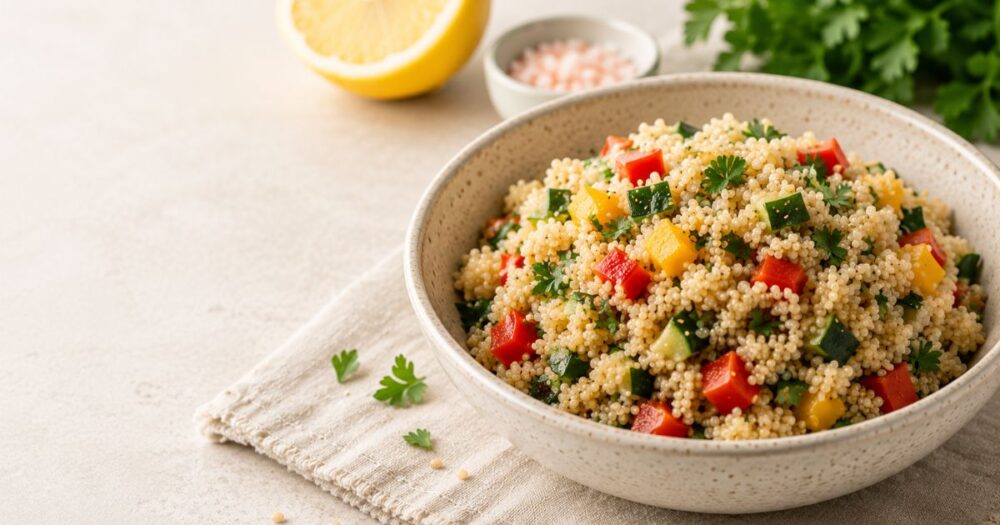
- In colourful salads with leafy greens, cucumber, tomatoes, avocado, fresh herbs, and a drizzle of extra virgin olive oil.
- Mixed with roasted vegetables such as broccoli, cauliflower, pumpkin, zucchini, or capsicum for a nourishing plant-forward meal.
- Added to soups and stews to provide extra texture, fibre, and plant protein.
- As a warm breakfast porridge, cooked with unsweetened almond or coconut milk and topped with cinnamon, chopped nuts, seeds, and a handful of fresh berries.
- Stuffed into capsicums, combined with vegetables, herbs, and your choice of lean protein or beans and legumes for a satisfying meal.
- Serve quinoa alongside grilled salmon and roasted vegetables, or enjoy it with foods such as oats, brown rice, or other whole-food carbohydrate sources as part of a varied diet.
Preparing quinoa at home using fresh, whole-food ingredients allows you to create balanced meals that are rich in fibre, protein, and nutrients while avoiding the added sugars and highly processed ingredients often found in convenience foods.
Frequently Asked Questions
For many people, yes. Quinoa can be included as part of a balanced Candida-friendly diet because it provides fibre, complete plant protein, vitamins, and minerals. Although it contains carbohydrates, its overall nutritional value and the context of your entire diet are generally more important than excluding quinoa altogether.
There is no high-quality scientific evidence showing that quinoa directly feeds Candida or causes Candida overgrowth. Quinoa is a minimally processed whole food that contains carbohydrates alongside fibre, protein, and beneficial nutrients. Rather than focusing on a single food, it’s generally more helpful to consider your overall dietary pattern and lifestyle.
If you’re new to the topic, our guide to What Is Candida Overgrowth? explains what Candida is, the factors that may contribute to an overgrowth, and why supporting overall gut health is important.
Quinoa can support gut health as part of a balanced diet. Its dietary fibre helps nourish beneficial gut bacteria and supports regular bowel movements, while its protein and nutrient content contribute to overall nutrition. Like any food, quinoa is most beneficial when eaten alongside a variety of vegetables, fruits, beans and legumes, healthy fats, and quality protein sources.
No. Quinoa is not considered an antifungal food, and there is no reliable evidence that eating quinoa treats or prevents Candida overgrowth. Its value lies in providing fibre, protein, vitamins, and minerals that contribute to a nutritious, balanced diet.
Yes. Quinoa is naturally gluten-free, making it suitable for people with coeliac disease or those who need to avoid gluten for medical reasons. If you have coeliac disease, choose quinoa labelled certified gluten-free to minimise the risk of cross-contamination during processing.
There isn’t a single amount that’s right for everyone. Many people find that a moderate serving—around ½ to 1 cup of cooked quinoa as part of a balanced meal with vegetables, healthy fats, and protein—fits well within a Candida-friendly eating plan. Your ideal portion will depend on your overall diet, activity level, health goals, and individual tolerance.
For most people, quinoa is not considered an inflammatory food. In fact, its fibre and nutrient content make it a nutritious addition to many healthy eating patterns. However, everyone responds to foods differently, so if you notice discomfort after eating quinoa, it’s worth discussing your symptoms with a healthcare professional.
Yes. Although many packaged varieties are pre-rinsed, it’s still a good idea to rinse quinoa under cold running water before cooking. This helps remove its natural coating of saponins, which can leave a bitter taste and may cause digestive discomfort in some people.
Conclusion
Quinoa doesn’t need to be viewed as simply “allowed” or “forbidden.” For many people, it can be a nutritious addition to a balanced Candida-friendly diet, providing fibre, complete plant protein, and a range of important vitamins and minerals.
Rather than focusing on individual foods, it’s generally more helpful to look at the overall quality of your diet. Eating a variety of whole, minimally processed foods—including vegetables, quality proteins, healthy fats, and fibre-rich carbohydrates—can help support your overall health and a balanced gut microbiome.
As with any food, individual tolerance can vary. Paying attention to how your body responds and choosing a dietary approach that’s balanced, sustainable, and enjoyable is likely to be more beneficial than following overly restrictive food rules.
Want to learn more? Read our Candida Cleanse Diet: Complete Food List and Beginner’s Guide for practical food lists, meal ideas, and tips for building a balanced Candida-friendly eating plan.
References
Cryan, J. F., O’Riordan, K. J., Cowan, C. S. M., et al. (2019). The microbiota-gut-brain axis. Physiological Reviews, 99(4), 1877–2013. https://doi.org/10.1152/physrev.00018.2018
Food and Agriculture Organization of the United Nations. (2011). Quinoa: An ancient crop to contribute to world food security. FAO. https://www.fao.org
Makki, K., Deehan, E. C., Walter, J., & Bäckhed, F. (2018). The impact of dietary fibre on gut microbiota in host health and disease. Cell Host & Microbe, 23(6), 705–715. https://doi.org/10.1016/j.chom.2018.05.012
Peterson, L. W., & Artis, D. (2014). Intestinal epithelial cells: Regulators of barrier function and immune homeostasis. Nature Reviews Immunology, 14(3), 141–153. https://doi.org/10.1038/nri3608
Singh, R. K., Chang, H. W., Yan, D., et al. (2017). Influence of diet on the gut microbiome and implications for human health. Journal of Translational Medicine, 15, 73. https://doi.org/10.1186/s12967-017-1175-y
Valdes, A. M., Walter, J., Segal, E., & Spector, T. D. (2018). Role of the gut microbiota in nutrition and health. BMJ, 361, k2179. https://doi.org/10.1136/bmj.k2179
Disclaimer: This article is for educational purposes only and is not intended as medical advice, diagnosis, or treatment. While research suggests that diet plays an important role in overall health and the gut microbiome, there is no single food that has been proven to prevent, treat, or cure Candida overgrowth. Individual responses to foods can vary depending on your health, medical history, and nutritional needs. If you have persistent digestive symptoms or an underlying medical condition, consult your doctor or a qualified healthcare professional before making significant changes to your diet.